Turkey Meatballs and Spaghetti: A Healthier Take on a Classic Dish
I made turkey meatballs for spaghetti, thinking they’d be healthier than beef but just as easy. Mixed ground turkey with breadcrumbs and egg like beef meatballs, formed balls, and baked them. They came out dry and crumbly, falling apart when I tried to put them in sauce. My family ate them politely, but everyone noticed the sawdust texture. The problem was turkey is much leaner than beef—it needs extra moisture and fat, or it dries out completely during cooking. You can’t just swap turkey for beef using an identical recipe and expect the same results.
Turkey meatballs work when you add moisture-boosting ingredients and adjust the cooking method for lean meat, not when you treat turkey like beef with a different name. Ground turkey has almost no fat compared to ground beef—it needs milk-soaked breadcrumbs, grated vegetables, or olive oil mixed in to stay tender. Cooking temperature matters too—high heat dries lean turkey fast. Lower temperature or finishing in sauce helps retain moisture. The health benefits (less saturated fat, fewer calories) only matter if meatballs actually taste good enough to eat. For more Italian-inspired dishes, refer to our Italian pasta collection.
Why Turkey Meatballs
Health Benefits Reality
Ground turkey (93% lean) has about 170 calories and 8 g fat per 4 oz serving versus ground beef (80/20) with 290 calories and 23 g fat. Significant difference if watching calories or saturated fat intake.
Turkey also provides 22 g of protein per serving—the same as beef. Good source of B vitamins (especially B6 and B12), selenium, and zinc. Not magical health food but a legitimately leaner protein option.
Reality check: Turkey is only healthier if you don’t compensate by adding tons of cheese, cream sauce, or frying in oil. The meatball preparation matters as much as meat choice.
Taste and Texture Expectations
Turkey tastes milder than beef—less inherently savory. This means turkey meatballs need more aggressive seasoning (garlic, herbs, and Parmesan) to match beef’s flavor intensity.
Texture naturally drier and more delicate. Properly made turkey meatballs should be tender and moist, not rubbery or crumbly. Achieving this requires technique adjustments.
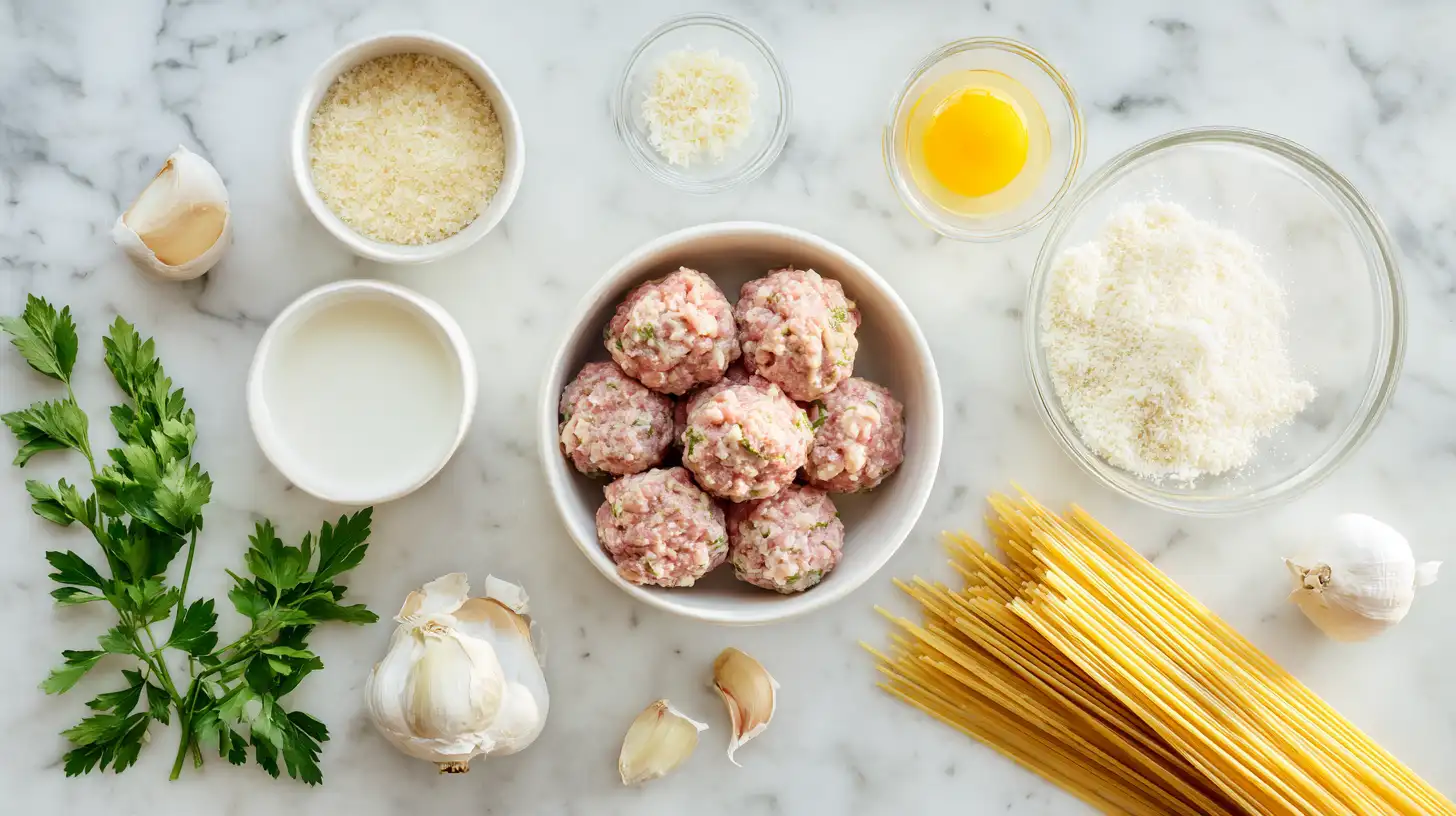
Turkey Meatball Ingredients
For meatballs (makes about 20):
- 1 lb ground turkey (93% lean recommended)
- ½ cup breadcrumbs (panko or regular)
- ¼ cup milk (whole milk best for moisture)
- 1 large egg
- ⅓ cup grated Parmesan cheese
- 3 garlic cloves, minced
- 2 tbsp fresh parsley, chopped
- 1 tsp dried oregano
- 1 tsp salt
- ½ tsp black pepper
- 2 tbsp olive oil (mixed into meat OR for cooking)
For marinara sauce:
- 28 oz can crushed tomatoes
- 2 tbsp olive oil
- 1 medium onion, diced
- 4 garlic cloves, minced
- 1 tsp dried basil
- 1 tsp dried oregano
- ½ tsp sugar (balances acidity)
- Salt and pepper to taste
- Fresh basil for garnish
For pasta:
- 1 lb spaghetti (regular, whole wheat, or gluten-free)
- Salt for pasta water
How to Make Turkey Meatballs Correctly
Prepare Meatball Mixture
Critical step: Soak breadcrumbs in milk 5 minutes before mixing. This creates panade (bread paste) that keeps meatballs moist during cooking. Without this step, breadcrumbs absorb moisture from meat, making it dry.
In a large bowl, combine ground turkey, milk-soaked breadcrumbs (squeeze out excess milk slightly), egg, Parmesan, minced garlic, parsley, oregano, salt, and pepper. If the mixture seems very lean and dry, add 2 tablespoons of olive oil.
Mix gently with hands until just combined. Don’t overmix—overworking makes meatballs dense and tough. The mixture should hold together when squeezed but not feel sticky or pasty.
Shape Meatballs
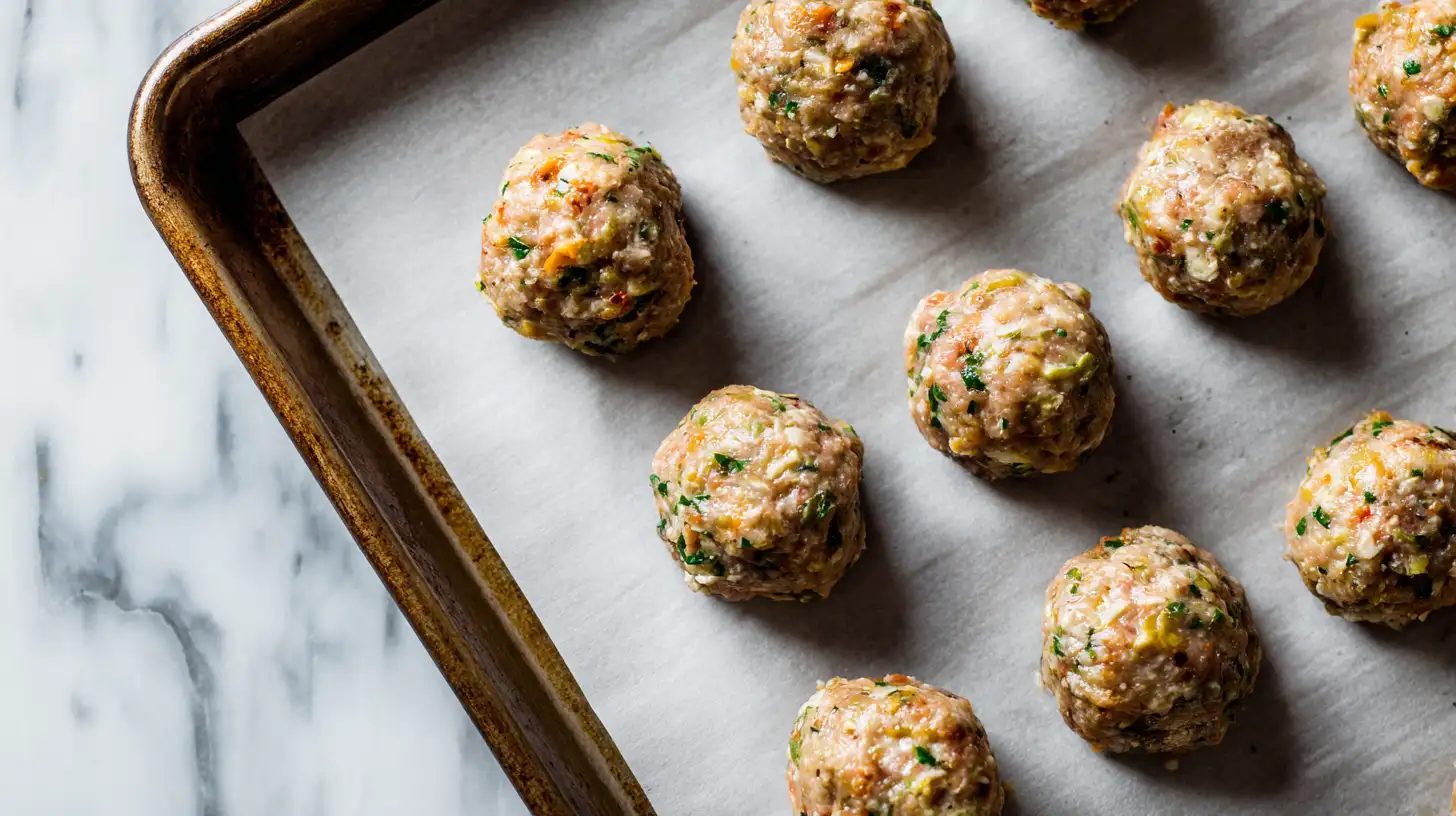
Wet hands slightly with water (prevents sticking). Scoop about 2 tablespoons of the mixture, and roll gently into a ball about 1½ inches in diameter. Don’t compress too hard—gentle rolling creates tender texture.
Place shaped meatballs on a plate or baking sheet. You should get about 20 meatballs from 1 pound of turkey.
Cooking Methods
Option 1 – Baking (healthiest, hands-off):
Preheat oven to 375°F (not 400°F—lower temp prevents drying). Line a baking sheet with parchment paper, brush lightly with olive oil. Arrange meatballs with space between (touching causes steaming, not browning).
Bake for 18-20 minutes until cooked through (internal temp 165°F). Don’t overbake—turkey dries out fast. Meatballs should be lightly browned but still moist inside.
Option 2 – Pan-searing then finishing in sauce (best flavor):
Heat 2 tablespoons olive oil in a large skillet over medium heat (not high—it burns outside before cooking inside). Brown meatballs on all sides, about 6-8 minutes total. They won’t be fully cooked yet—that’s intentional.
Transfer browned meatballs directly into simmering marinara sauce. Let them finish cooking in sauce for 10-12 minutes. This method keeps them incredibly moist and infuses them with sauce flavor.
Making Marinara Sauce
Heat olive oil in a large saucepan over medium heat. Add diced onion and cook until soft and translucent (5-6 minutes). Add minced garlic and cook for 1 minute until fragrant.
Pour in crushed tomatoes. Stir in dried basil, oregano, sugar, salt, and pepper. Bring to a simmer, reduce heat to low, and cook 20-25 minutes, stirring occasionally. Sauce should thicken slightly, and flavors should meld together.
Taste and adjust seasoning. If too acidic, add a pinch more sugar. If too sweet, add a pinch of salt or a splash of lemon juice.
When to add meatballs: If pan-seared, add to sauce for the final 10-12 minutes of cooking. If fully baked, add just to warm through and coat with sauce (5 minutes).
Cooking Pasta
Bring a large pot of water to a rolling boil (4-6 quarts for 1 lb of pasta). Add 1-2 tablespoons of salt—water should taste like seawater.
Add spaghetti, and stir immediately to prevent sticking. Cook according to package directions minus 1 minute for al dente (firm to bite). This usually takes 8-10 minutes.
Before draining, scoop out 1 cup of pasta water. This starchy water helps sauce cling to pasta. Drain pasta; don’t rinse.
Toss drained pasta with a small amount of sauce to coat. Add a splash of pasta water if needed to loosen the sauce.
Common Turkey Meatball Problems
Dry Crumbly Meatballs
Causes: My exact problem—didn’t add enough moisture, overcooked, or used extra-lean turkey without compensation.
Prevention: Soak breadcrumbs in milk before mixing. Add 2 tablespoons of olive oil to the mixture if using 93% lean or higher. Don’t overbake—cook just to 165°F internal temp. Finish cooking in sauce when possible.
Meatballs Falling Apart
Causes: Not enough binder (egg and breadcrumbs), mixture too wet, or handled too roughly.
Fixes: Use a full egg and ½ cup breadcrumbs per pound of of turkey. If the mixture is damp, add more breadcrumbs, a tablespoon at a time. Let shaped meatballs rest in the fridge 15-20 minutes before cooking—helps them firm up. Handle gently when turning.
Bland Flavorless Meatballs
Cause: Turkey’s mild flavor needs more seasoning than beef.
Fixes: Don’t skimp on salt (1 teaspoon per pound of turkey minimum). Add Parmesan for umami depth. Use fresh garlic, not powder. Increase herbs if needed. Taste the raw mixture by cooking a small piece in the microwave—adjust seasoning before shaping all meatballs.
Serving Turkey Meatball Spaghetti
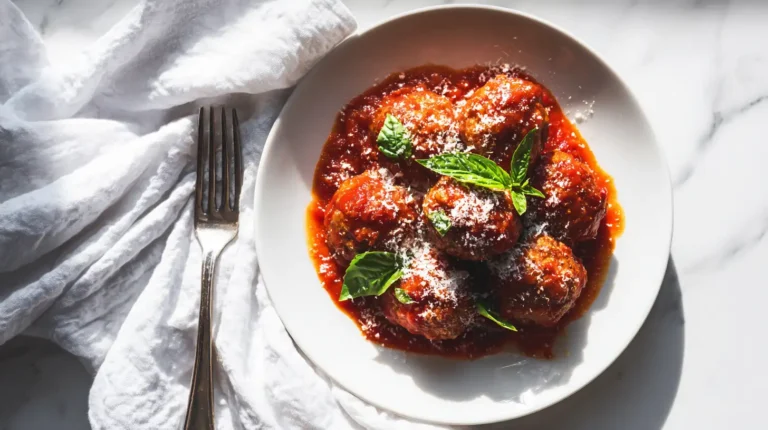
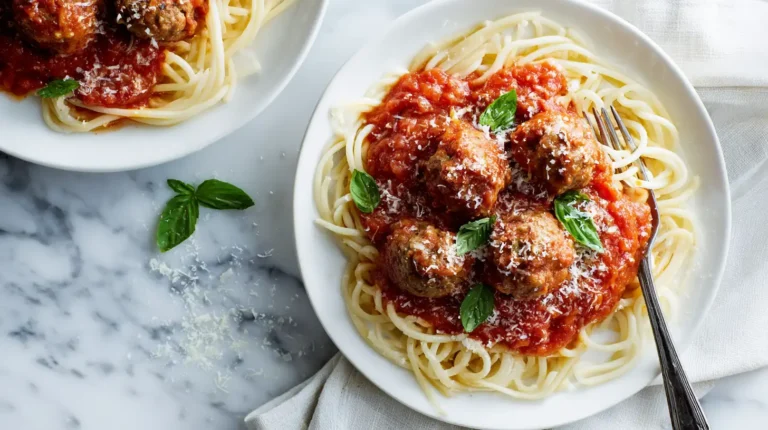
Plating: Twirl a portion of spaghetti on a plate using tongs or a pasta fork. Top with 4-5 meatballs. Spoon extra sauce over everything. Garnish with fresh grated Parmesan, chopped parsley or basil, and a drizzle of olive oil.
Sides that work:
- Simple green salad with vinaigrette
- Garlic bread (though adds back calories you saved with turkey)
- Roasted vegetables (zucchini, bell peppers, broccoli)
Storage and Reheating
Refrigerate: Store meatballs in sauce in an airtight container for up to 4 days. Store pasta separately—it gets mushy if stored with sauce. Combine when reheating.
Freeze: Freeze cooked meatballs in sauce for up to 3 months. Freeze pasta separately if desired. Thaw overnight in the fridge, and reheat gently on the stovetop, adding a splash of water if the sauce is too thick.
Reheat: Stovetop is best—heat meatballs and sauce over medium-low, stirring gently. Add pasta and toss to combine. The microwave works but can make meatballs rubbery (use 50% power, heat in intervals, stirring between).
Turkey Meatball Variations
Italian-Style with Fennel
Add 1 teaspoon fennel seeds (crushed) to meatball mixture. Gives Italian sausage flavor without actual sausage.
Greek-Style Turkey Meatballs
Replace Italian herbs with oregano, mint, and dill. Add crumbled feta cheese. Serve with tzatziki sauce instead of marinara.
Asian-Inspired
Replace breadcrumbs with panko. Add grated ginger, green onions, and soy sauce. Serve with sesame noodles instead of spaghetti.
Turkey Meatball Questions
Can I use ground chicken instead?
Yes, ground chicken works identically to turkey. Same lean profile, same moisture needs. Use the exact same recipe and techniques.
Can I make meatballs ahead?
Yes. Shape meatballs, place on baking sheet, and refrigerate covered up to 24 hours before cooking. Or freeze uncooked up to 2 months (freeze on a sheet first, then transfer to a freezer bag). Cook from frozen, adding 5-7 minutes to baking time.
How do I make this dish gluten-free?
Use gluten-free breadcrumbs (or almond flour) in meatballs. Use gluten-free pasta. Everything else is naturally gluten-free. Check sauce ingredients if using jars.
How can I make the meal even healthier?
Use whole wheat or chickpea pasta (more fiber and protein). Add grated zucchini or carrots to the meatball mixture (extra vegetables). Use light Parmesan or skip the cheese garnish. Serve a larger vegetable portion and a smaller pasta portion.
Final Reality on Turkey Meatballs
Turkey meatballs stopped being a dry disappointment when I learned lean meat requires a different technique than fatty beef. My crumbly disaster happened because I treated turkey like a beef substitute using identical preparation—doesn’t work. Turkey needs moisture boosters (milk-soaked breadcrumbs, olive oil, and Parmesan) and gentler cooking (lower temp and finishing in sauce) to stay tender.
The health benefits are real—significantly less saturated fat and fewer calories than beef meatballs. But it only matters if meatballs taste good enough to actually eat and enjoy. Dry sawdust balls defeat the purpose regardless of nutrition stats.
This is a practical, healthy swap when done correctly—not difficult, just requires understanding lean meat behavior. Soak breadcrumbs, don’t overbake, season aggressively, and finish in sauce when possible. My family now requests turkey meatballs regularly—vindication after that first dry batch nobody wanted seconds of.
Related Recipes
Turkey Meatballs and Spaghetti
These turkey meatballs and spaghetti deliver the comfort of the classic with far less saturated fat — tender, moist meatballs made with milk-soaked breadcrumbs and Parmesan, simmered in a quick homemade marinara and served over al dente spaghetti. The technique is built around lean turkey, so the meatballs come out juicy instead of dry.
Ingredients
For the Meatballs (makes about 20)
- 1 lb ground turkey (93% lean recommended)
- 1/2 cup breadcrumbs (panko or regular)
- 1/4 cup milk (whole milk best for moisture)
- 1 large egg
- 1/3 cup grated Parmesan cheese
- 3 cloves garlic (minced)
- 2 tbsp fresh parsley (chopped)
- 1 tsp dried oregano
- 1 tsp salt
- 1/2 tsp black pepper
- 2 tbsp olive oil (mixed into meat or for cooking)
For the Marinara Sauce
- 28 oz can crushed tomatoes
- 2 tbsp olive oil
- 1 medium onion (diced)
- 4 cloves garlic (minced)
- 1 tsp dried basil
- 1 tsp dried oregano
- 1/2 tsp sugar (balances acidity)
- salt and pepper (to taste)
- fresh basil (for garnish)
For the Pasta
- 1 lb spaghetti (regular, whole wheat, or gluten-free)
- salt (for the pasta water)
Instructions
- Soak the breadcrumbs in the milk for 5 minutes — this panade is what keeps lean turkey meatballs moist.
- In a large bowl, gently combine the turkey, milk-soaked breadcrumbs (squeeze out excess milk slightly), egg, Parmesan, garlic, parsley, oregano, salt, and pepper. If the mixture seems very lean, mix in 2 tablespoons olive oil. Don't overmix.
- With slightly wet hands, roll about 2 tablespoons of mixture per meatball into 1 1/2-inch balls without compressing too hard — you should get about 20.
- Make the sauce: heat olive oil over medium, cook the onion 5-6 minutes until translucent, add garlic for 1 minute, then pour in the crushed tomatoes with basil, oregano, sugar, salt, and pepper. Simmer on low 20-25 minutes, stirring occasionally.
- Cook the meatballs — either bake at 375°F on a parchment-lined sheet 18-20 minutes to 165°F internal, or (best flavor) pan-sear in olive oil over medium heat 6-8 minutes until browned all over.
- If pan-seared, transfer the meatballs into the simmering sauce to finish cooking 10-12 minutes; if baked, warm them in the sauce 5 minutes to coat.
- Cook the spaghetti in generously salted boiling water until al dente (package time minus 1 minute). Reserve 1 cup of pasta water, then drain without rinsing.
- Toss the pasta with a little sauce, loosening with a splash of pasta water if needed. Plate with 4-5 meatballs per serving, extra sauce, grated Parmesan, and fresh basil or parsley.
Notes
Don't skip the milk-soaked breadcrumbs and don't overbake — lean turkey dries out fast; finishing the meatballs in the sauce keeps them moist. Rest shaped meatballs in the fridge 15-20 minutes if they feel soft. Meatballs keep 4 days in the fridge in their sauce, freeze up to 3 months; store pasta separately. Ground chicken works identically.