The Ultimate Guide to Italian Pasta Recipes: Classic & Creative Dishes
I ruined pasta once for six months. Made it multiple times per week because it seemed easy and cheap, but every single batch came out wrong. Too mushy, bland sauce, weird texture. My family started requesting literally anything else for dinner. The problem wasn’t pasta—it was that I treated it like boiling water was cooking. I didn’t understand salt ratios, timing, sauce pairing, or why Italians are so particular about their pasta rules. Once I learned the actual techniques instead of just winging it, pasta became genuinely delicious instead of tolerable carbs.
Quick Answer
- The best Italian pasta dishes for families use five ingredients or fewer
- Pasta cooks perfectly in 8 to 12 minutes — always salt the boiling water generously
- Classic Italian sauces (marinara, arrabbiata, pesto) are naturally halal when made without wine
- Ground beef, chicken, and turkey are the best halal protein swaps in Italian pasta
- These recipes skip the alcohol and deliver authentic Italian flavor every time
Italian pasta works when you respect basic principles that matter—proper water-to-pasta ratio, adequate salt, correct cooking time, and matching shapes to sauces. These aren’t fussy rules for the sake of tradition. They’re functional requirements that determine whether your pasta tastes good or tastes like cafeteria food. For complete Italian cooking guidance, refer to our Italian meatloaf recipe.
Why Italian Pasta Recipes Actually Matter
Italian Pasta Recipes: Cultural Tradition
Italians take pasta seriously not because they’re snobs but because they’ve been making it for centuries and figured out what works. Different regions developed specific pasta shapes for specific sauces based on texture, how sauce clings, and what ingredients were locally available. The result isn’t random—it’s accumulated knowledge about what tastes good together.
Southern Italy uses dried pasta made from durable durum wheat because it’s hot and dry—perfect for drying pasta. Northern Italy uses fresh egg pasta because they have dairy farms and cooler weather. These regional differences aren’t about being authentic for authenticity’s sake. They’re about using what works in specific conditions.
Italian Pasta Recipes Simplicity Principle
Italian pasta recipes use few ingredients because quality matters more than quantity. Carbonara is eggs, cheese, pepper, and cured pork. That’s it. No cream (despite what American restaurants do). Aglio e olio is garlic, olive oil, pepper, and pasta. The recipe requires a total of four ingredients.
This simplicity means you can’t hide behind complicated recipes. Bad pasta water ruins carbonara. Mediocre olive oil makes aglio e olio taste flat. Low-quality cheese is obvious. The fewer ingredients you use, the more each one matters.
Types of Italian Pasta Recipes and Shapes
Long Italian Pasta Shapes
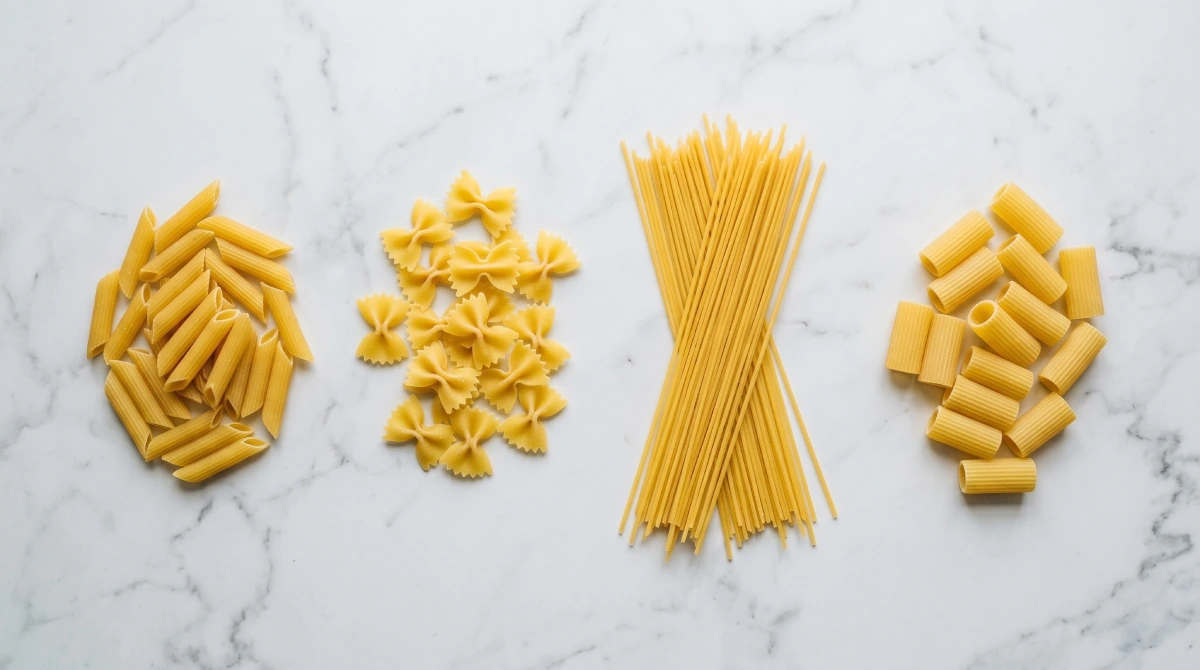
Spaghetti: The most common long pasta. Round, medium thickness. Works with oil-based sauces, simple tomato sauce, and carbonara. The round shape lets sauce coat evenly without pooling.
Linguine: Flatter than spaghetti, slightly wider. Better for seafood sauces because the flat shape holds delicate fish pieces. I often use this recipe for clam sauce or shrimp scampi.
Fettuccine: Wide, flat ribbons. Heavy enough to support cream sauces without disappearing under them. Classic for Alfredo (though real Alfredo is just butter and Parmesan, not cream).
Angel hair (capellini): Very thin, delicate. It cooks in 2–3 minutes. Only works with light sauces—heavy sauce overwhelms it and makes it clump. Good with fresh tomatoes and basil, nothing else.
Short Italian Pasta Recipes Shapes
Penne: Tube-shaped with angled ends. Ridges (rigate) help sauce stick. The hollow center traps chunky sauces. Good for baked pasta, meat sauces, and vegetables. Versatile workhorse.
Rigatoni: Larger tubes than penne, straight-cut ends. Even better for chunky sauces—big enough that meat pieces fit inside tubes. Essential for proper Bolognese.
Fusilli: Spiral/corkscrew shape. Grooves trap creamy or pesto sauces exceptionally well. Also good for pasta salad because dressing clings to spirals.
Farfalle: Bow-tie/butterfly shape. Thicker in the center, thinner on the edges. Creates textural variety in a single bite. Works with cream sauces, light tomato sauces, and pasta salads.
Fresh vs. Dried Italian Pasta Recipes
Fresh pasta (made with eggs and soft wheat flour): Tender, silky, and absorbs sauce quickly. It cooks in 2–4 minutes. Best with butter-based or delicate cream sauces that let pasta texture shine. It is more expensive, has a shorter shelf life, and requires skill to make properly.
Dried pasta (made with hard durum wheat and water): Firmer texture, holds shape better, has a slight chew. Cooks in 8-12 minutes. Stands up to robust tomato sauces, meat sauces, and high heat. Cheaper, lasts forever, and easier for beginners. This is what most Italian home cooks use daily.
Neither is “better”—they’re different tools for different purposes. I use dried pasta 90% of the time because it’s practical and works for most sauces.
Essential Italian Pasta Recipes Ingredients
Italian Pasta Quality Selection
Buy pasta made from 100% durum wheat semolina. The ingredient list should say “durum wheat semolina” or “semola di grano duro.” Nothing else. Cheap pasta lists “wheat flour,” which means soft wheat—it cooks mushy, falls apart, and tastes bland.
Italian brands (Barilla, De Cecco, and Rummo) are reliable. Bronze-cut pasta has a rough texture that holds sauce better than Teflon-cut (smooth). Worth an extra dollar if you care about texture.
Olive Oil for Italian Pasta Recipes
Extra virgin olive oil for finishing pasta (drizzling at the end). Regular olive oil for cooking (heating destroys extra virgin benefits). The fruity, peppery taste of good EVOO is noticeable when used raw. Heating it wastes money.
Store olive oil in a cool, dark place. Light and heat make it go rancid. Tastes bitter and off when rancid—ruins pasta.
Cheese for Italian Pasta Recipes
Parmigiano-Reggiano: Real Parmesan from the Parma region. Aged a minimum of 12 months, with a complex nutty flavor and granular texture. Buy a block and grate it yourself—pre-grated has anti-caking additives that prevent smooth melting.
Pecorino Romano: Sheep’s milk cheese, sharper and saltier than Parmesan. Traditional for carbonara, cacio e pepe, and amatriciana. More assertive flavor.
Don’t use the green can of “Parmesan.” It tastes like salty sawdust and contains cellulose (wood pulp). Spend $8 on a real block of Parmigiano-Reggiano—it lasts weeks and transforms pasta from okay to good.
Tomatoes for Italian Pasta Recipes
San Marzano tomatoes from the Campania region (look for DOP certification) are ideal for sauce. They’re sweeter, less acidic, and have fewer seeds. Regular canned whole tomatoes work fine too—crush by hand for chunky sauce or blend for smooth.
Don’t use tomato sauce from a jar as your base. It’s pre-seasoned with sugar, dried herbs, and mystery ingredients. Start with plain tomatoes, and add your salt, garlic, and basil. You control flavor instead of fixing someone else’s idea of tomato sauce.
How to Cook Italian Pasta Recipes Properly
Water and Salt Ratio for Pasta
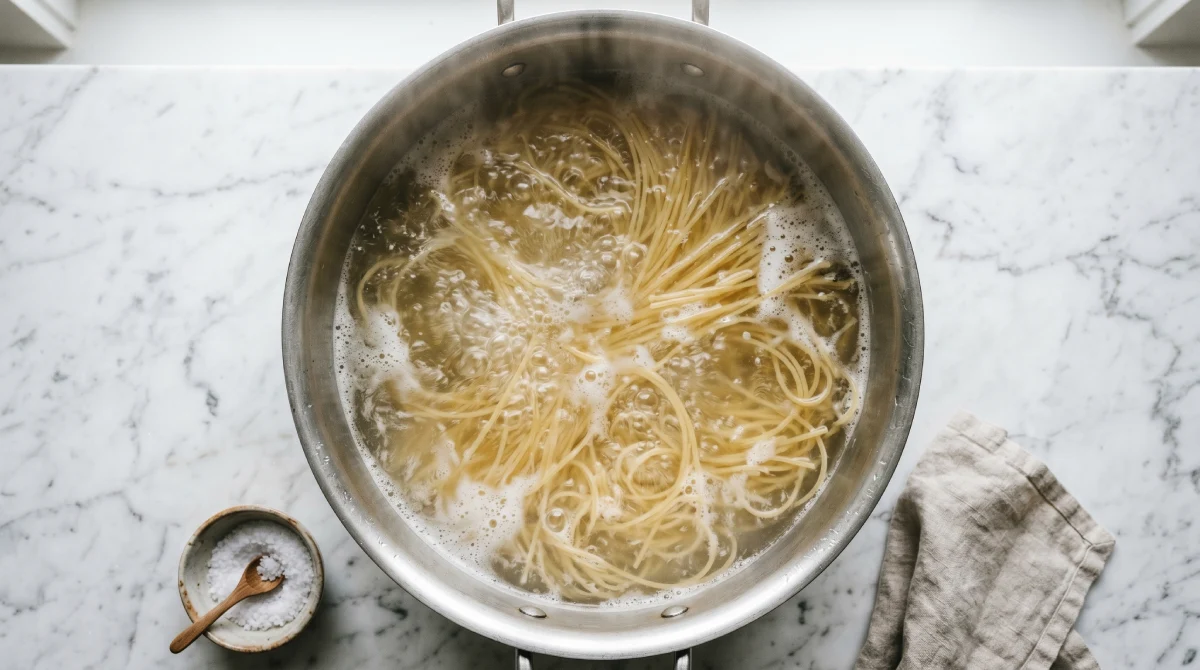
Use 4-6 quarts of water per pound of pasta. Small pot = crowded pasta = sticking and uneven cooking. Water temp drops when you add pasta, so starting with a massive pot of water means it returns to a boil quickly.
Add 1-2 tablespoons of salt to water once boiling. “Salty like the sea” is an actual guideline. Under-salted pasta tastes flat no matter how good your sauce is. Salt penetrates pasta as it cooks—you can’t fix bland pasta by salting sauce.
Don’t add oil to water. It doesn’t prevent sticking (stirring does that). It coats pasta and prevents sauce from adhering. Waste of oil.
Cooking Pasta Al Dente
“Al dente” means “to the tooth”—pasta should have slight resistance when bitten. Not crunchy, not mushy. Firm enough that you feel texture.
Start testing 2 minutes before package time. Bite a piece—if the center has a tiny white dot, cook 1 more minute. If uniformly colored and slightly firm, it’s done. If soft throughout, you overcooked it.
Pasta continues cooking after draining from residual heat. Undercook by 1 minute if tossing with hot sauce on the stove. It’ll finish cooking in sauce and absorb flavors.
Saving Pasta Water for Sauce
Before draining, scoop out 1-2 cups of pasta water. This starchy, salty water is the secret to restaurant-quality pasta at home.
Add splashes of pasta water to sauce when tossing with pasta. The starch helps sauce cling to pasta and creates a silky consistency. It’s a free thickener and flavor enhancer. Never skip this step.
Classic Italian Pasta Recipes
Spaghetti Carbonara Recipe
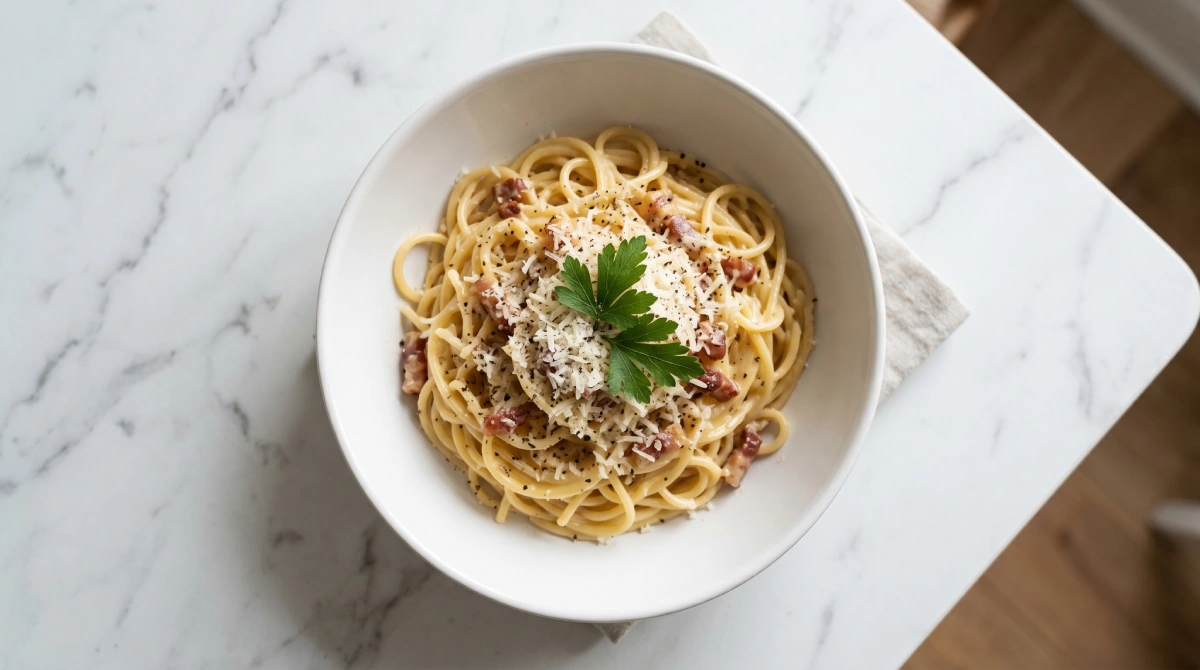
Real carbonara has no cream. It’s eggs, cheese, black pepper, and guanciale (cured pork jowl) or pancetta. The egg-cheese mixture creates a creamy sauce when tossed with hot pasta and pasta water.
Ingredients (serves 4):
- 1 lb spaghetti
- 6 oz guanciale or halal turkey bacon (diced)
- 4 egg yolks + 1 whole egg
- 1 cup grated Pecorino Romano
- Black pepper (lots)
- Salt for pasta water
Method: Cook guanciale in a dry pan until fat renders and meat crisps. Remove from heat. Whisk eggs, cheese, and pepper in a bowl. Cook spaghetti, reserve 2 cups pasta water, and drain. Add hot pasta to the pan with guanciale (off heat). Quickly toss with egg mixture, adding pasta water gradually until creamy. Serve immediately with more cheese and pepper.
Why it fails: Adding eggs to a hot pan scrambles them. Mix everything off heat, using pasta heat and pasta water to gently cook eggs. It takes practice to get the timing right.
Spaghetti Aglio e Olio Recipe
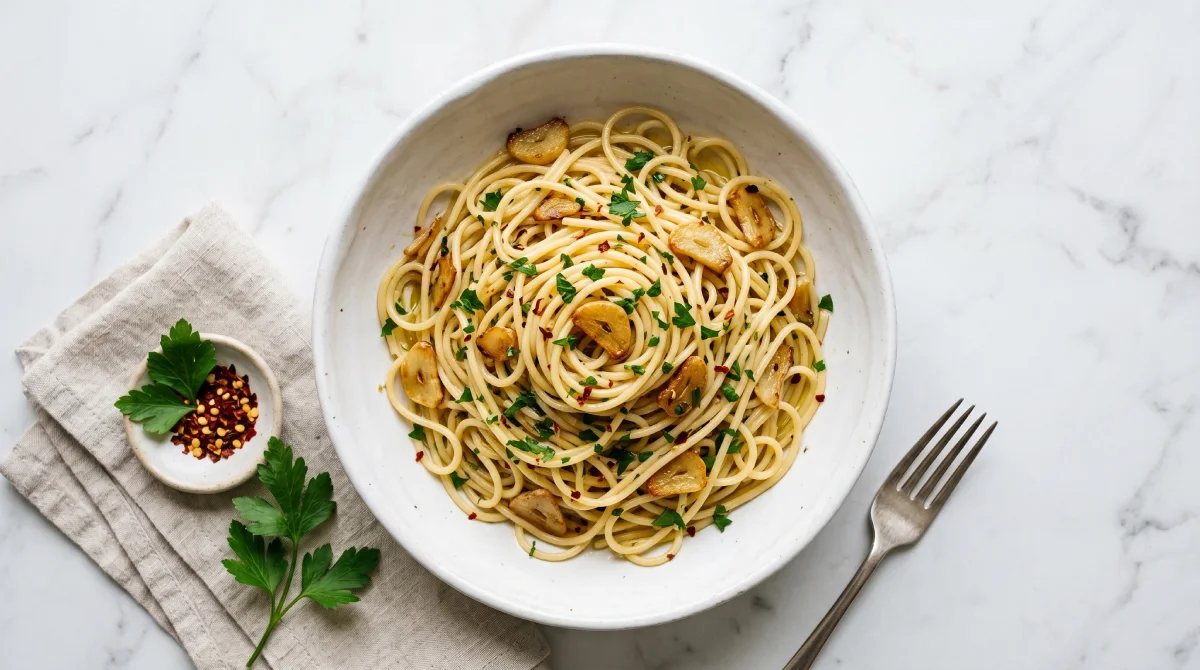
Garlic and oil pasta. Simplest recipe, hardest to execute perfectly because there’s nowhere to hide mistakes.
Ingredients (serves 4):
- 1 lb spaghetti
- 1/2 cup extra virgin olive oil
- 6-8 garlic cloves (thinly sliced)
- 1 tsp red pepper flakes
- Fresh parsley (chopped)
- Salt
Method: Cook spaghetti. Meanwhile, heat olive oil in a large pan over medium-low. Add sliced garlic and cook slowly until golden (not brown—it burns fast and tastes bitter). Add red pepper flakes. Add drained pasta and pasta water to the pan. Toss vigorously to emulsify (oil and water combine into a light sauce). Add parsley and season with salt.
Key technique: Slow-cook garlic to release sweet flavor without burning. Fast, high heat = bitter garlic = ruined dish. For more Italian recipes, see our roasted potatoes guide.
Pasta Pomodoro Recipe
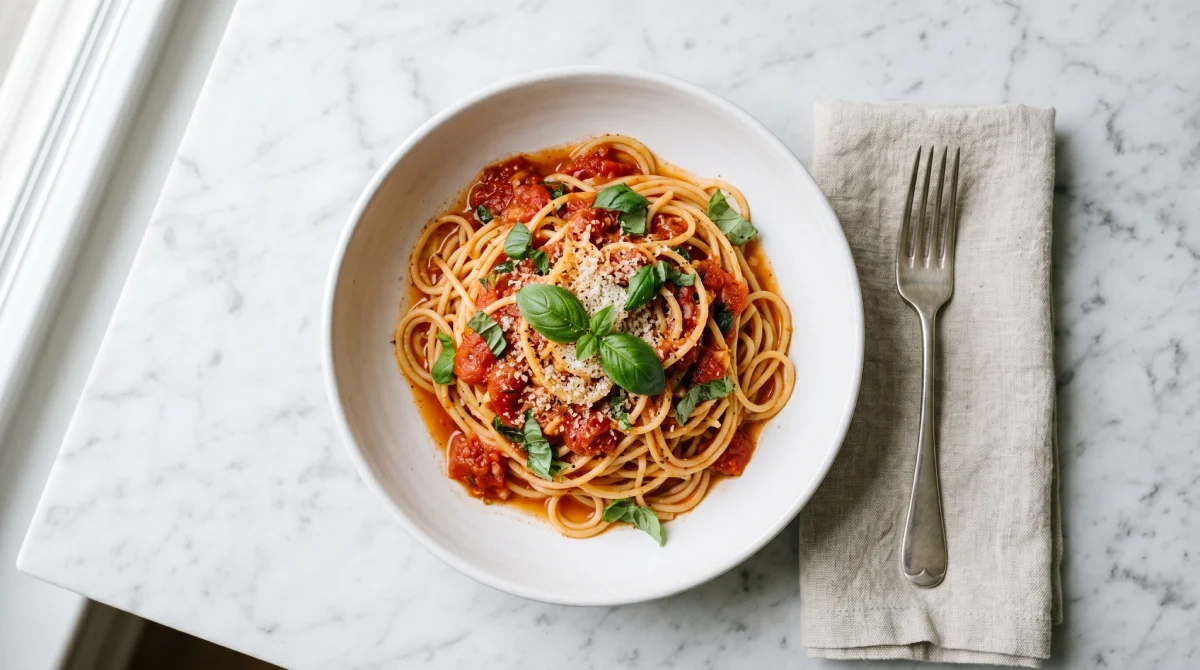
Simple tomato sauce. Different from marinara (which has more ingredients and cooks longer). Pomodoro is quick, fresh, and bright.
Ingredients (serves 4):
- 1 lb spaghetti or penne
- 28 oz can whole San Marzano tomatoes
- 4 garlic cloves (smashed)
- 1/4 cup olive oil
- Fresh basil leaves
- Salt
Method: Heat olive oil, add smashed garlic, and cook 1 minute. Crush tomatoes by hand, and add to pan with juices. Season with salt. Simmer 15-20 minutes, stirring occasionally. Tomatoes break down, and the sauce thickens slightly. Remove garlic cloves. Toss with cooked pasta and torn basil leaves. Finish with a good olive oil drizzle.
Variation: Add red pepper flakes for arrabbiata (angry sauce).
Cacio e Pepe Recipe
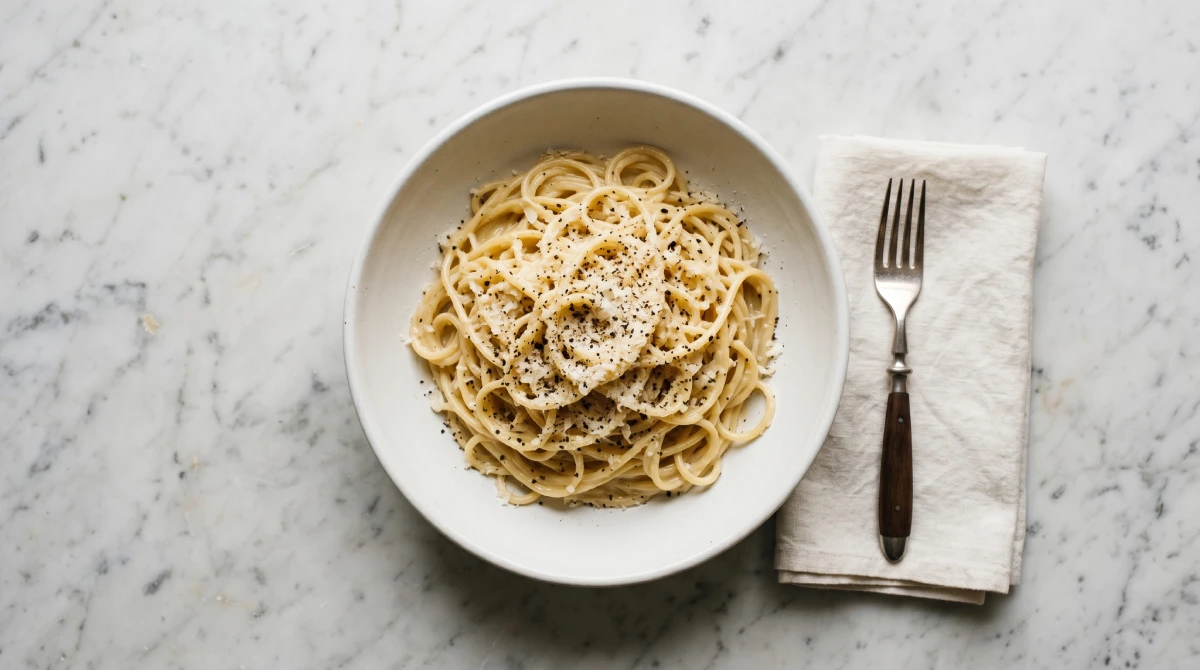
Cheese and pepper pasta. Three ingredients: pasta, Pecorino Romano, and black pepper. Notoriously difficult despite simplicity because technique matters enormously.
Ingredients (serves 2):
- 8 oz spaghetti or tonnarelli
- 2 oz Pecorino Romano (finely grated)
- 2 tsp whole black peppercorns (coarsely ground)
- Salt for pasta water
Method: Toast pepper in dry pan until fragrant. Cook pasta in less water than usual (3 quarts for 8 oz)—makes starchier pasta water. Reserve 2 cups of pasta water before draining. In a large bowl, mix cheese with 1/4 cup warm pasta water until a paste forms. Add hot, drained pasta and toasted pepper, and toss vigorously. Add more pasta water gradually, tossing constantly, until creamy sauce coats pasta. Serve immediately.
Why it fails: Cheese clumps if too hot or too cold. Needs precise temperature—warm enough to melt, cool enough not to seize. Starchy pasta water and constant motion create emulsion.
Common Italian Pasta Recipes Problems
Sticky Clumped Pasta
Causes: Not enough water, didn’t stir after adding pasta, let it sit after draining.
Fixes: Use a big pot with lots of water. Stir pasta immediately when adding to pot and occasionally during cooking. Toss with sauce immediately after draining—don’t let it sit. If serving later, a very light coating of olive oil prevents sticking (but limits sauce adhesion).
Bland Flavorless Pasta
Causes: Under-salted pasta water, bland sauce, wrong cheese.
Fixes: Salt pasta water generously—taste it; it should be noticeably salty. Use quality ingredients in the sauce. Grate real Parmesan, not the green can. Finish with a good olive oil drizzle. Add fresh herbs at the end. Don’t rely on sauce alone to provide all flavor.
Mushy Overcooked Pasta
Causes: Cooked too long, wrong pasta shape for sauce.
Prevention: Set a timer for 2 minutes before package time, and start testing. Drain immediately when al dente. Remember, it continues cooking in hot sauce. Can’t fix overcooked pasta—start over. This is why timing matters.
Sauce Doesn’t Stick to Pasta
Causes: Pasta too dry, wrong pasta shape for sauce type, didn’t use pasta water.
Fixes: Always toss pasta with sauce on the stove, not just pour sauce on plated pasta. Add pasta water to thin sauce and create a glossy coating. Match pasta shape to sauce (smooth sauces for long pasta, chunky for short). Finish with olive oil or butter—fat helps sauce cling.
Italian Pasta Recipes Questions Answered
How much salt for pasta water?
1-2 tablespoons per 4-6 quarts of water. Taste it—it should be clearly salty, like seawater. This isn’t excessive. Most salt stays in cooking water and doesn’t absorb into pasta. Under-salting is the most common pasta mistake.
Should you rinse pasta after cooking?
No, unless making pasta salad. The starch coating helps sauce stick. Rinsing removes this and cools pasta down. For hot pasta dishes, drain and immediately toss with sauce. For pasta salad, rinse with cold water to stop cooking and remove excess starch that makes the salad gummy.
Does adding oil to pasta water help?
No. It floats on the water surface and doesn’t prevent sticking. It coats drained pasta and prevents sauce from adhering. Waste of oil. Just stir pasta occasionally during cooking—that prevents sticking.
Do pasta shapes actually matter?
Yes. Long smooth pasta for oil-based and smooth sauces. Short ridged pasta for chunky or creamy sauces that need to cling. Tiny pasta for soups. Large flat pasta for baked dishes. Shape affects how sauce distributes and how pasta feels in your mouth. Using the wrong shape doesn’t ruin the dish but makes it less enjoyable.
Is fresh pasta better than dried?
Different, not better. Fresh pasta has a delicate texture and is good with butter or light cream sauces. Dried pasta has a firmer texture, stands up to robust sauces, is easier to store, and is more versatile. Most Italian home cooks use dried pasta daily. Fresh pasta is for special occasions or specific dishes. Both have appropriate uses.
Final Reality on Italian Pasta Recipes
Italian pasta stopped being a disappointment for me when I learned actual techniques instead of assuming “boil pasta, add sauce” was cooking. Water amount matters. Salt amount matters. Cooking time matters. Pasta water matters. Matching shapes to sauces matters. These aren’t fussy Italian rules—they’re functional requirements that determine results.
My six months of terrible pasta happened because I ignored these basics. Once I used enough water, salted it properly, cooked it to actual al dente (not package time), saved pasta water, and matched shapes to sauces, pasta became a reliable good meal instead of disappointing carbs.
Start with simple recipes—aglio e olio, pomodoro, and carbonara. Master the techniques: proper water ratio, adequate salt, correct timing, and pasta water usage. Then experiment with different shapes and sauces. The fundamentals stay the same regardless of recipe complexity. Get those right, and Italian pasta becomes actually good instead of theoretically good.