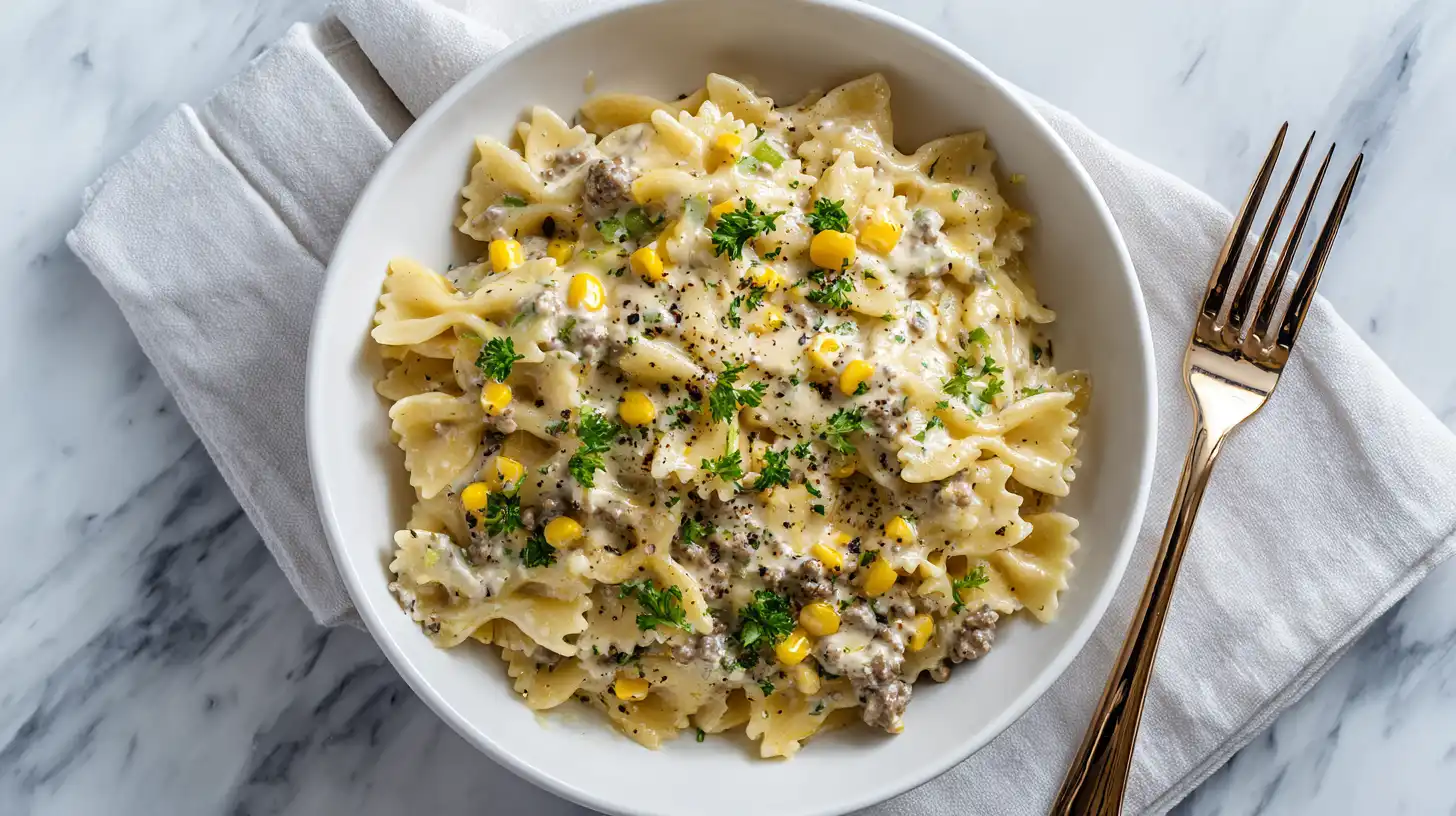
Creamy Ranch Beef Bowtie Skillet with Sweet Corn Magic: A One-Pan Family Favorite
I made this skillet for a potluck once and forgot the ranch seasoning packet. Just browned beef, added cream, tossed pasta—completely bland. Everyone ate around it politely while demolishing the other dishes. That failure taught me ranch seasoning isn’t an optional garnish; it’s a structural flavor foundation. Without it, you have beige beef pasta swimming in plain cream. With it, you have an actually seasoned dish people want seconds of.
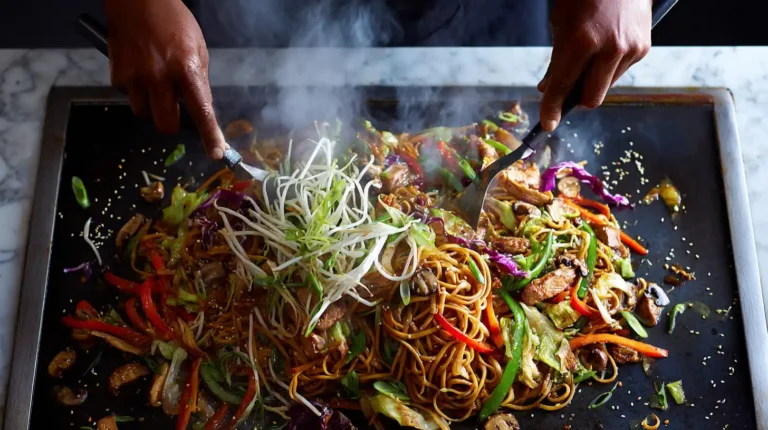
This creamy ranch beef bowtie skillet works when you layer flavors properly instead of dumping everything together hoping it tastes delicious. The ranch seasoning provides an herb-garlic base, beef adds savory richness, cream makes it indulgent, and corn cuts through heaviness with sweetness. Each component serves a purpose. Skip one, and the whole thing falls flat. For more one-pan meals, refer to our griddle lo mein recipe.
Why This Creamy Ranch Beef Skillet Works
Ranch Seasoning in Creamy Beef Skillet
Ranch seasoning mix contains dried buttermilk, garlic powder, onion powder, dill, parsley, and sometimes chives. These herbs and aromatics create a savory-tangy base that plain salt and pepper can’t replicate. Using an actual packet versus trying to recreate it from scratch saves time and guarantees consistent flavor.
Brand matters slightly—Hidden Valley is standard, but store brands work fine. Avoid “ranch dip mix,” which has different ratios designed for cold dips, not hot cooking.
Sweet Corn in Ranch Beef Skillet
Corn isn’t decoration. It provides textural contrast (slight crunch against soft pasta and ground beef) and natural sweetness that balances cream richness and ranch tanginess. Without corn, the dish feels monotonously heavy. Corn kernels create pockets of brightness that make you want another bite instead of feeling overwhelmed.
Frozen corn works better than canned—no metallic taste, better texture, and doesn’t add excess liquid that thins sauce.
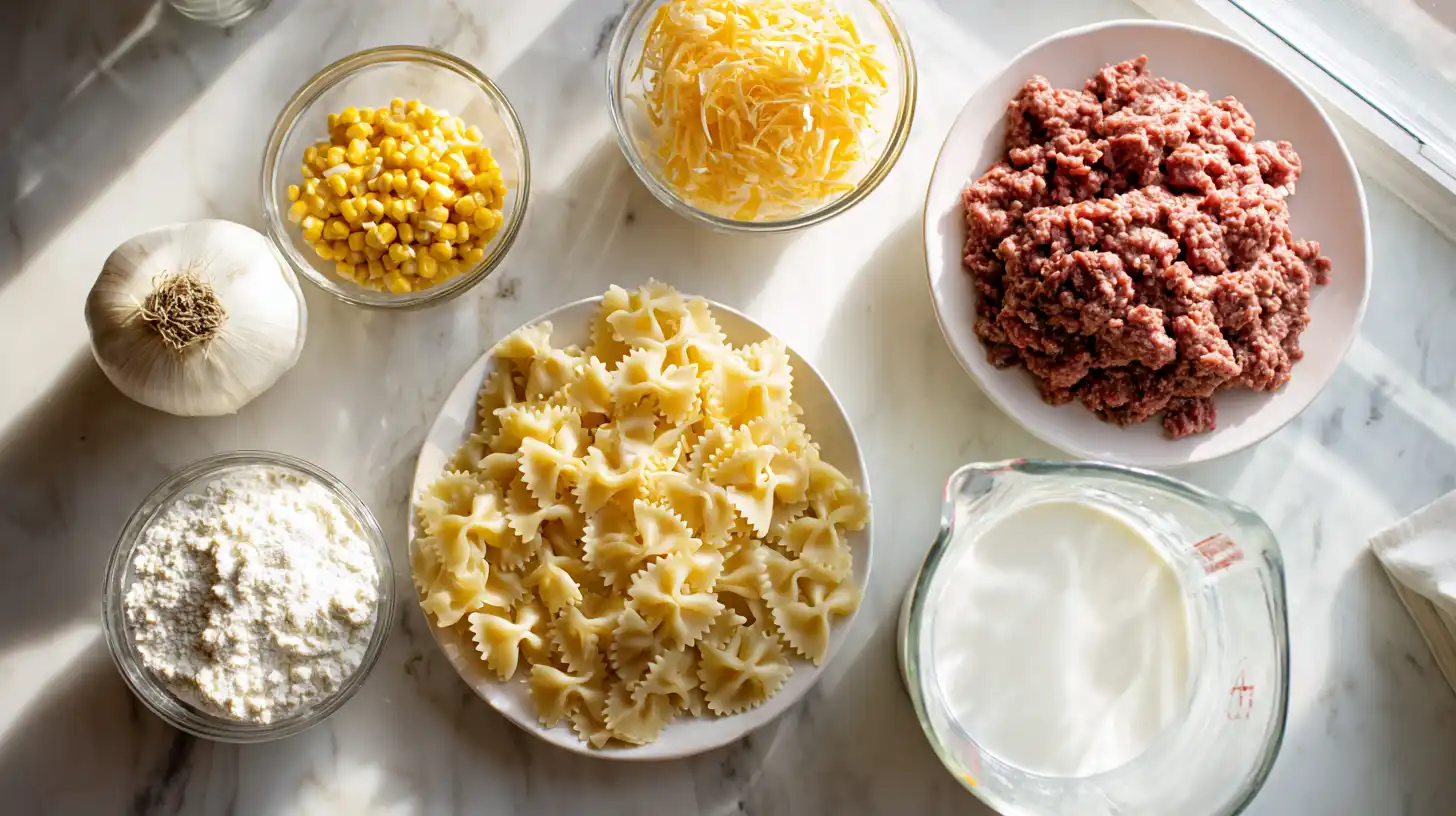
Creamy Ranch Beef Skillet Ingredients
What you need:
- 1 lb ground beef (80/20 lean-to-fat ratio—90/10 too dry, 73/27 too greasy)
- 12 oz bowtie pasta (farfalle—the wings catch sauce)
- 1 cup frozen sweet corn (don’t thaw first)
- 1 small onion, diced
- 2 garlic cloves, minced
- 1 packet (1 oz) ranch seasoning mix (not ranch dip mix)
- 1½ cups heavy cream (not half-and-half—too thin)
- 1 cup beef broth (adds depth cream alone lacks)
- 1 cup shredded cheddar (sharp cheddar better than mild)
- ½ tsp smoked paprika (regular paprika is pointless—no flavor)
- ½ tsp black pepper
- 1 tbsp butter or olive oil
- Salt for pasta water
Time reality: 30 minutes total if organized. 45 minutes if you’re scrambling. Prep everything before starting—mise en place prevents burning garlic while you’re still dicing onions.
How to Make Ranch Beef Skillet
Cook Pasta Correctly
Boil 4-6 quarts of salted water (1 tablespoon of salt minimum). Cook bowtie pasta 1-2 minutes LESS than the package says for al dente. It finishes cooking in sauce later. Overcooked pasta turns mushy when mixed with hot cream sauce.
Drain pasta; don’t rinse. The starch coating helps sauce cling. Set aside.
Brown Beef Properly
Heat a large skillet (12-inch minimum—a crowded pan steams meat instead of browning) over medium-high. Add butter or oil. Add ground beef and diced onion. Break beef into chunks with a wooden spoon, but don’t constantly stir—let it sit 2-3 minutes to develop a brown crust. Then break up and stir.
Cook until no pink remains, about 7–8 minutes. Add minced garlic, smoked paprika, and black pepper. Cook 1 minute until fragrant. Garlic burns fast, so add it late.
Drain excess fat if necessary. 80/20 beef renders about 2-3 tablespoons of fat. Leave 1 tablespoon for flavor; drain the rest. Too much fat makes sauce greasy.
Build Cream Sauce
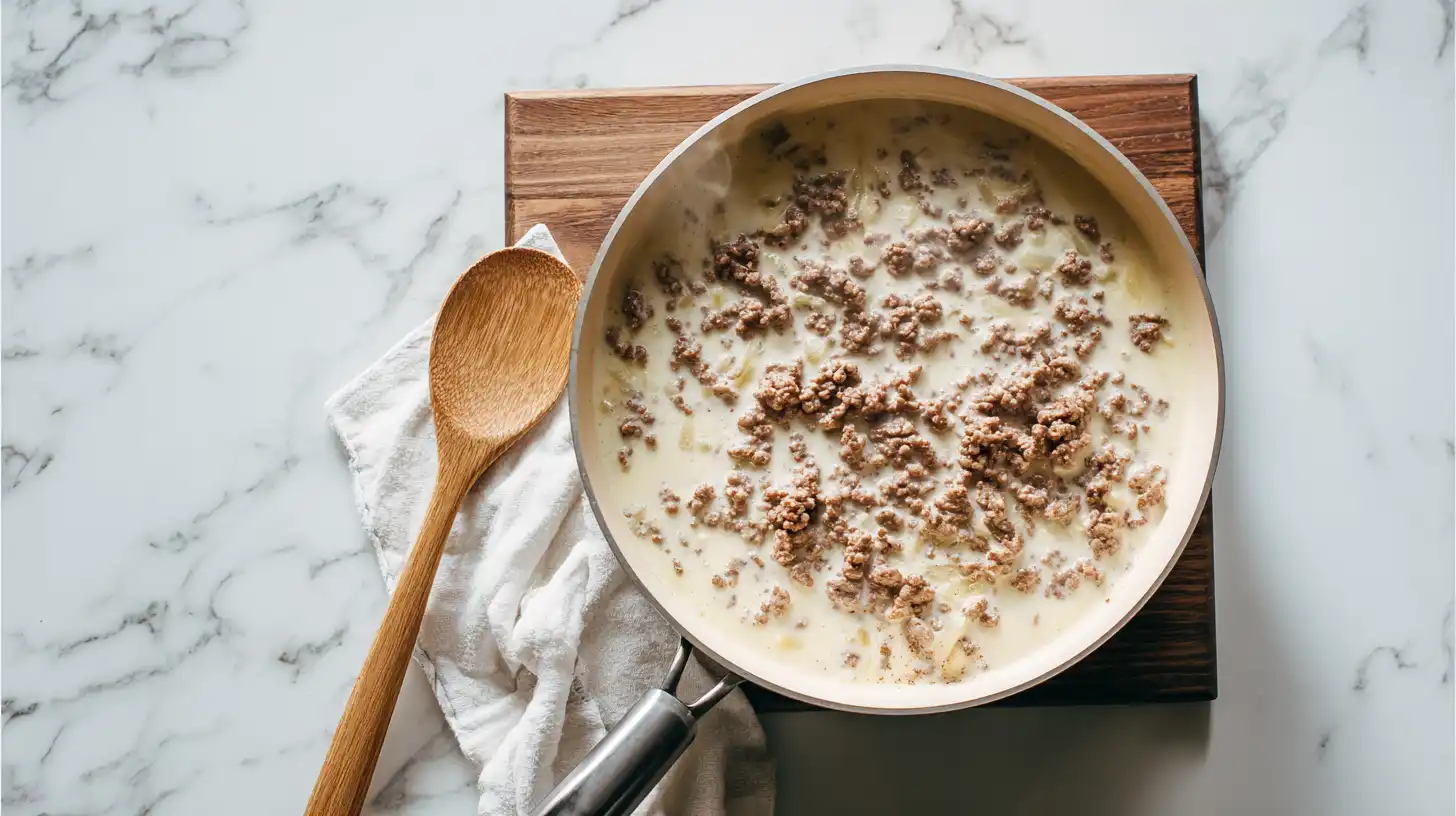
Reduce heat to medium-low. Pour in beef broth first (deglazes pan, picks up browned bits stuck to bottom—flavor you don’t want to waste). Scrape the bottom with a wooden spoon. Let simmer for 2 minutes.
Add heavy cream. Stir well. Sprinkle ranch seasoning mix evenly over surface. Whisk to combine—don’t dump it all in one spot or it will clump. Let the mixture simmer gently 3-4 minutes to thicken slightly.
Don’t boil cream sauce. High heat can cause it to separate or curdle. Gentle simmer only.
Combine Everything
Add cooked pasta to the skillet. Fold gently to coat with sauce. Add frozen corn directly from the freezer. Stir to distribute. Let everything simmer together for 3–5 minutes. Pasta absorbs some sauce, and corn heats through and releases a slight sweetness into the sauce.
Add shredded cheddar cheese. Stir until melted and incorporated. Sauce should be thick enough to coat pasta but not gloppy. If too thick, add a splash of milk or broth. If too thin, simmer uncovered for 2 more minutes.
Taste and adjust salt if needed (ranch seasoning is salty, so you probably won’t need much).
Common Ranch Beef Skillet Problems
Bland Flavorless Skillet
Causes: Forgot ranch seasoning (like I did), under-salted pasta water, didn’t brown beef properly, skipped smoked paprika.
Fixes: Ranch seasoning is non-negotiable. Salt pasta water generously. Let beef actually brown instead of just turning gray. Smoked paprika adds depth that regular paprika doesn’t—use it.
Greasy Sauce
Causes: Didn’t drain beef fat, used too-fatty beef (73/27), added cheese before sauce stabilized.
Fixes: Drain excess fat after browning beef. Use 80/20 or 85/15 ground beef. Let the cream sauce simmer and thicken before adding cheese. Fat from cheese integrates better into stable sauce.
Watery Thin Sauce
Causes: Used half-and-half instead of heavy cream, added too much broth, didn’t simmer long enough, used canned corn (releases liquid).
Fixes: Heavy cream has higher fat content that thickens better. Measure broth accurately—1 cup maximum. Let sauce simmer to reduce. Use frozen corn, not canned.
Mushy Pasta
Causes: Overcooked pasta initially, simmered too long in sauce.
Prevention: Undercook pasta by 1-2 minutes. It continues cooking in hot sauce. Only simmer together 3-5 minutes maximum.
Ranch Beef Skillet Variations
Lighter Version
Use ground turkey instead of beef (add extra butter—turkey is lean and dry). Use half heavy cream, half whole milk. Reduce cheese to ½ cup. Add extra vegetables (bell peppers, peas, broccoli) for bulk without calories.
Spicy Ranch Beef Skillet
Add ½ teaspoon cayenne pepper with the smoked paprika. Use pepper jack cheese instead of cheddar. Top with sliced jalapeños. Spicy ranch works because the ranch’s cooling herbs balance heat.
More Vegetables
Add diced bell peppers with onions. Stir in frozen peas and corn. Mix in fresh spinach at the end, as it wilts in the residual heat. Mushrooms work if you like them—slice thin and sauté with beef.
What to Serve with Ranch Beef Skillet
This skillet is a complete meal (protein, carbs, and vegetables in one dish), but sides help balance richness:
- Southern Cornbread—soaks up cream sauce, slight sweetness complements corn
- Quinoa Salad—Fresh, light contrast to rich skillet
- Simple green salad—crisp lettuce, vinegar dressing, and cut cream
- Garlic bread—a classic pairing, good for sauce mopping
Don’t serve with other heavy/creamy dishes. One rich element per meal.
Storage and Reheating
Refrigerate: Store in an airtight container for up to 3 days. Cream sauces separate slightly when cold—normal.
Reheat: Stovetop is best—add a splash of milk or broth, heat gently over medium-low, and stir frequently. The microwave works, but cream can separate. Heat in 1-minute intervals, stirring between.
Freeze: Technically possible, but cream sauces don’t freeze well—texture becomes grainy when thawed. If you must freeze it, undercook the pasta significantly and add less cream initially. Add extra cream when reheating.
Ranch Beef Skillet Questions
Can I use fresh corn instead of frozen?
Yes. Cut kernels off 2 ears of corn. Add the frozen corn at the same time. Fresh corn is slightly sweeter and crunchier—good but not necessary. Frozen is more convenient and works year-round.
What replaces heavy cream?
Half-and-half makes thinner sauce (works if you prefer lighter). Full-fat coconut milk for dairy-free (adds slight coconut flavor—not authentic but edible). Greek yogurt added at the very end off heat (careful—yogurt curdles if boiled). Can’t use regular milk—too thin, won’t create proper sauce.
Do I have to use bowtie pasta?
No. Penne, rotini, shells, and rigatoni all work. Short pasta shapes with curves or ridges catch cream sauce better than long pasta. Avoid angel hair or spaghetti—too delicate for heavy sauce.
Can I make this meal ahead?
Sort of. Cook beef and sauce ahead, and store separately from pasta. Cook pasta fresh when serving. Combine and heat together. Sharp cheddar has the most flavor. Keep components separate for better results.
What cheese works best?
Sharp cheddar has the most flavor. Medium cheddar works but is milder. Monterey Jack melts smoothly but has less flavor. Pepper jack for a spicy version. Mix cheddar and Parmesan (½ cup each) for depth. Don’t use pre-shredded if possible—anti-caking agents prevent smooth melting. Block cheese you grate yourself melts better.
Does this work with ground turkey?
Yes, but turkey is leaner and drier than beef. Add an extra tablespoon of butter when browning. Season more aggressively—turkey has less inherent flavor than beef. Otherwise, the same process.
Final Reality on Ranch Beef Skillet
This creamy ranch beef skillet stopped being disappointing when I learned ranch seasoning is mandatory, not optional, and when I understood each component serves a specific purpose. Corn provides sweetness and texture contrast. Beef broth adds depth that cream alone lacks. Proper browning creates a flavor foundation. Correct pasta cooking prevents mushiness.
My potluck failure happened because I treated it like a dump-and-stir recipe instead of understanding why each step matters. Once I followed proper technique—brown beef well, drain fat, layer flavors correctly, time pasta right—it became a reliable weeknight dinner instead of bland pasta swimming in plain cream.
This is genuinely a quick meal when organized (30 minutes realistic) and uses one pan, which matters on busy nights. The ranch seasoning does heavy lifting, so you don’t need complicated spice blends. Ground beef is cheap and freezable. It’s practical comfort food that actually works when made correctly. For more quick dinners, see our stir-fry collection.