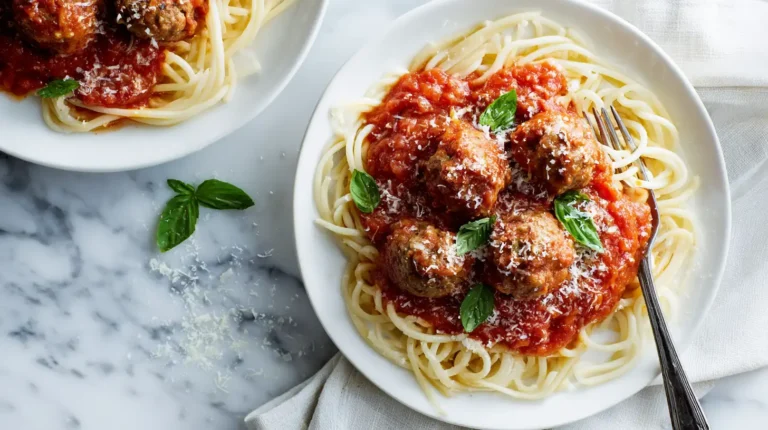
Spaghetti Pie Recipe
I attempted spaghetti pie for a potluck after seeing it praised as “impossible to mess up.” I combined cooked spaghetti with eggs, pressed it into a pan, added sauce and cheese, and then baked it. The result looked perfect—golden top, held its shape when sliced. Then people actually ate it. Multiple guests politely mentioned it tasted “interesting,” which is potluck code for “what did you do to this pasta?” The problem was I used unsalted pasta water and no seasoning anywhere. Despite the beautiful presentation, the pasta lacked any flavor. Just bland baked spaghetti held together with eggs.
Spaghetti pie works when you season properly at every step instead of assuming cheese and sauce provide all the flavor. The egg-bound pasta crust needs salt and Parmesan. The ricotta layer needs herbs and garlic. The sauce needs proper seasoning. Each component must taste delicious individually because baking doesn’t magically add flavor—it just heats and melds what’s already there. For more Italian-inspired dishes, refer to our Italian pasta collection.
What Is Spaghetti Pie
Spaghetti Pie Concept
Spaghetti pie is a baked pasta dish where cooked spaghetti mixed with eggs forms a “crust” in a pie pan, which is then layered with a ricotta cheese mixture and marinara sauce, topped with mozzarella, and baked until set. Similar to lasagna but uses long pasta instead of flat noodles, and egg binding creates a sliceable structure.
Originated as a way to use leftover spaghetti—Italian-American home cooks transformed next-day pasta into a new dish instead of reheating plain leftovers. Now made intentionally as a comfort food casserole.
Why Spaghetti Pie Popular
Appeals because it looks impressive (slices like actual pie, stays together on plate) but uses basic ingredients most people have. Kids like it because pasta held in a neat slice feels less intimidating than loose spaghetti. Adults like it because it’s make-ahead friendly and feeds a crowd efficiently.
Also practical—uses one baking dish instead of multiple pots and pans. Easier cleanup than traditional baked pasta dishes.
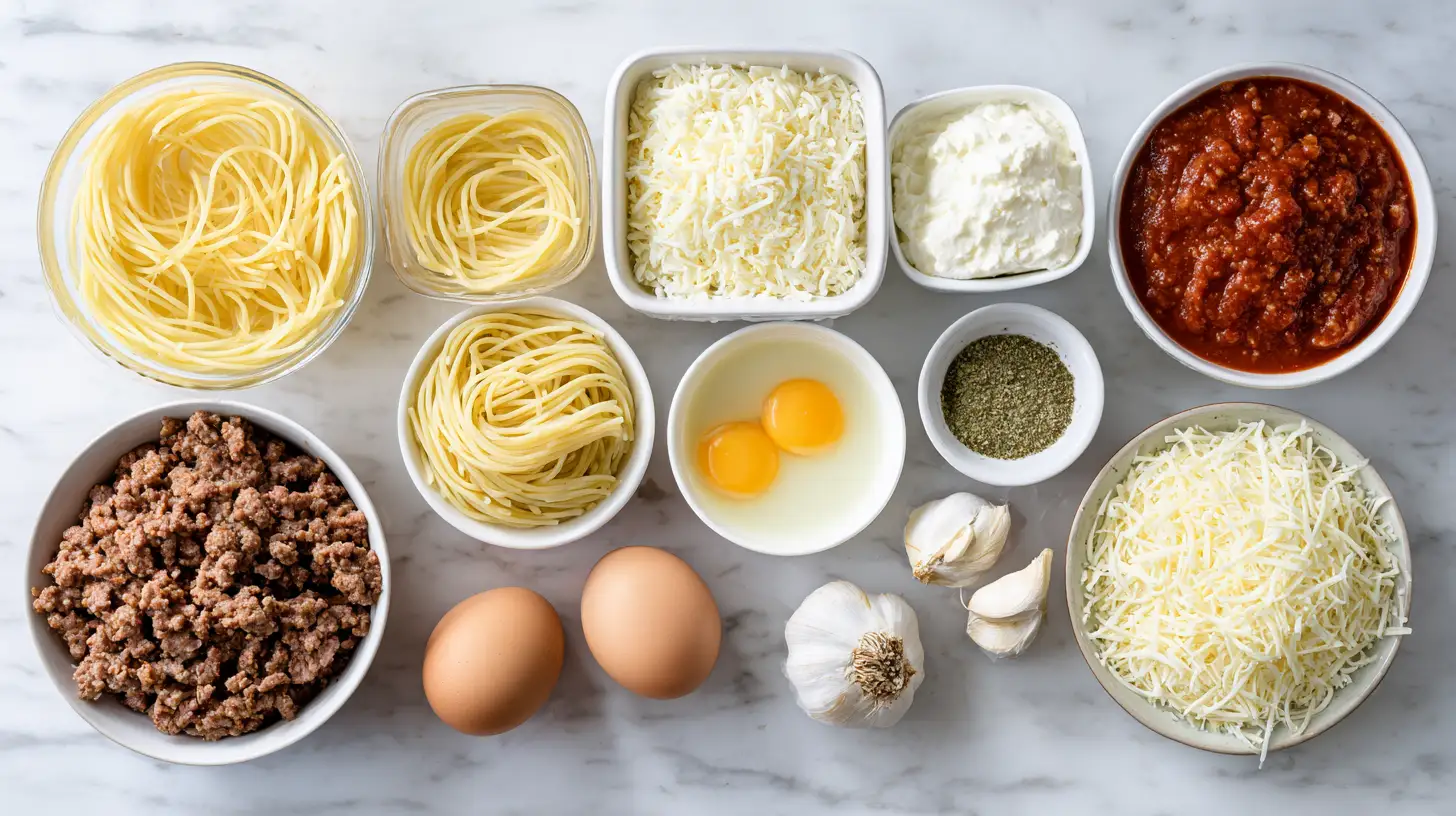
Spaghetti Pie Ingredients
What you need:
- 12 oz spaghetti (regular or whole wheat)
- 3 large eggs
- ½ cup grated Parmesan cheese
- 2 cups ricotta cheese
- 1 cup shredded mozzarella (plus 1 cup for topping)
- 2 cups marinara sauce (homemade or jarred)
- 1 lb ground beef or Italian sausage (optional)
- 3 garlic cloves, minced
- 1 tsp Italian seasoning
- ½ tsp salt
- ½ tsp black pepper
- 2 tbsp butter for greasing pan
- Fresh basil or parsley for garnish (optional)
Optional additions:
- Sautéed mushrooms, bell peppers, or spinach for a vegetarian version.
- Red pepper flakes for heat
- Fresh herbs (basil, oregano) in a ricotta mixture
How to Make Spaghetti Pie Correctly
Prep Work
Preheat oven to 350°F (175°C). Generously butter a 9-inch deep-dish pie pan or springform pan. Springform makes removing slices easier, but a regular pie pan works.
Time reality: 20 minutes prep, 30 minutes baking, 10 minutes cooling. Total 60 minutes. Not a quick weeknight meal unless prepped ahead.
Make Pasta Base
Cook spaghetti in heavily salted water until al dente (1-2 minutes LESS than the package says—it bakes more). Drain and let cool for 5 minutes.
In a large bowl, whisk 3 eggs with ½ cup Parmesan, ½ teaspoon salt, and ¼ teaspoon black pepper. Add drained spaghetti, and toss thoroughly until every strand is coated. This egg mixture is what holds the pie together—don’t skip the salt here, or the crust will taste like cardboard.
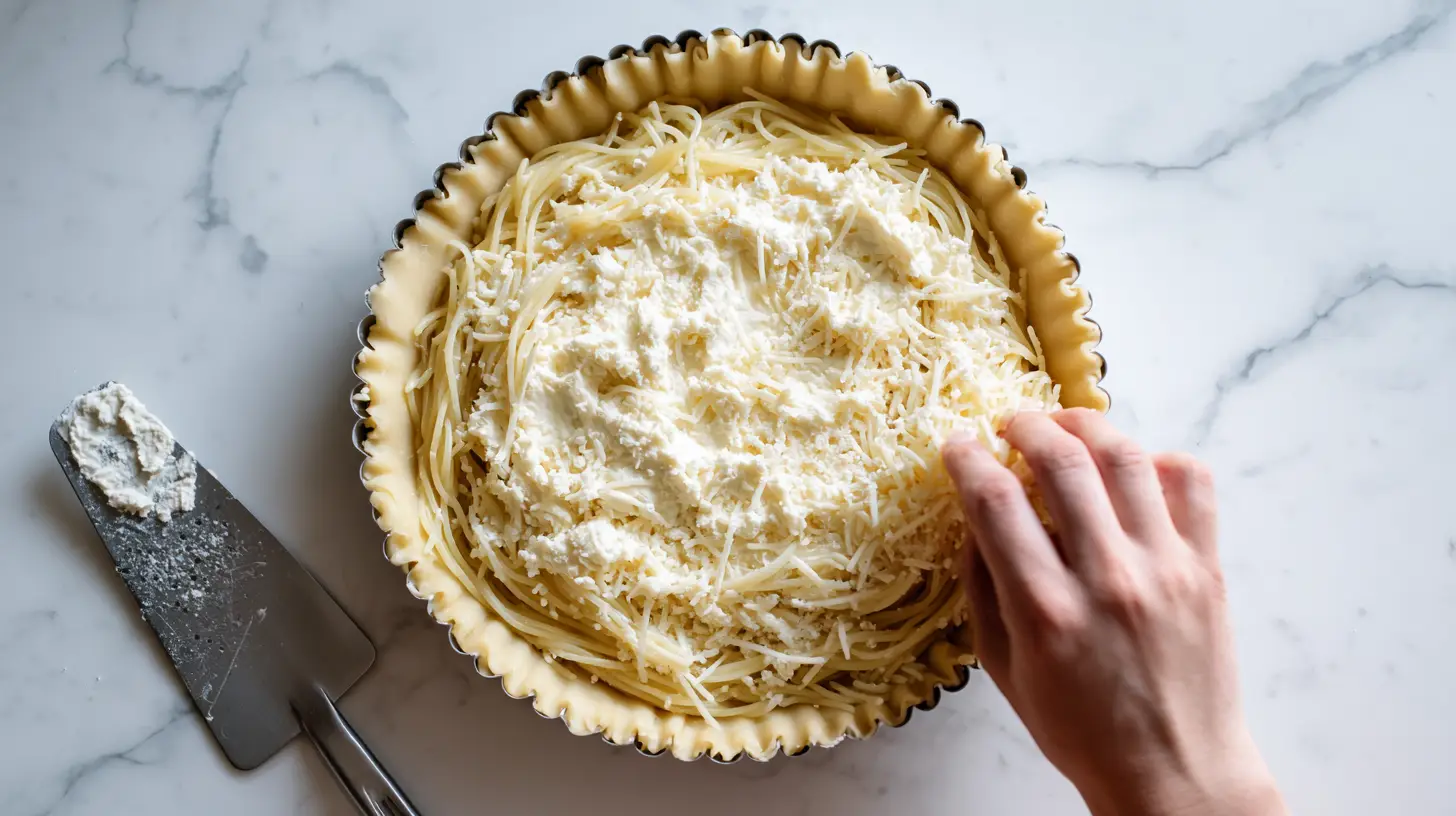
Press spaghetti mixture into buttered pan, creating crust on bottom and up sides. Use the back of a spoon to pack it firmly—loose packing means the pie falls apart when sliced.
Build Filling Layers
If using meat: Brown 1 lb of ground beef or sausage in a skillet with minced garlic. Drain fat. Mix with 2 cups marinara sauce. Season with Italian seasoning, salt, and pepper. Taste it—the sauce should be well-seasoned because baking doesn’t add flavor.
Ricotta mixture: Combine 2 cups ricotta, 1 cup mozzarella, the remaining minced garlic, 1 teaspoon Italian seasoning, ¼ teaspoon salt, and ¼ teaspoon pepper. Mix thoroughly. Taste this dish too—it should be pleasantly seasoned, not bland.
Layer assembly:
- Spread half the ricotta mixture over spaghetti crust
- Add half the meat sauce (or plain marinara if vegetarian)
- Add the remaining ricotta mixture.
- Top with the remaining sauce.
- Sprinkle 1 cup mozzarella evenly over top
- Add final sprinkle of Parmesan
Bake Properly
Cover the pan loosely with foil (don’t let the foil touch the cheese, or it will stick). Bake 20 minutes covered.
Remove foil and bake for an additional 10-15 minutes until cheese is golden and bubbly and edges are slightly pulling from pan sides.
Critical step: Let cool 10 minutes minimum before slicing. Hot pie falls apart. Cooling lets eggs set fully, and cheese firms up slightly, making clean slices possible. I know waiting is hard but it matters.
Common Spaghetti Pie Problems
Pie Falls Apart When Slicing
Causes: Didn’t cool long enough, not enough eggs in pasta base, pasta crust too loose, cut with a dull knife that pulled instead of sliced.
Fixes: Cool for a minimum of 10 minutes, up to 20 for the cleanest slices. Use 3 eggs for 12 oz of pasta—less won’t bind properly. Pack pasta crust firmly. Use a sharp knife and wipe between cuts.
Bland Flavorless Pie
Cause: My exact mistake was that I didn’t season the components individually.
Fix: Salt pasta water heavily. Season the egg mixture for the crust. Season the ricotta mixture. Season meat sauce. Taste everything before assembling. Each layer should taste delicious alone. Baking melds flavors but doesn’t create them.
Soggy Watery Pie
Causes: Too much sauce, didn’t drain pasta well, didn’t cool before slicing (liquid hasn’t set).
Fixes: Use 2 cups of sauce maximum for a standard 9-inch pan. Drain pasta thoroughly; shake excess water out. If sauce seems thin, simmer it to reduce before using. Let the pie cool fully—the liquid firms up as it cools.
Dry Pie
Causes: Overbaked, not enough sauce, used low-moisture ricotta.
Fixes: Don’t exceed 35 minutes total baking. Use 2 full cups of sauce. Regular ricotta (not part-skim) has more moisture and fat—it works better. Can drizzle olive oil over top before baking.
Spaghetti Pie Variations
Vegetarian Spaghetti Pie
Skip meat. Sauté 2 cups mushrooms, 1 diced bell pepper, and 2 cups spinach in olive oil with garlic until the vegetables release moisture and the liquid evaporates. Season well. Mix with marinara sauce. Use the same layering method. Vegetables add bulk that meat usually provides.
Meat-Lovers Spaghetti Pie
Combine ground beef and Italian sausage (half and half). Or add cooked crumbled bacon to meat sauce. This combination adds more protein and enhances the flavor. Drain fat well, or the pie becomes greasy.
Lighter Version
Use whole wheat pasta, part-skim ricotta and mozzarella, and turkey sausage instead of beef. Add extra vegetables. Won’t taste identical but reduces calories significantly. For more healthy options, see our gluten-free lunch ideas.
Serving Spaghetti Pie
Spaghetti pie is a complete meal, but sides help:
- Simple green salad—romaine, vinaigrette cuts richness
- Garlic bread—a classic pairing, good for sauce
- Roasted vegetables—broccoli, green beans, asparagus
- Fresh tomato salad—if you didn’t use tomatoes in pie
Slice with a sharp knife, and use a pie server or wide spatula to lift slices. The first slice is always the messiest—accept this. Subsequent slices are cleaner.
Storage and Reheating
Refrigerate: Cover tightly with foil or plastic wrap. Keeps 3-4 days. Texture is best within 2 days.
Reheat: The oven is best—place the slice in a baking dish, cover with foil, and heat at 350°F for 15-20 minutes until warmed through. The microwave works (2-3 minutes) but makes the crust slightly rubbery.
Freeze: Freeze the whole pie or individual slices wrapped tightly in plastic wrap then foil. Keeps for 2 months. Thaw overnight in the fridge, and reheat as above. Add 5–10 minutes to the heating time if it is still cold.
Make ahead: Assemble completely, cover, and refrigerate up to 24 hours before baking. Bake straight from fridge, add 5-10 minutes to cooking time. Good for entertaining.
Spaghetti Pie Questions
Can I make this gluten-free?
Yes. Use gluten-free spaghetti. Everything else is naturally gluten-free. Gluten-free pasta is slightly more delicate, so handle gently when mixing with eggs. May need an extra egg to bind properly.
Can I use a different pasta shape?
Technically yes, but spaghetti works best. Long strands weave together, creating a stable crust. Short pasta (penne, rigatoni) doesn’t bind as well—the pie is more likely to fall apart. Angel hair is too delicate. Linguine or fettuccine works if that’s what you have.
Can I substitute cottage cheese for ricotta?
Yes, but the texture is slightly different. Cottage cheese has more liquid—drain excess before using. Blend smooth if you don’t like curds. The flavor is similar enough that most people won’t notice.
What if I don’t have eggs?
Eggs are essential for binding pasta crust. Without them, pie won’t hold together. Can try 3 tablespoons of ground flaxseed mixed with 9 tablespoons of water (let sit 5 minutes) as an egg substitute. Works, but the texture is slightly different.
Can I double the recipe?
Yes. Use a 9×13 inch baking dish instead of a pie pan. Everything stays in the same proportions, but bake for 40-45 minutes total. Makes a rectangular “pie” you cut into squares instead of wedges. Feeds 10-12 people.
Final Reality on Spaghetti Pie
Spaghetti pie stopped being a bland disaster when I learned seasoning matters at every stage, not just in the final sauce. My potluck failure happened because I assumed eggs + pasta + cheese + sauce automatically equals flavor. It doesn’t. Each component needs proper salt and seasoning because baking doesn’t create taste—it just heats and melds what’s already there.
The egg-bound crust, ricotta layers, and meat sauce must each taste delicious individually. Then baking combines them into a cohesive dish where flavors complement each other. But start with bland components, and you end up with a bland pie no matter how perfect it looks.
This is a practical make-ahead dish when done correctly—it assembles in advance, slices neatly, travels well, and feeds a crowd efficiently. Good for potlucks (redemption after my first attempt), family dinners, and meal prep. Just don’t skip seasoning steps. Taste everything before layering. Your guests will actually mean it when they say it’s delicious. For more crowd-friendly dishes, check out our roasted potatoes guide.
Spaghetti Pie Recipe
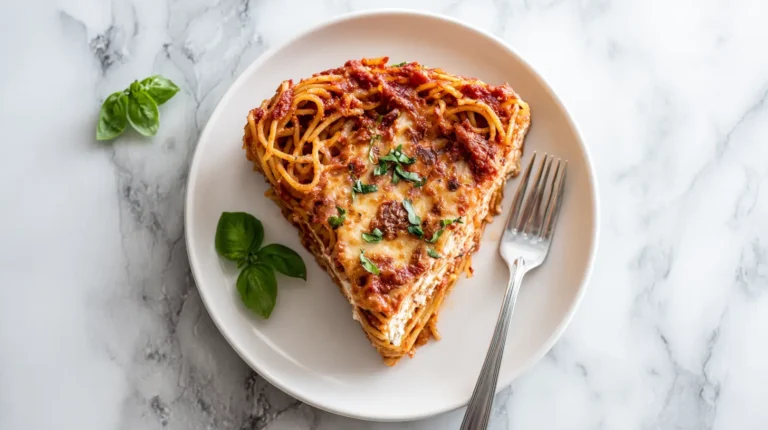
Spaghetti pie turns cooked spaghetti into a sliceable baked dish: an egg-and-Parmesan-bound pasta crust layered with a seasoned ricotta mixture, marinara sauce, and melted mozzarella. It looks like lasagna's fun cousin, slices like an actual pie, and works for potlucks, family dinners, and make-ahead meals.
Ingredients
- 12 oz spaghetti (regular or whole wheat)
- 3 large eggs
- 1/2 cup grated Parmesan cheese (plus a final sprinkle for the top)
- 2 cups ricotta cheese (regular (not part-skim) works best)
- 2 cups shredded mozzarella (1 cup for the filling + 1 cup for topping)
- 2 cups marinara sauce (homemade or jarred — 2 cups max)
- 1 lb halal ground beef (optional)
- 3 cloves garlic (minced)
- 1 tsp Italian seasoning
- 1/2 tsp salt
- 1/2 tsp black pepper
- 2 tbsp butter (for greasing the pan)
- fresh basil or parsley (for garnish, optional)
Instructions
- Preheat oven to 350°F (175°C). Generously butter a 9-inch deep-dish pie pan or springform pan.
- Cook spaghetti in heavily salted water until al dente — 1-2 minutes less than the package says, it bakes more. Drain well and let cool 5 minutes.
- In a large bowl, whisk the eggs with the Parmesan, salt, and pepper. Add the drained spaghetti and toss until every strand is coated.
- Press the spaghetti mixture into the buttered pan, creating a crust on the bottom and up the sides. Pack it firmly with the back of a spoon — loose packing means the pie falls apart when sliced.
- If using meat: brown the halal ground beef in a skillet with half the minced garlic, drain the fat, then mix with the marinara sauce. Taste — the sauce should be well-seasoned.
- Make the ricotta mixture: combine ricotta, 1 cup mozzarella, the remaining garlic, and the Italian seasoning with a pinch of salt and pepper. Mix thoroughly and taste.
- Layer: half the ricotta mixture over the crust, half the sauce, the remaining ricotta, the remaining sauce, then 1 cup mozzarella and a final sprinkle of Parmesan.
- Cover loosely with foil (don't let it touch the cheese) and bake 20 minutes. Remove the foil and bake 10-15 more minutes until golden and bubbly.
- Let cool at least 10 minutes before slicing — the eggs need to set for clean slices.
Notes
Season every layer — the crust, the ricotta, and the sauce should each taste good on their own. Cool at least 10 minutes (up to 20) before slicing or the pie falls apart. Keeps 3-4 days in the fridge, freezes up to 2 months. Make ahead: assemble, refrigerate up to 24 hours, and bake straight from the fridge adding 5-10 minutes. For vegetarian, swap the meat for sautéed mushrooms, bell pepper, and spinach.