How to Make Bavarian Crepes: Sweet, Simple
From Our Kitchen: The Sunday Morning That Changed Everything
Hey there, sweetie! It’s Nora, and I have to tell you about the morning our youngest announced she wanted “fancy breakfast like in the movies.” I panicked for about two seconds before remembering my grandmother’s crepe recipe from Bavaria. Well, sort of remembered—I’d watched her make them exactly once when I was seven!
Here’s the beautiful thing about Bavarian crepes: they feel fancy, but they’re actually incredibly forgiving. What happened to the first batch I made? Honestly, the first two crepes were disasters. One stuck to the pan; the other folded in half before I could flip it. Nicolas walked into the kitchen, took one look at my frustrated face, and said, “The first pancake is always the sacrifice to the kitchen gods, right?” He was trying to help, bless him.
But you know what? By crepe number three, I had the rhythm down. By crepe number five, the girls were fighting over who got to flip the next one. And by the time we sat down to eat, our dining table looked like something from a European café—stacks of golden crepes, bowls of fresh berries, homemade vanilla yogurt, and everyone smiling. That’s the magic of these crepes.
Here’s what you’ll learn about making Bavarian crepes:
• Why your first crepe will probably be weird (and that’s totally okay!)
• The batter consistency trick that changed everything for me
• Simple fillings that make these feel restaurant-fancy
• How to flip without fear (yes, it’s possible!)
• Make-ahead tips for stress-free weekend mornings
Love breakfast recipes that feel special? Check out our breakfast collection for more family favorites.
My Bavarian Crepe Learning Curve
So, full disclosure: I’m not Bavarian, and my grandmother only made these crepes when we visited her once. But something about that memory stuck with me—the way she’d swirl the batter in the pan with this confident flick of her wrist, how paper-thin they were, and how she’d fill them with whatever she had on hand.
When I finally decided to recreate them, I made every mistake possible. Was I using too much batter? Thick, doughy crepes. Too little? They tore when I tried to flip them. Pan too hot? Burnt spots. Is the pan too cool to handle? Sticky, pale crepes that wouldn’t release. It was a whole learning experience, and Nicolas documented my failures with his phone camera (which he still brings up at family dinners).
But here’s what I figured out: Bavarian crepes are different from French crêpes. They’re slightly thicker, a bit more forgiving, and have this wonderful soft texture that’s perfect for holding fillings. Think of them as the friendly cousin of those intimidating paper-thin French versions. If you love comforting breakfast dishes, you’ll also enjoy our breakfast pizza recipe.
The Batter Breakthrough
The turning point came when I stopped overthinking the batter. In my first attempts, I’d measure everything precisely, whisk until my arm hurt, and still end up with lumpy batter. Then I watched a video of a grandmother in Bavaria making crepes, and she was so casual about it. Just whisking things together, eyeballing the consistency, and letting it rest while she did other things.
So I tried her approach: mix everything until it’s smooth (a few tiny lumps are fine!), make it slightly runnier than pancake batter, and then—this is key—let it rest for at least 15 minutes. During that rest time, the flour fully hydrates and the batter becomes silky. Game changer! It went from “Why won’t this work?” to “Oh, this process is actually easy!”
Sweet Fillings That Actually Work
Bavarian Crepes: Fresh Fruit and Cream Combinations
Here’s where these crepes really shine—they’re like a blank canvas for whatever you’re craving. My go-to filling? Fresh strawberries with a dollop of vanilla Greek yogurt and a tiny drizzle of honey. Simple and fresh, the tartness of the yogurt balances the sweet crepe perfectly.
Nicolas loves bananas with a swipe of almond butter and a sprinkle of cinnamon. Our oldest discovered that blueberries with lemon-flavored cream cheese is amazing (I was skeptical until I tried it—she was right!). And our youngest just wants Nutella with strawberries, which, honestly, is hard to argue with.
The beauty is that you can prep all these fillings ahead. Chop the fruit in the morning, set out small bowls, and let everyone build their own. It’s like a crepe bar, and the girls greatly enjoy it. For more fresh fruit ideas, refer to our quinoa salad recipe, which uses similar fresh ingredients.
Bavarian Crepes: Kid-Friendly Combinations
Getting kids involved in making crepes has become our Sunday morning tradition. They love the hands-on aspect—pouring the batter (with supervision!), watching it spread across the pan, and especially that moment when you flip it and it actually works.
For fillings, we keep it simple and fun. Banana slices with a thin spread of peanut butter are always a hit. Diced apples tossed with cinnamon and a tiny bit of sugar taste like apple pie filling. Greek yogurt with mini chocolate chips feels like dessert but has protein. Mashed berries (we just smash them with a fork) with a little cream cheese creates this beautiful pink swirl.
The girls have started getting creative—one morning, our youngest made a “rainbow crepe” with different colored fruits in sections. It was chaotic and beautiful and tasted amazing. That’s what I love about these—they encourage creativity without stress.
Perfecting the Technique
The Pan and the Flip
Let’s discuss the equipment, because this matters more than I initially thought. After ruining several crepes in my regular stainless steel pan, I switched to a non-stick pan, and suddenly everything was easier. The crepes released cleanly, flipping became less terrifying, and cleanup took seconds instead of scrubbing.
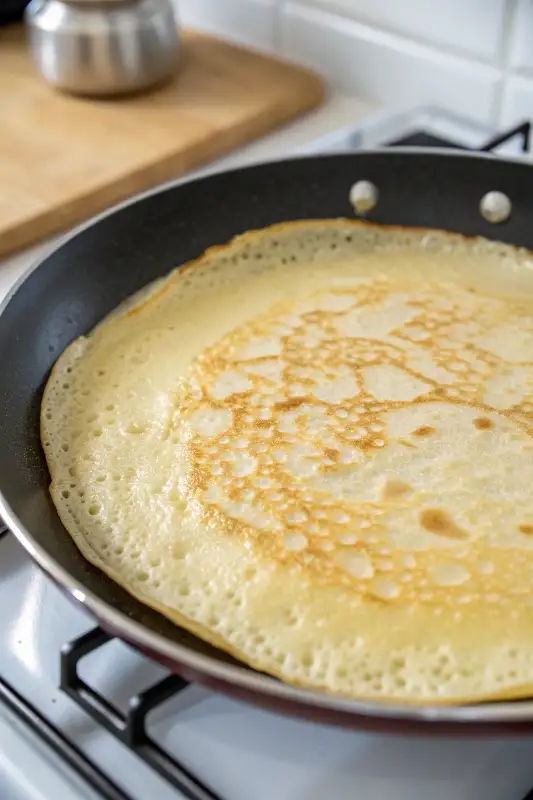
For the flip itself—and I know the phrase sounds dramatic, but it really isn’t—confidence is everything. Wait until you see little bubbles forming on the surface. Then, slide your spatula gently under the edge. Lift it slightly to check if it’s golden underneath. If it is, flip it with one smooth, quick motion. Don’t hesitate or go slow—that’s when things go wrong.
My first successful flip felt like winning a medal. Nicolas gave me a standing ovation (yes, really), and the girls cheered. Now it’s second nature, but I still remember that feeling of accomplishment. You’ll arrive there too!
Temperature Control
Here’s something nobody tells you: the first crepe is always weird. I don’t know if it’s the pan temperature, the cooking gods, or just universal law, but accept it. Use it to test your batter consistency and heat level. Too thick? Add a splash of milk. Too thin? Add a spoonful of flour. Heat too high? Turn it down.
Medium heat is your friend. I learned this after burning three crepes in a row on high heat. They were dark brown on the outside and raw in the middle. Not great. Now I preheat on medium, wait until the pan is evenly hot (test with a drop of water—it should sizzle gently), and maintain that steady temperature throughout.
Make-Ahead Magic
Here’s the secret that changed our weekend mornings: you can make these crepes ahead! Saturday afternoon, I’ll make a double batch while listening to a podcast. Let them cool completely, stack them with parchment paper between each one, and pop them in the fridge.
Sunday morning? I just reheat them gently in the pan for about 30 seconds per side. They taste freshly made, and I look like a breakfast hero without any stress. The girls don’t know that I made these yesterday—they just know Mom’s making “fancy crepes” again.
You can even freeze them! I learned this when I accidentally made far too many one morning. Froze them the same way (with parchment between layers), and they kept beautifully for up to two months. Just thaw in the fridge overnight before reheating. For more make-ahead breakfast ideas, try our protein pancakes.
Ready to make your own crepe magic? Let me walk you through exactly how I make these now—after all the trial and error, this method works every single time!
Ingredients
Here’s what you need for about 8-10 crepes:
- 4 eggs, beaten – These give structure and richness without making the crepes heavy
- 2 cups milk—Whole milk works best, but 2% is fine too
- 1½ cups flour—all-purpose flour is perfect here
- 2 tablespoons vegetable oil—plus extra for the pan
- ½ teaspoon salt—Don’t skip this! It balances the sweetness
- 2 tablespoons sugar—just enough for a hint of sweetness
How I Make Them
This is my foolproof method after months of practice:
- Mix the batter: Whisk eggs, milk, flour, oil, salt, and sugar until smooth. A few tiny lumps are okay—don’t overmix!
- Let it rest: Cover and let it sit for 15 minutes. This process is crucial! Go do something else—check emails, prep your fillings, whatever.
- Heat your pan: Medium heat, let it warm up for a full minute. Add a tiny bit of butter or oil.
- Pour and swirl: Use about ½ cup of batter. Pour it in, then immediately tilt and swirl the pan so the batter spreads thin and even.
- Cook until bubbles form: Wait for small bubbles to appear on the surface—about 1-2 minutes.
- Flip with confidence: Slide your spatula under, lift slightly to check if it’s golden, then flip in one smooth motion.
- Cook the other side: just 30 seconds to 1 minute—it goes fast!
- Stack and repeat: Keep going until all the batter is used.
Serving Suggestions
This recipe makes about 8-10 crepes, serving 4 people generously (or 2 famished people with leftovers!).
We serve them warm with a variety of fillings set out buffet-style. Everyone gets to build their own, which makes it interactive and fun. My favorite pairings:
- Homemade brioche—for when you want to go all out with a fancy brunch
- Cottage cheese variations—a protein-rich filling option that’s surprisingly delicious
- Fresh fruit salad—light and refreshing alongside the crepes
- Hot tea or coffee—because what’s breakfast without a satisfying cup of something warm?

My Hard-Learned Tips
Things I wish I’d known from the start:
- The first crepe is practice: Don’t judge yourself by it. Even professional chefs throw away the first one.
- Rest the batter: I can’t stress this recommendation enough. 15 minutes makes such a difference in texture.
- Use a non-stick pan: Life is too short to wrestle with stuck crepes.
- Keep the pan oiled: A quick wipe with an oiled paper towel between crepes prevents sticking.
- Don’t fill before storing: Keep crepes plain in the fridge; fill them fresh when serving.
- Embrace imperfection: Wonky shapes still taste delicious!
Nutrition and Timing
Per crepe (approximate):
- Calories: 160
- Fat: 6 g
- Carbs: 20 g
- Protein: 5 g
- Fiber: 1 g
Note: Nutrition varies based on fillings you choose!
Time breakdown:
- Prep: 10 minutes
- Rest: 15 minutes
- Cook: 20 minutes
- Total: 45 minutes (most of it hands-off!)
Frequently Asked Questions
What’s the difference between Bavarian and French crêpes?
Can I make the batter ahead of time?
Why do my crepes keep tearing?
What’s the difference between crepes and blintzes?
Why These Crepes Became Our Tradition
You know what I love most about making these Bavarian crepes? It’s become our Sunday morning ritual. The girls wake up asking, “Are we making crepes today?” Nicolas sets up the coffee, I mix the batter, and we all gather in the kitchen together.
There’s something special about standing around the stove, watching each crepe cook, and deciding what fillings to try. No phones, no rushing, just us and some really good food. The girls have gotten so good at flipping now that they barely need my help. Our youngest can swirl the batter like a pro.
These crepes aren’t perfect—sometimes they’re too thick, sometimes they’re wonky shaped, and occasionally one sticks to the pan. But they’re ours, and they taste like weekend mornings and laughter and family time. And really, that’s what the best recipes are all about.
From our kitchen to yours,
Nora & Nicolas
P.S. – When you make your first batch and that first crepe comes out weird (because it will!), just laugh and keep going. By crepe number three, you’ll feel like a pro. And if you share your crepe creations in the comments, I’d absolutely love to see them!

Bavarian Crepes
Ingredients
Crepe Batter
- 4 pieces eggs, beaten Provides structure and richness without heaviness.
- 2 cups milk Whole milk works best, but 2% is acceptable.
- 1.5 cups flour All-purpose flour is perfect.
- 2 tablespoons vegetable oil Plus extra for the pan.
- 0.5 teaspoon salt Balances the sweetness.
- 2 tablespoons sugar Provides a hint of sweetness.
Instructions
Making the Batter
- Whisk eggs, milk, flour, oil, salt, and sugar until smooth. Allow for a few tiny lumps.
- Cover and let the batter rest for 15 minutes to hydrate the flour.
Cooking the Crepes
- Heat a non-stick pan over medium heat and warm for one full minute. Add a little butter or oil.
- Pour about ½ cup of batter into the pan, tilting to swirl and create a thin, even layer.
- Cook until small bubbles form on the surface, about 1-2 minutes.
- Once golden underneath, flip the crepe in one smooth motion and cook for 30 seconds to 1 minute on the other side.
- Repeat the process until all batter is used.