What Veggies Are Good in Soup? Surprising Ingredients for Best Results
I made vegetable soup once by just dumping whatever vegetables I had into a pot. Carrots, broccoli, cauliflower, bell peppers, and spinach—all at once, at the same time. It came out as gray-brown mush where everything tasted identical. The broccoli turned to slime, the cauliflower dissolved into grainy bits, and the spinach became dark strings. Nobody ate it. That disaster taught me vegetables have different cooking times, and not everything belongs in soup together just because it’s a vegetable.
Good soup vegetables share characteristics: they hold shape during cooking, add flavor instead of turning bland, and contribute texture rather than becoming mush. Some vegetables need long cooking to soften (carrots, potatoes), while others wilt quickly (spinach, zucchini). Understanding these differences determines soup success versus vegetable-flavored water with sad floating bits. For more soup guidance, refer to our complete vegetarian soup guide.
Why Some Vegetables Are Good in Soup
Vegetables That Hold Structure in Soup
The best soup vegetables maintain integrity during cooking. Carrots stay carrot-shaped even after simmering 30+ minutes. Potatoes soften but don’t disintegrate (unless you want them to for creamy soup). Celery provides crunch even when cooked.
Vegetables that fail: broccoli florets break apart into tiny green bits, cauliflower turns grainy and falls apart, and asparagus gets stringy and mushy. These might work in specific soups but not general vegetable soup, where you want distinct pieces.
Flavor Contribution of Soup Vegetables
Some vegetables add flavor to broth (onions, garlic, celery, carrots). Others absorb flavor from broth (potatoes, zucchini, and green beans). You need both types.
My mistake was using too many strong-flavored vegetables. Broccoli, cauliflower, and bell peppers all competing created a muddy, confused taste. It’s better to use one or two flavor contributors (onions and tomatoes, for example) and fill the rest with neutral vegetables that absorb those flavors.
Cooking Times for What Veggies Are Good in Soup
This is where most people mess up. Different vegetables need different cooking times:
- 30+ minutes: Potatoes, carrots, parsnips, turnips, celery root
- 15-20 minutes: Celery, green beans, bell peppers, corn
- 5-10 minutes: Zucchini, yellow squash, peas, tomatoes
- 2–5 minutes: spinach, kale, chard, and cabbage (if you want it slightly crisp).
Add vegetables in stages based on cooking time. Start with the longest-cooking ones; add quicker-cooking ones later. This prevents some vegetables from turning to mush while others stay raw.
What Veggies Are Good in Soup by Category
Root Vegetables for Hearty Soup
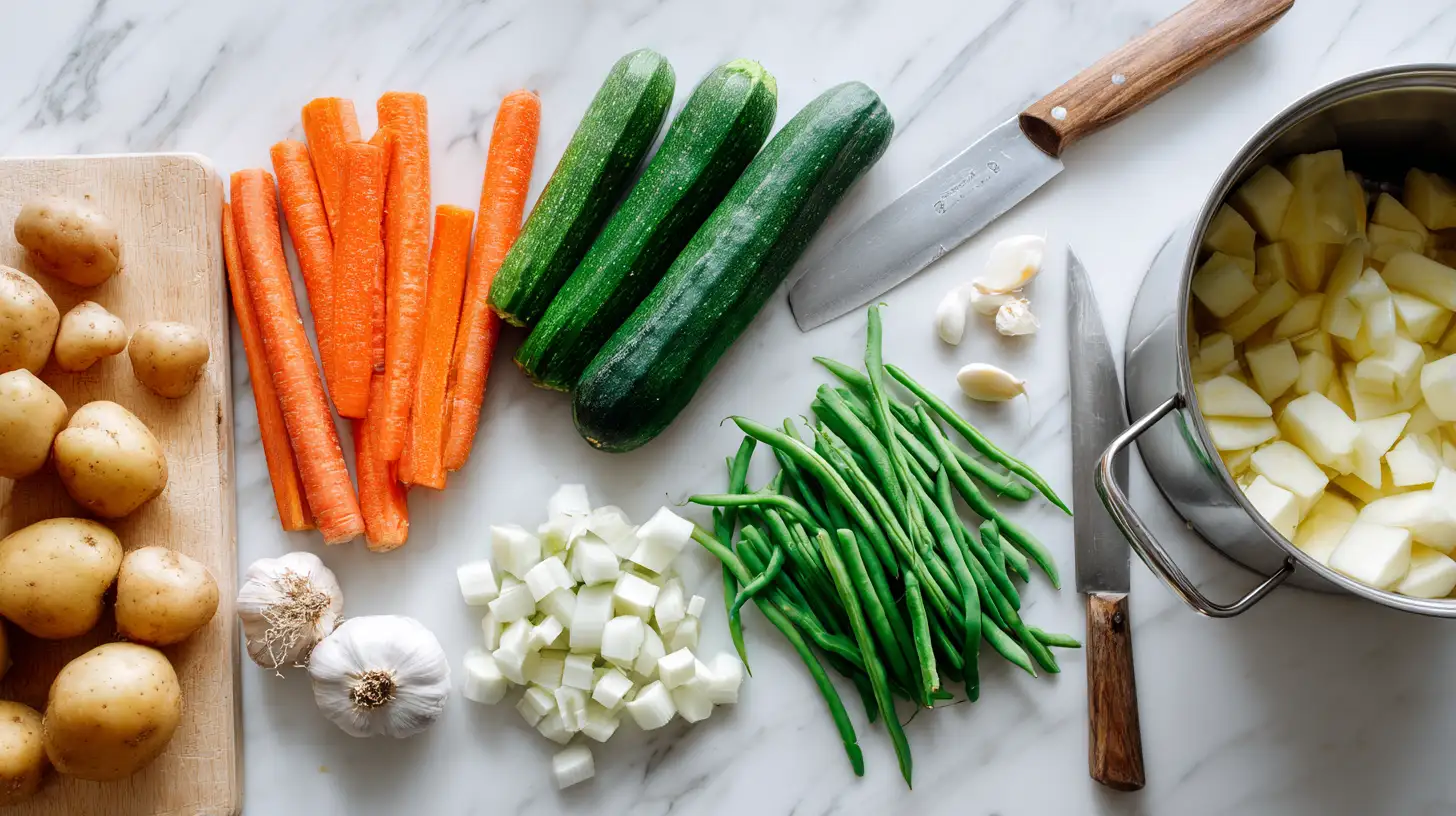
Carrots: Essential soup vegetable. Adds sweetness, holds shape, and contributes orange color. Dice them—don’t slice thin or they disappear. Chunks about 1/2 inch work best.
Potatoes: Make soup more filling, thicken broth slightly as they break down, and absorb flavors well. Russet potatoes break down more (good for creamy soups), and Yukon Gold potatoes hold their shape better (good for chunky soups). Cut 1-inch cubes.
Parsnips: Like sweet carrots but earthier. Use sparingly—strong flavor. Good in winter soups.
Turnips: Slightly peppery, firm texture. Cut smaller than potatoes—they’re denser.
Sweet potatoes: Make soup sweeter and more filling. Orange color changes the soup color significantly. Works better in specific sweet potato soups than mixed vegetable soup.
Aromatic Vegetables Good in Soup Base
Onions: A non-negotiable soup ingredient. Provides savory base flavor. Yellow onions are standard, white onions are sharper, and sweet onions are milder. Dice them and sauté before adding liquid.
Garlic: Essential for depth. Mince it and sauté it with onions. Don’t burn it—burnt garlic makes soup bitter.
Celery: Part of classic mirepoix (onions, carrots, and celery). Adds subtle flavor and slight crunch. Slice thin—big celery chunks are stringy and unpleasant.
Leeks: Milder than onions, slightly sweet. Good for delicate soups. Wash thoroughly—dirt hides between layers.
Quick-Cooking Vegetables for Soup
Zucchini: Absorbs flavor, soft texture, cooks quickly. Add during the last 10 minutes. Don’t overcook or it will turn to mush.
Spinach: Wilts in 2-3 minutes. Add at the very end. Fresh spinach reduces dramatically in volume—what looks like a huge amount becomes a small handful.
Kale: Heartier than spinach, takes 5-7 minutes to soften. Remove thick stems—they’re tough. Tear into small pieces.
Cabbage: Adds volume, slightly sweet when cooked. Shred it thin—big cabbage chunks are hard to eat from a spoon.
Peas: Frozen peas work better than fresh for soup. Add the last 5 minutes. They’re already cooked; they just need heating.
Strong-Flavor Vegetables for Soup
Tomatoes: Add acidity and umami. Canned crushed tomatoes are easier than fresh for soup. Fresh tomatoes need peeling and seeding—too much work.
Bell peppers: Sweet, slight crunch, vibrant color. Remove seeds and white membrane—they’re bitter. Red peppers are the sweetest, green ones are the most vegetal.
Corn: Adds sweetness and a pop of texture. Frozen corn kernels work fine—thaw first, or they cool soup down.
Green beans: Provide color and slight crunch. Trim ends, and cut into 1-inch pieces. Don’t overcook—it should have a slight bite.
Seasonal Vegetable Choices for Soup
Spring Vegetables in Soup
Spring vegetables are tender and cook quickly. Asparagus, peas, and radishes (yes, cooked radishes lose spiciness and become mild). These make light, fresh soups good for transitioning out of winter.
Cut asparagus into 1-inch pieces; discard woody ends. Add during the last 10 minutes. Overcooked asparagus is stringy and unpleasant.
Summer Vegetables in Soup
Summer means zucchini, yellow squash, corn, tomatoes, and green beans. These make lighter soups since summer’s too hot for heavy, creamy soups.
Zucchini and yellow squash have high water content—they release liquid into soup as they cook. Account for this when adding broth. Start with less liquid than you think you need.
Fall Vegetables in Soup
Fall is squash season. Butternut squash, pumpkin, and acorn squash make creamy, sweet soups perfect for cool weather. These need roasting first or a very long cooking time to soften.
Peel squash (painful but necessary), cube, and roast at 400°F for 30 minutes before adding to soup. Or pressure cook cubes for 10 minutes. Raw squash takes forever to soften in a regular pot. For squash recipes, see our popular squash collection.
Winter Vegetables in Soup
Winter means root vegetables and hearty greens. Potatoes, carrots, parsnips, turnips, celery root, cabbage, and kale. These make filling, warming soups that stick to your ribs.
Celery root (celeriac) is an underrated soup vegetable. Tastes like mild celery, adds creaminess when blended, and holds shape when diced. Peeling it is annoying (knobby and weird-shaped) but worth it.
How to Combine Vegetables in Soup
Building Soup bases with Vegetables
Start with classic mirepoix: onions, carrots, and celery (ratio 2:1:1). Dice small, and sauté in oil or butter until softened. This creates a flavor foundation.
Add garlic in the last minute of sautéing (it burns faster than other vegetables). Next, add the liquid, followed by the remaining vegetables according to their cooking times.
Texture Balance in Vegetable Soup
Good soup has textural variety. You want:
- Soft vegetables that partially break down (potatoes, carrots)
- Firm vegetables that hold shape (green beans, celery)
- Leafy vegetables that wilt (spinach, kale)
Don’t make soup with all soft vegetables (becomes baby food) or all firm vegetables (too crunchy, doesn’t feel like soup).
Flavor Balance in Soup Vegetables
Balance sweet, savory, and acidic vegetables:
- Sweet: Carrots, corn, sweet potatoes, bell peppers
- Savory: Onions, garlic, celery, mushrooms
- Acidic: Tomatoes, adding splash of lemon juice at end
Too much sweetness makes soup cloying. Too much savory without acid makes it flat. Balance is key.
Enhancing Vegetable Soup Flavor
Herbs for Vegetable Soup
Bay leaves: Add during cooking, remove before serving. Subtle earthy flavor.
Thyme: A classic soup herb. Use fresh or dried. Woody stems should be removed before serving if using fresh.
Add parsley at the end for freshness. Flat-leaf tastes better than curly.
Dill: Good in lighter soups with potatoes or cabbage. Use fresh—dried dill tastes like dust.
Spices for Vegetable Soup
Black pepper: Essential. Adds heat and depth. Freshly ground is better than pre-ground.
Paprika: Adds color and mild sweetness. Smoked paprika adds depth.
Cumin: Earthy, warm. Use sparingly—it becomes overpowering easily.
Red pepper flakes: For heat. Start small—it’s easier to add more than remove.
Adding Umami to Vegetable Soup
Vegetable soup can taste flat without umami. Add:
- Tomato paste: Sauté with vegetables before adding liquid. Concentrates flavor.
- Soy sauce: A small amount (1-2 tablespoons) adds depth without making the soup taste Asian.
- Nutritional yeast: Adds cheesy, savory flavor. Good for vegan soups.
- Miso paste: Stir in at the end (boiling kills beneficial bacteria). Adds salty, savory depth.
Common Vegetable Soup Problems
Bland Vegetable Soup
Problem: Soup tastes like hot vegetable water.
Fixes: Not enough salt (most common cause—taste and add salt until flavors pop). No aromatics (need onions and garlic). No umami (add tomato paste, soy sauce, or miso). Need acid (a squeeze of lemon juice at the end brightens everything).
Mushy Vegetable Soup
Problem: All vegetables disintegrated into mush.
Causes: Overcooked (simmered too long or boiled instead of gently simmered). Wrong vegetables (used delicate ones that break down). Cut too small (tiny pieces fall apart).
Prevention: Simmer gently, not boil. Cut vegetables larger. Add quick-cooking vegetables near the end.
Watery Vegetable Soup
Problem: Too much liquid, not enough vegetables, tastes diluted.
Fixes: Simmer uncovered to evaporate excess liquid. Add more vegetables. Add thickener (blended portion of soup, mashed potatoes, or cornstarch slurry).
Vegetable Soup Questions Answered
How to add depth of flavor to vegetable soup?
Sauté aromatics (onions, celery, carrots, and garlic) before adding liquid. This caramelizes natural sugars and builds a flavor base. Add umami sources (tomato paste, soy sauce, miso). Use herbs and spices. Finish with acid (lemon juice or vinegar) to brighten flavors. Don’t skip salt—under-salting is the main reason soup tastes flat.
Can you eat vegetable soup on a plant-based diet?
Obviously yes. Vegetable soup is naturally plant-based. Use vegetable broth instead of chicken or beef broth. Add legumes (lentils, chickpeas, and white beans) for protein. Include starchy vegetables (potatoes, sweet potatoes) for filling factor. Season it it well so it doesn’t taste like punishment food.
Do all vegetables need the same cooking time in soup?
No—this is a critical mistake. Root vegetables (potatoes, carrots) need 30+ minutes. Medium vegetables (celery, green beans) need 15-20 minutes. Quick vegetables (zucchini, peas) need 5-10 minutes. Leafy greens (spinach, kale) take 2–5 minutes. Add vegetables in stages based on cooking time.
Can you use frozen vegetables in soup?
Yes, but with caveats. Frozen vegetables are pre-blanched, so they cook faster than fresh. Add them near the end of cooking. Frozen vegetables release more water than fresh—use slightly less broth to compensate. Texture won’t be identical to fresh but works fine for soup. Frozen peas, corn, and green beans work particularly well.
How long does vegetable soup keep?
Refrigerate in an airtight container for up to 5 days. Freeze for up to 3 months. Flavors often improve after a day as they meld together. Soup thickens in the fridge as vegetables absorb liquid—add water or broth when reheating. Don’t freeze soups with potatoes if possible—they get a grainy texture when thawed.
Final Reality on Vegetables in Soup
Good vegetable soup requires understanding which vegetables hold up during cooking, which add flavor versus absorb it, and—critically important—different cooking times. My gray-brown mush disaster happened because I treated all vegetables the same way.
Start with an aromatic base (onions, celery, carrots, and garlic), add long-cooking vegetables (potatoes, more carrots, and parsnips), then medium-cooking vegetables (green beans and bell peppers), and finally quick-cooking vegetables (zucchini and leafy greens). Season with herbs, spices, and salt. Add umami and acid for depth and brightness.
Best soup vegetables: carrots, potatoes, onions, celery, garlic, tomatoes, green beans, zucchini, spinach, and kale. These consistently produce good results with reasonable effort. Master soup with these before experimenting with unusual vegetables. For more soup recipes, refer to our complete soup collection.