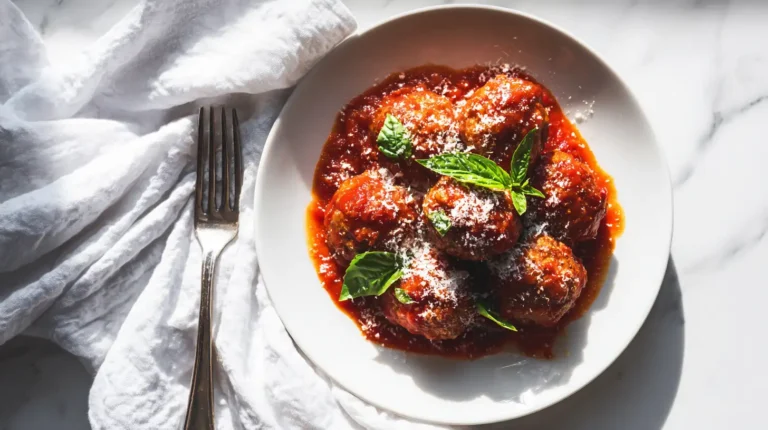
The Ultimate Guide to Cooking a Flavorful Pastalaya Recipe
I made pastalaya for a church potluck after someone said, “It’s impossible to mess up—just jambalaya with pasta instead of rice.” Browned sausage and chicken, added vegetables, and dumped in pasta and broth. It looked perfect bubbling away. Then served it, and the pasta had absorbed everything, turning into a sticky, dry clump that barely held together. People took polite portions and then quietly moved to other dishes. The problem was I used far too little liquid and the wrong pasta shape. Pastalaya needs more liquid than regular pasta cooking because pasta absorbs broth as it sits, and short, sturdy shapes work better than long noodles.
Pastalaya works when you account for pasta’s absorption rate and choose shapes that hold up in one-pot cooking, not when you blindly substitute pasta for rice using jambalaya ratios. Rice and pasta absorb liquid differently—rice takes a specific amount and then stops, while pasta continues to absorb as long as liquid is present. Need extra broth and must serve soon after cooking, or it gets gluey. The Cajun seasoning, andouille sausage, and trinity vegetables provide authentic Louisiana flavor, but technique matters for texture. For more Cajun-inspired dishes, check out our steak pasta collection.
What Is Pastalaya?
Pastalaya Concept
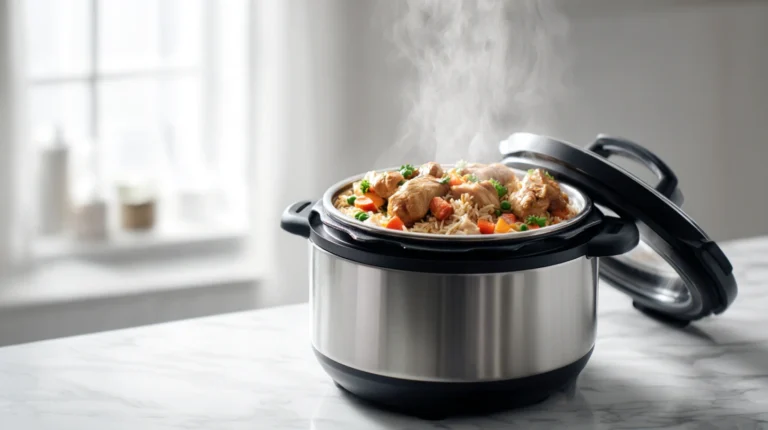
Pastalaya is a Louisiana one-pot dish that substitutes pasta for rice in the jambalaya recipe. Contains andouille sausage, chicken, trinity vegetables (onions, bell peppers, and celery), Cajun seasoning, and short pasta cooked together in broth until the pasta is tender and the flavors have melded.
Originated as a practical alternative when rice was unavailable or when feeding large crowds at church gatherings and fundraisers—pasta was cheaper and easier to find in bulk than rice in some areas. Now popular throughout Louisiana as a distinct dish, not just a jambalaya substitute.
Why Pastalaya Popular
Appeals because it cooks in a single pot (easy cleanup), stretches expensive meat with affordable pasta, and feeds crowds efficiently. One pound of meat plus one pound of pasta serves 8-10 people versus traditional jambalaya serving 4-6. Economical for church potlucks, family reunions, and large gatherings.
Also reheats better than rice-based jambalaya. Rice gets hard and dry when reheated; pasta maintains a better texture (though it is still best eaten fresh).
Pastalaya Ingredients
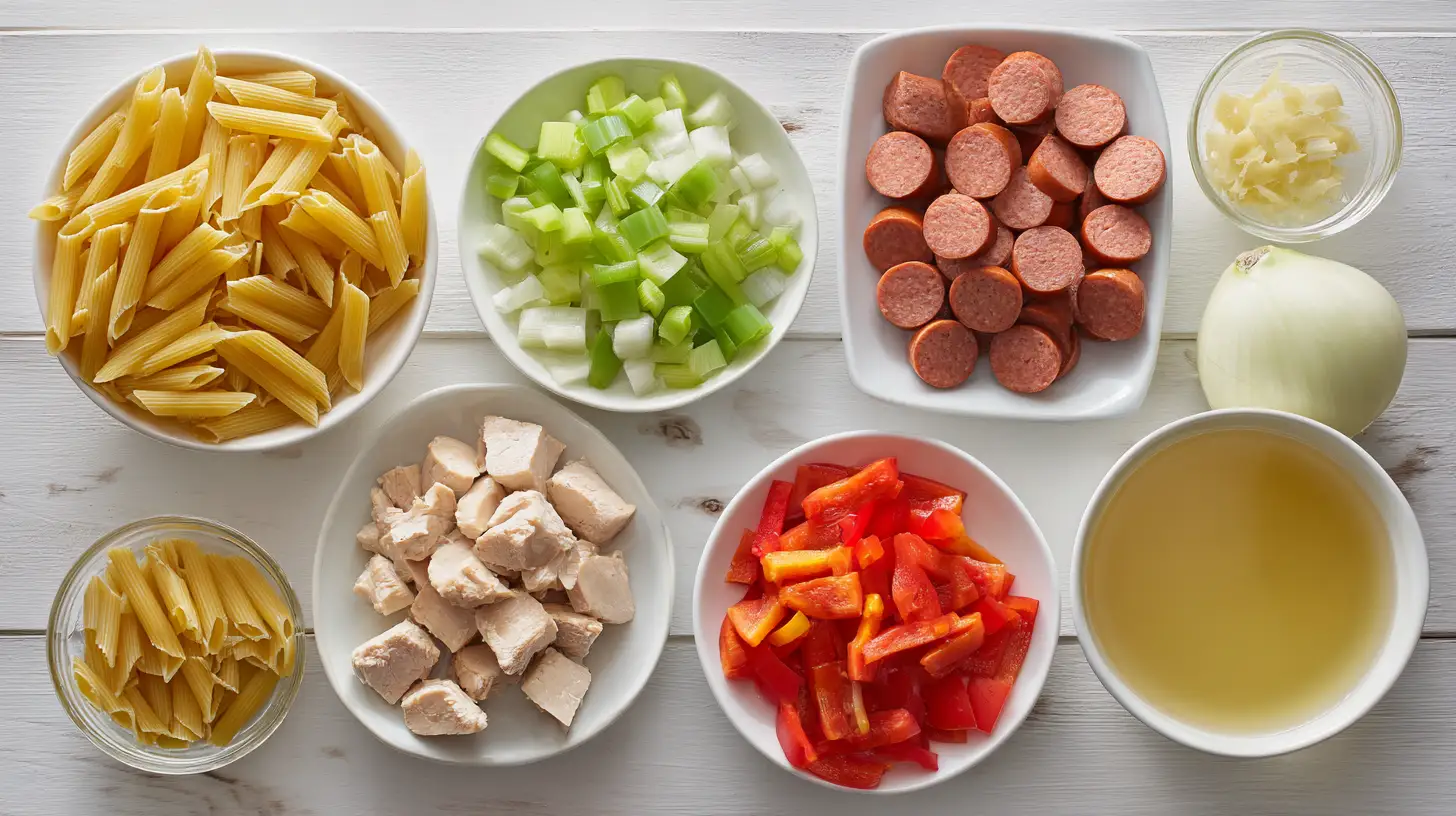
What you need (serves 8-10):
- 1 lb andouille sausage, sliced (or smoked sausage, kielbasa)
- 1 lb chicken thighs or breasts, cubed
- 1 large onion, diced
- 2 bell peppers (mix of colors), diced
- 3 celery stalks, diced
- 4 garlic cloves, minced
- 1 lb short pasta (penne, rotini, rigatoni—NOT spaghetti)
- 6 cups chicken broth (more than you think—critical)
- 14 oz can diced tomatoes (optional but traditional)
- 2-3 tbsp Cajun seasoning (adjust to taste)
- 2 tbsp vegetable oil
- Salt, black pepper
- Green onions and parsley for garnish
- Hot sauce for serving
Meat Selection
Andouille sausage is essential for authentic flavor—smoky, spicy, and distinctly Louisiana. If unavailable, smoked sausage or kielbasa works but tastes slightly different. Avoid Italian sausage (wrong flavor profile) or breakfast sausage (too mild).
Chicken: Dark meat (thighs) stays juicier during long cooking. Breast meat works but can dry out—cut larger pieces and don’t overcook. Can also use a combination of chicken and smoked turkey.
Pasta Choice Critical
Best shapes:
- Penne—a classic choice, holds shape well
- Rotini – Spirals catch sauce nicely
- Rigatoni—sturdy tubes, good texture
- Cavatappi—Twisted tubes work well
Avoid: Spaghetti, linguine, angel hair (too delicate, clump together), small shapes like orzo or ditalini (turn mushy), and large shells (take too long to cook evenly).
How to Make Pastalaya Correctly
Brown Meats First
Heat a large heavy pot (8 quart minimum) or Dutch oven over medium-high. Add oil. Brown sausage slices until edges are caramelized, about 5 minutes. Remove to plate.
Season chicken with salt, pepper, and 1 tablespoon Cajun seasoning. Brown in the same pot in batches (don’t crowd or it will steam instead of brown). Remove to plate with sausage. This browning creates a flavor foundation—don’t skip it.
Cook Trinity Vegetables
In the same pot (keep brown bits), add diced onion, bell peppers, and celery. Cook over medium heat, stirring occasionally, until vegetables are soft and slightly caramelized (8-10 minutes). Add garlic and the remaining Cajun seasoning, and cook for 1 minute until fragrant.
Trinity vegetables (onion, celery, and bell pepper) are the foundation of Louisiana cooking. Don’t rush this step—properly cooked trinity adds depth that regular sautéed vegetables don’t.
Add Liquid and Pasta
Return sausage and chicken to pot. Pour in 6 cups of chicken broth and a can of diced tomatoes (if using). Stir well, scraping up any brown bits stuck to the pot bottom. Bring to a boil.
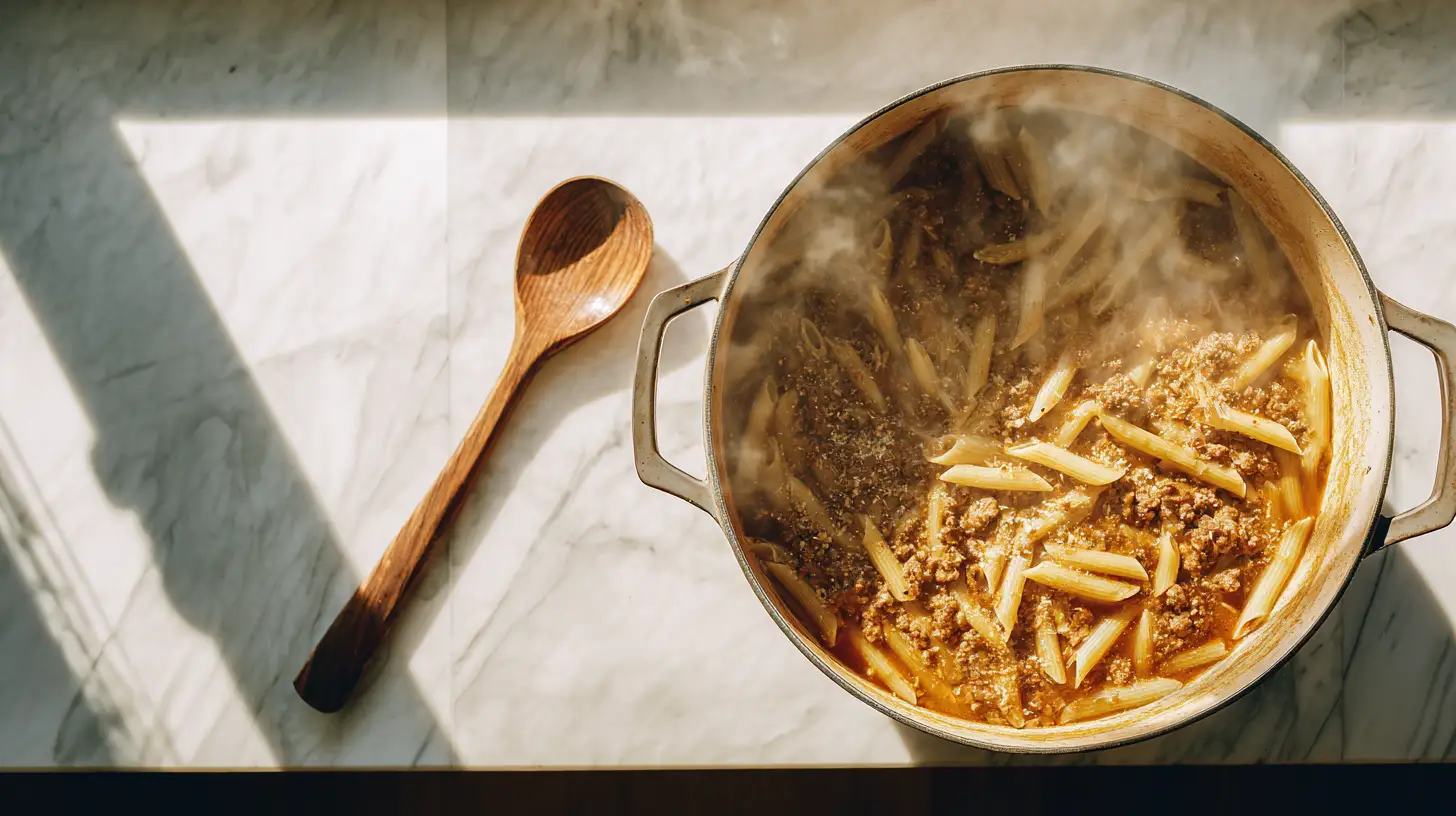
Add pasta. Stir to submerge. Reduce heat to medium-low, cover, and cook 12-15 minutes, stirring every 3-4 minutes to prevent sticking and ensure even cooking.
Critical: Pasta should be barely covered with liquid. If it looks dry before the pasta is tender, add more broth ½ cup at a time. Better too much liquid initially than too little—you can always simmer uncovered to reduce at the end.
Finish and serve.
When the pasta is tender and most of the liquid is absorbed (it should still be slightly saucy, not dry), remove from heat. Taste and adjust salt, pepper, and Cajun seasoning. Let sit 5 minutes before serving (flavors meld, pasta absorbs final bit of liquid).
Garnish with sliced green onions and fresh parsley. Serve with hot sauce on the side—everyone has different heat tolerance.
Common Pastalaya Problems
Dry Sticky Pasta
Cause: My exact problem—insufficient liquid; the pasta absorbed everything.
Prevention: Use a full 6 cups of liquid minimum for 1 pound of pasta. Check halfway through cooking—if pasta is barely covered, add more broth immediately. Serve soon after cooking, before the pasta absorbs all the liquid sitting in the pot.
Fix if it happens: Add ½ cup hot broth at a time, stir gently, and let pasta reabsorb liquid. Won’t be perfect but salvageable.
Mushy Overcooked Pasta
Cause: Cooked too long, used a delicate pasta shape, and the heat was too high, so the outside cooked before the inside.
Prevention: Set timer for minimum cooking time on pasta package, start checking early. Use sturdy shapes (penne, rigatoni). Keep heat at gentle simmer not rolling boil.
Bland Flavorless Dish
Cause: Under-seasoned, didn’t brown meats properly, skipped trinity cooking step.
Fixes: Season generously with Cajun seasoning (2-3 tablespoons, not a shy amount). Brown meats well—this creates a flavor base. Cook the trinity until the vegetables are caramelized. Taste before serving, and adjust with salt and hot sauce. Use high quality andouille—cheap, bland sausage makes bland pastalaya.
Pastalaya Variations
Seafood Pastalaya
Replace chicken with 1 lb shrimp (peeled, deveined) or a combination of shrimp and crawfish tails. Add seafood during the last 5 minutes of cooking—overcooking makes it rubbery. Sausage stays the same. Some versions add crab meat at the very end just to warm through.
Vegetarian Version
Skip meats. Double vegetables—add mushrooms, zucchini, and extra bell peppers. Use vegetable broth. Add 2 cans of drained beans (kidney, black, or white) for protein and substance. Increase Cajun seasoning to compensate for missing meat flavor. Add smoked paprika for depth.
Serving Pastalaya
Traditional sides:
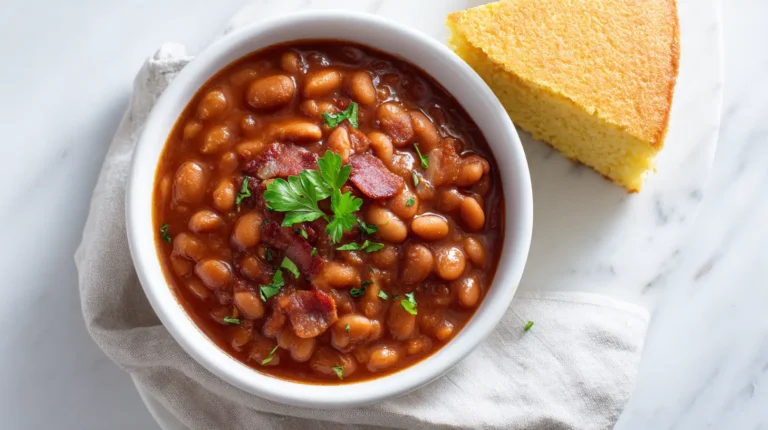
- Cornbread—a classic Louisiana pairing
- Green salad—light contrast to rich pasta
- Garlic bread—not traditional but popular
- Coleslaw—crunchy, tangy balance
Drink pairings (halal options):
- Sweet tea (Southern classic)
- Lemonade (cuts through spice)
- Sparkling water with lime
- Ginger ale
Storage and Reheating
Refrigerate: Store in an airtight container for up to 3 days. Pasta continues absorbing liquid in the fridge—this is unavoidable.
Reheat: Stovetop is best—add ¼ cup broth, heat gently over medium-low, stirring frequently. The microwave works (add a splash of broth, cover, and heat in 2-minute intervals, stirring between).
Freeze: Freezes adequately for up to 2 months, but texture is slightly different when thawed—pasta is softer, and sauce may separate. What’s the difference between jambalaya and pastalaya?
Pastalaya Questions
What’s the difference between jambalaya and pastalaya?
Jambalaya uses rice; pastalaya uses pasta. Rice absorbs a specific amount of liquid and then stops. Pasta keeps absorbing as long as liquid is present, so pastalaya needs more liquid and to be served sooner or it gets dry.
What is the water-to-pasta ratio for pastalaya?
Use 6 cups of liquid per 1 pound of pasta at a minimum. This is more than regular pasta cooking because pasta sits in the pot absorbing liquid as you prep for serving. It is better to start with too much liquid, as it can always be simmered to reduce the amount.
Can I make this ahead?
Not ideal. Pasta absorbs liquid sitting in the pot, making it dry and sticky. Best cooked and served the same day. If making for an event, cook 1-2 hours before serving, keep covered on low heat, and add extra broth as needed to maintain moisture.
Is pastalaya healthy?
Not particularly—it contains fatty sausage, white pasta, and significant sodium from seasoning and broth. Can make it healthier using turkey sausage, whole wheat pasta, low-sodium broth, and extra vegetables. But it’s comfort food meant for occasional enjoyment, not daily health food.
Final Reality on Pastalaya
Pastalaya stopped being a dry potluck disaster when I learned pasta absorption rates differ from rice and technique matters despite simple appearance. My church potluck failure happened because I assumed “jambalaya with pasta” meant identical liquid ratios—it doesn’t. Pasta continues absorbing liquid much longer than rice, so it needs more broth initially and must be served soon after cooking.
The pasta shape matters too. Long noodles clump together in one-pot cooking. Short, sturdy shapes (penne, rigatoni, and rotini) maintain structure and distribute evenly. Proper browning of meats and thorough cooking of trinity vegetables create a flavor foundation that compensates for pasta’s neutral taste.
This works as an economical crowd-feeder when done correctly—one pound of meat plus one pound of pasta serves 8-10 people versus 4-6 with regular jambalaya. Popular for Louisiana church gatherings, family reunions, and fundraisers for good reason. Just account for pasta’s liquid absorption, use the right shapes, and serve while still moist. Church ladies now ask for my recipe—vindication after that first dry batch.
Pastalaya Recipe
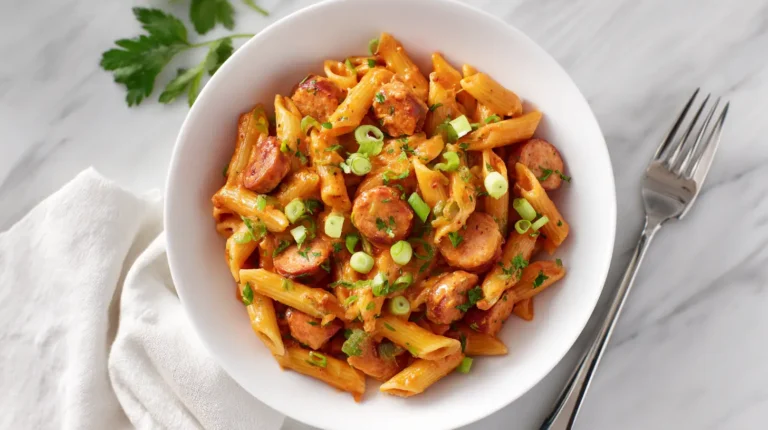
Pastalaya is Louisiana's one-pot crowd-feeder: smoky sausage, chicken, and the trinity of onion, bell pepper, and celery simmered with short pasta in Cajun-seasoned broth. One pound of meat plus one pound of pasta feeds 8-10 people, making it a favorite for potlucks, reunions, and fundraisers.
Ingredients
- 1 lb halal beef sausage (sliced)
- 1 lb chicken thighs or breasts (cubed — thighs stay juicier)
- 1 large onion (diced)
- 2 bell peppers (mix of colors, diced)
- 3 stalks celery (diced)
- 4 cloves garlic (minced)
- 1 lb short pasta (penne, rotini, rigatoni — NOT spaghetti)
- 6 cups chicken broth (more than you think — critical)
- 14 oz can diced tomatoes (optional but traditional)
- 2-3 tbsp Cajun seasoning (adjust to taste)
- 2 tbsp vegetable oil
- salt and black pepper (to taste)
- green onions and parsley (for garnish)
- hot sauce (for serving)
Instructions
- Heat the oil in a large heavy pot (8-quart minimum) or Dutch oven over medium-high. Brown the sausage slices until the edges caramelize, about 5 minutes. Remove to a plate.
- Season the chicken with salt, pepper, and 1 tablespoon of the Cajun seasoning. Brown in the same pot in batches — don't crowd it or it steams. Remove to the plate with the sausage. This browning is the flavor foundation; don't skip it.
- In the same pot (keep the brown bits), cook the onion, bell peppers, and celery over medium heat until soft and slightly caramelized, 8-10 minutes. Add the garlic and remaining Cajun seasoning and cook 1 minute until fragrant.
- Return the sausage and chicken to the pot. Pour in the 6 cups of broth and the diced tomatoes (if using), scraping up the brown bits. Bring to a boil.
- Add the pasta and stir to submerge. Reduce to medium-low, cover, and cook 12-15 minutes, stirring every 3-4 minutes. The pasta should stay barely covered with liquid — add more broth 1/2 cup at a time if it looks dry before the pasta is tender.
- When the pasta is tender and the dish is still slightly saucy (not dry), remove from heat. Taste and adjust salt, pepper, and Cajun seasoning. Let sit 5 minutes so the flavors meld.
- Garnish with sliced green onions and parsley. Serve with hot sauce on the side.
Notes
Use 6 cups of liquid minimum per pound of pasta — pasta keeps absorbing broth long after rice would stop, and it's better to simmer off excess than to end up dry. Stick to sturdy short shapes. Serve soon after cooking. Keeps 3 days in the fridge; reheat with 1/4 cup broth over medium-low. For seafood pastalaya, swap the chicken for shrimp added in the last 5 minutes.