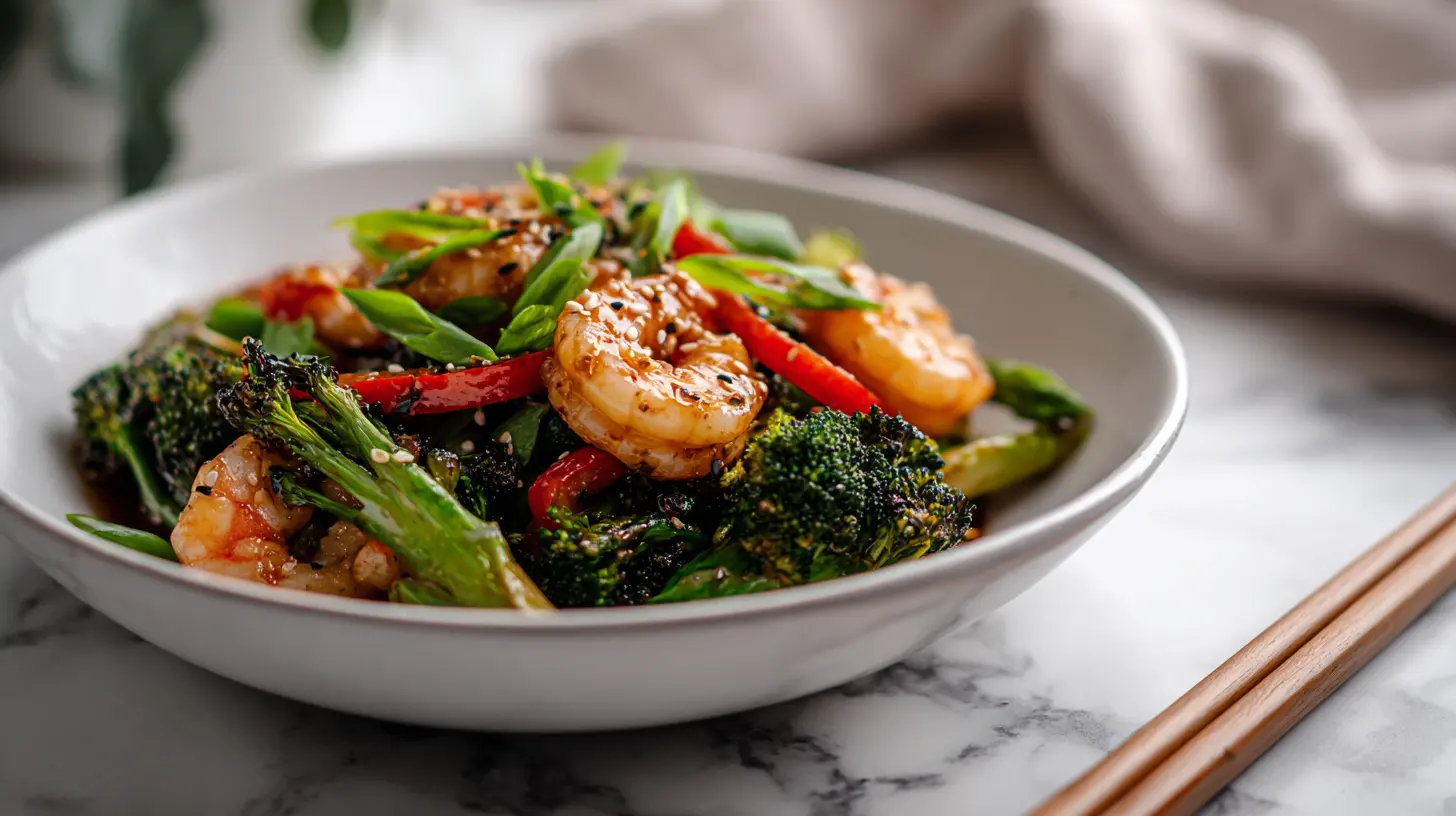
Quick Shrimp Stir-Fry Recipe (Ready in 20 Minutes!)
You know those nights when everyone’s starving, the clock’s ticking, and you’re staring at the fridge wondering how you’ll pull dinner together? Yeah, I’ve been there more times than I can count. That’s precisely how this shrimp stir-fry turned into my go-to meal.
Last Tuesday, I had fifteen minutes before soccer practice. Ethan was hangry, Lily needed help with homework, and Sam was convinced he’d never eat again. I grabbed shrimp from the freezer and tossed some veggies in a hot pan; twenty minutes later, I had a delicious meal ready. Three clean plates and actual compliments. From teenagers. That’s when you know you’ve got a winner.
Here’s what makes this recipe different from all those other stir fry recipes floating around—it’s actually doable on a weeknight. No fancy ingredients you’ll never use again. No complicated techniques that leave you sweating over the stove. Just real food that real families actually want to eat. If you’re looking for more quick seafood recipes your family will love, I’ve got plenty more where this came from!
Why This Shrimp Stir-Fry Works Every Single Time
Quick wins for busy nights:
- Ready in 20 minutes flat (and I’m talking real cooking time, not that magical recipe math)
- One pan means less cleanup—because who has energy for dishes at 7 PM?
- Shrimp cooks crazy fast, so you’re not standing there waiting forever
- Kids actually eat their veggies when they’re coated in this sauce
- Makes amazing leftovers that taste even better the next day
The Secret to Restaurant-Quality Stir Fry at Home
Okay, let’s talk about what usually goes wrong with stir-fry at home. I made every mistake in the book before figuring this out. Soggy vegetables? Been there. Rubbery shrimp? Oh yeah. Sauce that tastes like… well, nothing? Guilty.
The game-changer is getting your pan screaming hot before anything goes in. I’m talking so hot you’re slightly nervous. That’s when the magic happens—vegetables get those beautiful caramelized edges, shrimp develops a gorgeous sear, and everything stays crisp instead of steaming into mush.
And here’s something nobody tells you—cook in batches. I know, I know, it sounds like extra work. But trust me on this. When you overcrowd the pan, everything steams instead of searing, and you end up with sad, watery stir fry. Give your ingredients some breathing room, and they’ll reward you with actual flavor and texture.
Ingredients You’ll Need
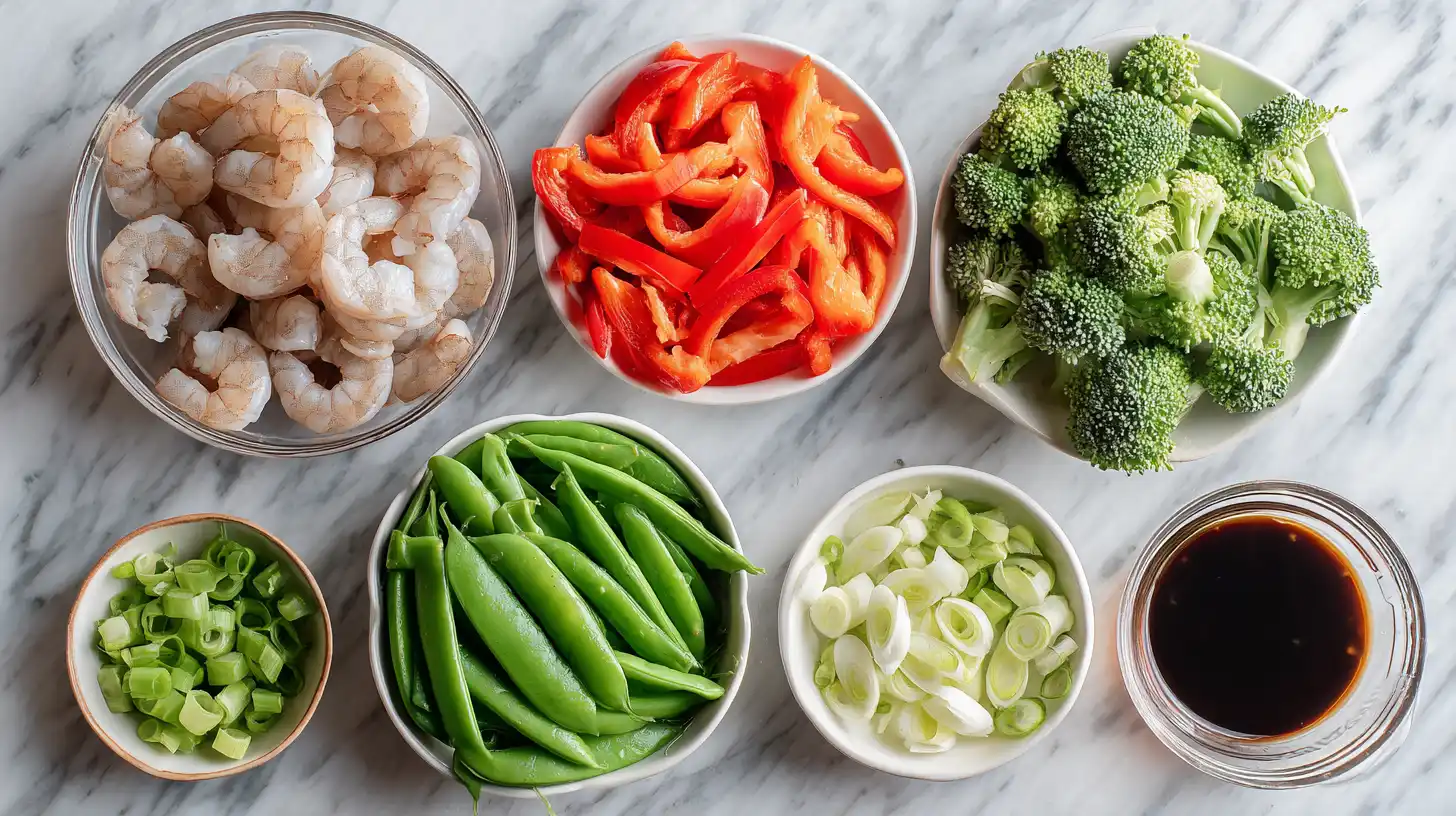
Let me walk you through what’s going on in this beauty. Nothing weird, nothing you’ll need to hunt down at specialty stores. Just good, honest ingredients that probably already live in your kitchen.
For the Shrimp and Vegetables:
- 1 pound large shrimp (peeled and deveined—buy them that way to save yourself the hassle)
- 2 cups broccoli florets (fresh or frozen, both work perfectly)
- 1 red bell pepper, sliced into strips
- 1 cup snap peas (or snow peas if that’s what you’ve got)
- 3 cloves garlic, minced (or use the jarred stuff, no judgment here)
- 1 tablespoon fresh ginger, grated or finely chopped
- 2 tablespoons vegetable oil (divided—this is important!)
- 2 green onions, sliced (mostly for pretty garnish, but they add nice flavor too)
For the Stir Fry Sauce:
- 3 tablespoons soy sauce (low sodium works great if you’re watching salt)
- 2 tablespoons oyster sauce (this is the secret ingredient that makes it taste like takeout)
- 1 tablespoon honey (balances out the salty perfectly)
- 1 tablespoon cornstarch (this is what makes the sauce cling to everything)
- ¼ cup chicken broth (or water in a pinch)
- 1 teaspoon sesame oil (just a little adds so much flavor)
- ¼ teaspoon red pepper flakes (optional, but we love a little kick)
Ingredient Swap Ideas: Don’t have snap peas? Use green beans or carrots. No oyster sauce? Double the soy sauce and add a splash of fish sauce if you have it. Frozen shrimp work just as well as fresh—just thaw them completely and pat them super dry before cooking.
How to Make Perfect Shrimp Stir-Fry (Step-by-Step)
Alright, let’s do this. I’m going to walk you through exactly how I make this in my kitchen, including all the little tricks I’ve picked up along the way.
Step 1: Get Everything Ready (This Matters More Than You Think)
Before you turn on that stove, get everything prepped and ready to go. Seriously. Stir-frying happens fast, and you don’t want to be frantically chopping garlic while your shrimp burns. Ask me how I know.
Pat your shrimp completely dry with paper towels. Like, really dry. Wet shrimp won’t get that nice golden color—they’ll just steam. Mix up your sauce in a small bowl and have it sitting right there by the stove. Chop all your veggies and have them in little piles on a plate. Feel like a cooking show host? Good. That’s the vibe.
Step 2: Make That Sauce Shine
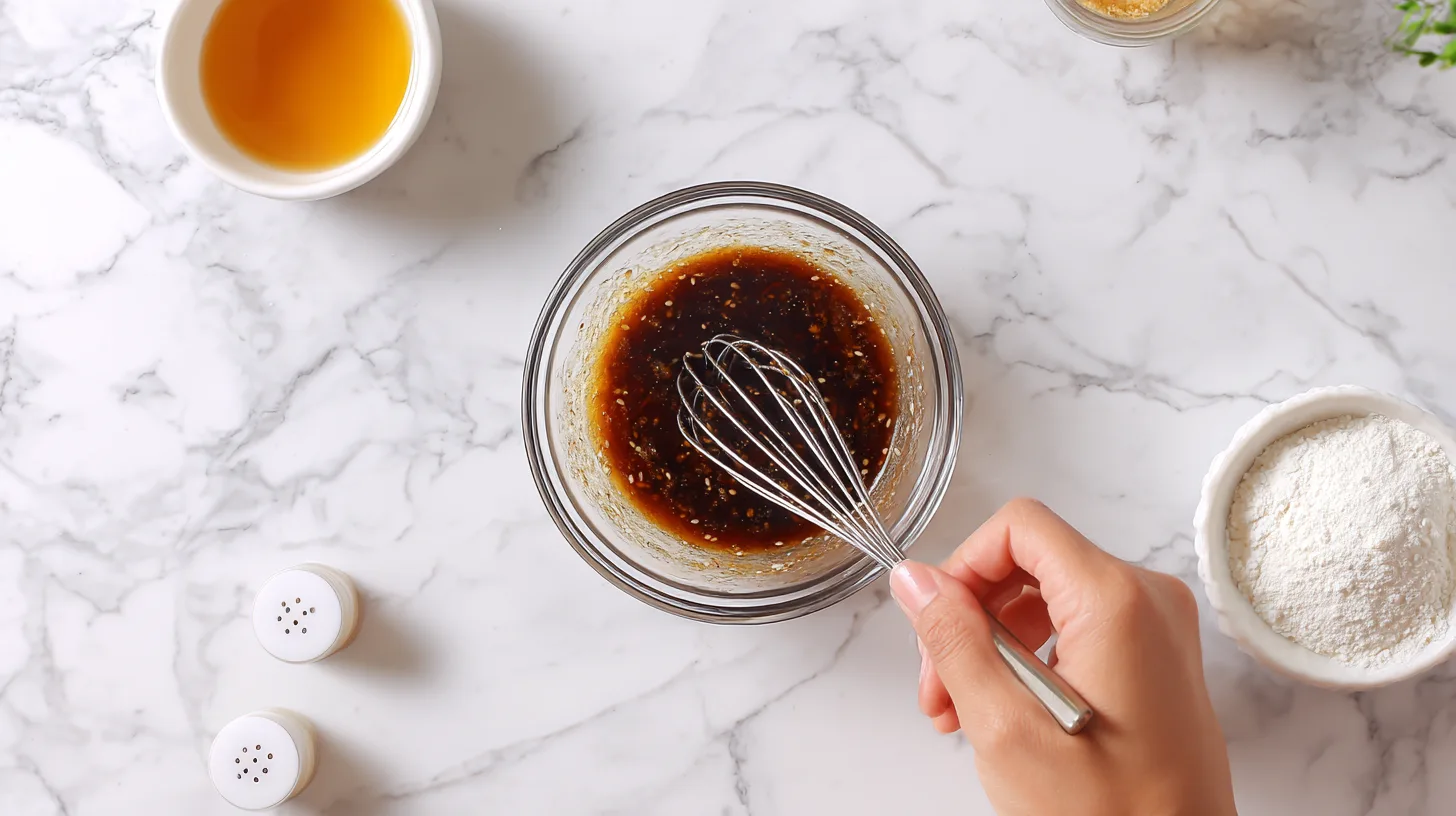
In a small bowl, whisk together the soy sauce, oyster sauce, honey, cornstarch, chicken broth, sesame oil, and red pepper flakes if you’re using them. The cornstarch might clump a bit—that’s totally normal. Just keep whisking until it’s smooth. This sauce is going to be thick enough to coat everything beautifully without pooling at the bottom of the pan.
Step 3: Cook the Shrimp (Hello, Golden Perfection)
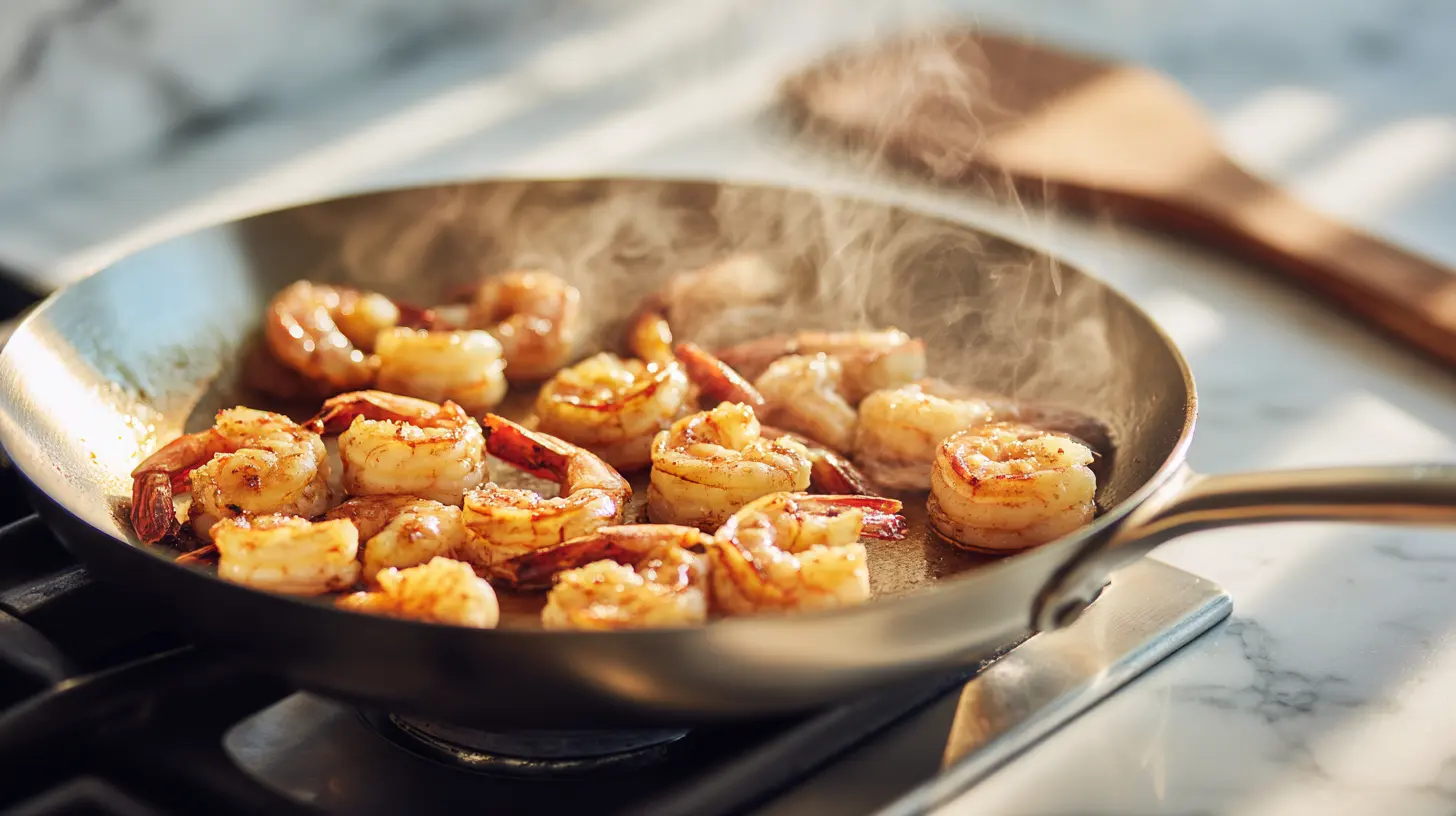
Heat a large skillet or wok over high heat. Add one tablespoon of vegetable oil and swirl it around. When it’s shimmering—you’ll see it look wavy—add your shrimp in a single layer. Don’t touch them for about 90 seconds. I mean it. Let them sear and get that gorgeous golden-pink color on one side.
Flip them over and cook for another minute or so until they’re just cooked through. They’ll curl into little C shapes when they’re done. Transfer them to a clean plate and resist the urge to eat them all right now. They’re going back in the pan in a minute, I promise.
Step 4: Get Those Veggies Singing
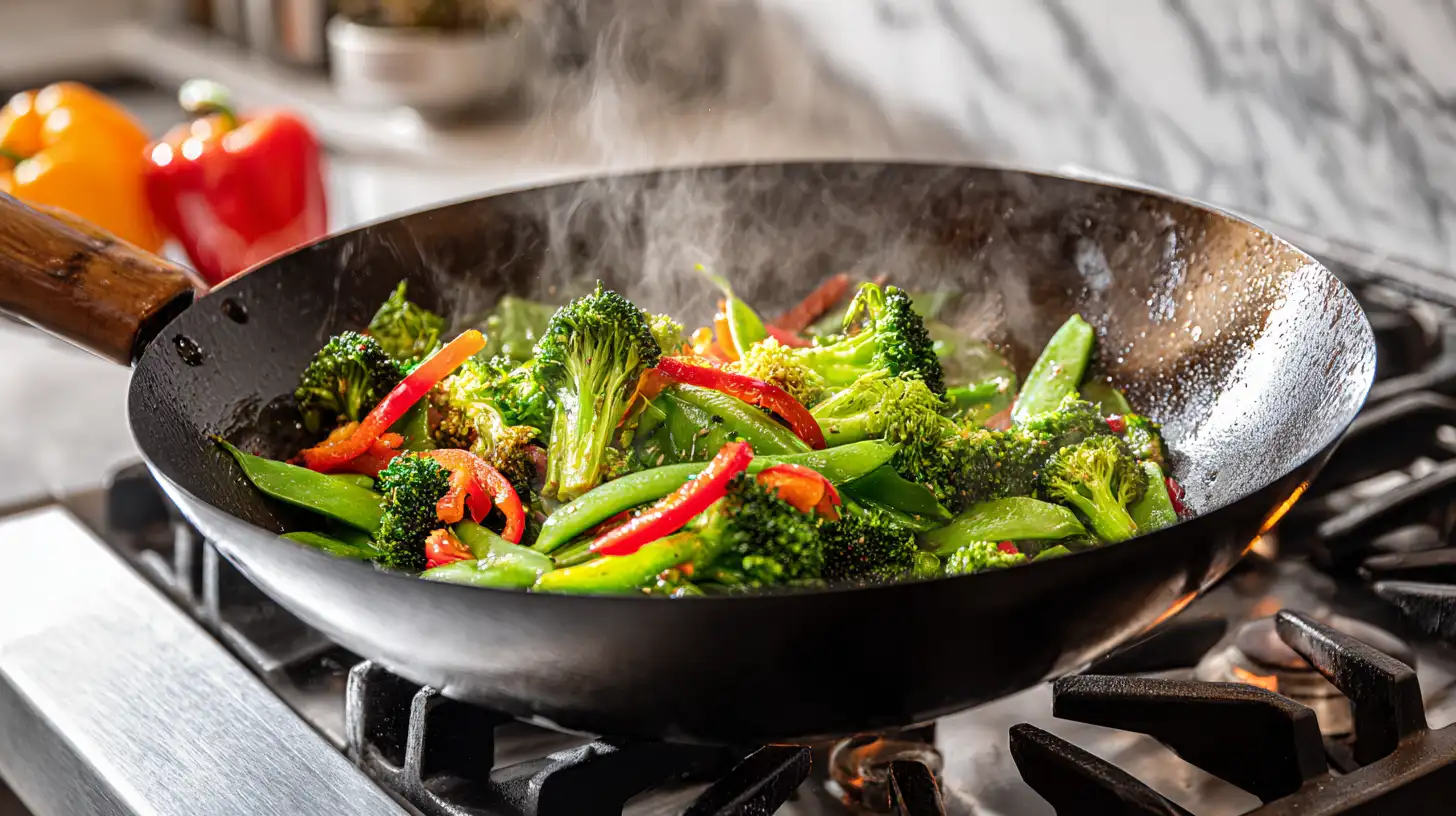
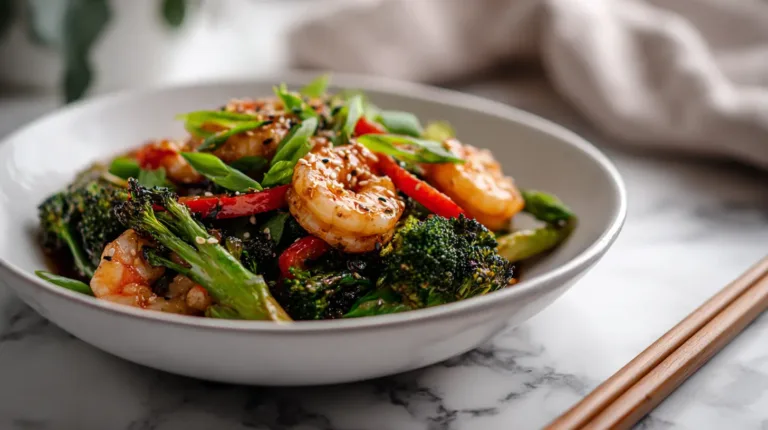
Add the remaining tablespoon of oil to the same pan. Toss in your broccoli first since it takes the longest to cook. Let it sit for about two minutes without stirring—this is how you get those beautiful brown spots. Then add the bell pepper and snap peas. Stir everything around for another 2-3 minutes until the veggies are crisp-tender. You want them to still have some crunch, not turn into baby food.
Push the veggies to the sides of the pan, making a little well in the center. Add the garlic and ginger right there in the middle. Cook them for about 30 seconds until they smell absolutely incredible. Then mix everything together.
Step 5: Bring It All Together
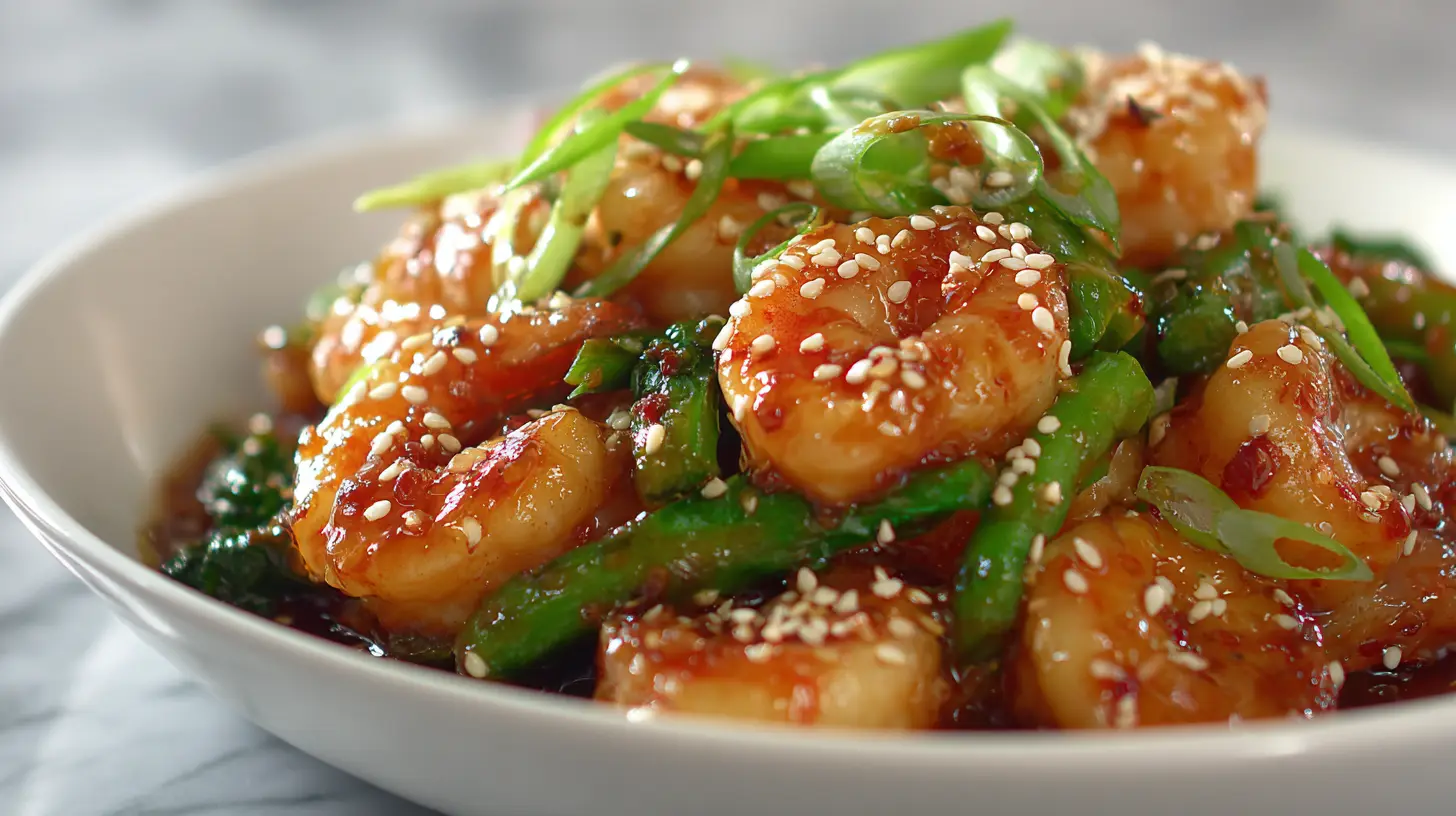
Add your shrimp back to the pan along with all those yummy juices that collected on the plate. Give your sauce one more quick whisk (the cornstarch likes to settle), then pour it all over everything in the pan.
Stir everything together and let it cook for about a minute. The sauce will go from thin to thick and glossy right before your eyes. It’s honestly so satisfying to watch. When everything’s coated and the sauce is clinging to the shrimp and veggies, you’re done.
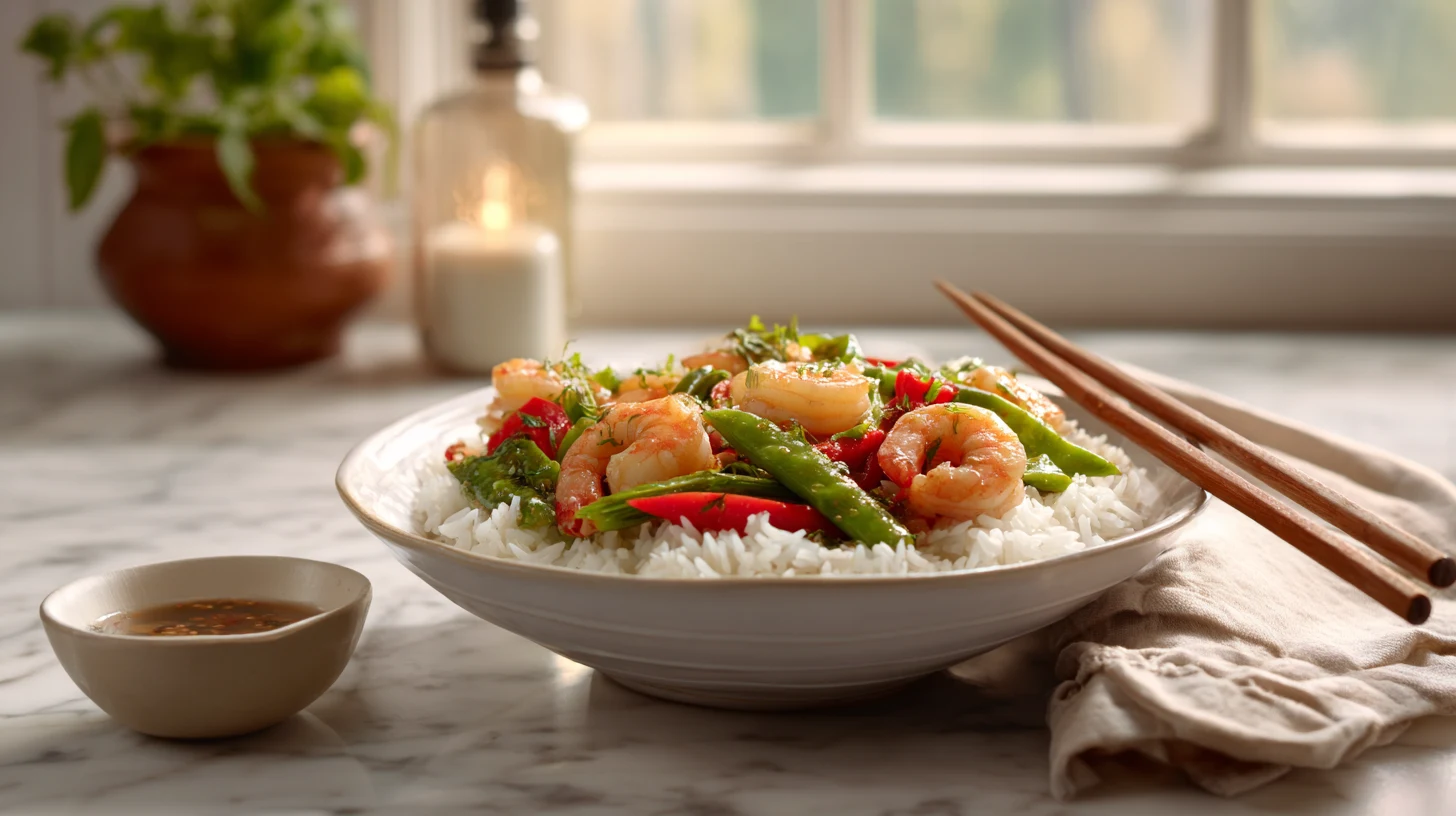
Sprinkle with those sliced green onions and serve immediately over rice or noodles, or just eat it straight from the pan. No judgment—I’ve done it.
Clara’s Kitchen Secrets (The Stuff That Actually Matters)
After making this recipe probably a hundred times, here’s what I’ve learned works and what doesn’t. These are the little things that take it from “pretty good” to “where did you order this from?”
The frozen shrimp situation: If you’re using frozen shrimp (which I usually do because they’re cheaper and always available), thaw them overnight in the fridge. In a rush? Put them in a colander and run cold water over them for about 10 minutes. Never—and I mean never—use hot water. It messes with the texture, and you’ll end up with rubbery, sad shrimp.
Size matters with shrimp: I use large shrimp (26-30 count per pound) because they’re easier to work with and harder to overcook. Those tiny salad shrimp cook in like 30 seconds, and it’s way too easy to turn them into little rubber bands. Bigger shrimp are more forgiving for busy cooks.
The veggie flexibility factor: This recipe is super forgiving about vegetables. Got zucchini that needs using up? Throw it in. Baby corn? Sure. Mushrooms? Absolutely. Just keep the total amount around 4-5 cups of veggies so the proportions stay balanced.
Serving size reality check: This feeds four people who are actually hungry. Not those mysterious recipe servings that claim to feed 6-8 but leave everyone still looking for snacks. If you’ve got teenage boys or anyone with a serious appetite, you might want to make 1.5 times the recipe.
Make-Ahead Magic (Because Life Gets Crazy)
Here’s what I do on Sunday afternoons when I’m feeling productive. I prep everything—peel and devein the shrimp, chop all the veggies, mix the sauce—and store them separately in the fridge. Then on Tuesday or Wednesday when I’m exhausted, I literally just dump everything in a hot pan, and dinner’s done in ten minutes.
The sauce keeps in the fridge for up to a week. Sometimes I double or triple the sauce recipe and keep it in a jar so I can make stir-fry whenever I have random vegetables and protein hanging around. It works with chicken, beef, or tofu just as well as shrimp.
Leftover stir-fry is actually amazing. Store it in an airtight container in the fridge for up to three days. I usually eat it cold straight from the container for lunch the next day, but you can reheat it gently in a pan or microwave if you prefer. Just don’t overcook the shrimp when reheating, or they’ll get tough.
Ways to Mix It Up (Because Variety Is Life)
Once you’ve made this basic version a few times, here are some fun ways to keep things interesting:
Spicy Thai Style: Add a tablespoon of Thai red curry paste to the sauce and swap the broccoli for baby corn and water chestnuts. Finish with fresh basil and a squeeze of lime. My kids think this version is “fancy restaurant food.”
Ginger Lover’s Dream: Triple the ginger and add a tablespoon of rice vinegar to the sauce. The brightness cuts through everything beautifully. Mark requests this version specifically.
Cashew Crunch: Toss in half a cup of roasted cashews at the very end. The crunch factor is unreal, and it makes the dish feel more substantial somehow.
Lo Mein Style: Skip the rice and toss everything with cooked lo mein noodles or even spaghetti. Add an extra splash of soy sauce and sesame oil. The kids love when I make it this way because they can twirl the noodles.
Want to switch up the protein? This same technique works beautifully with salmon, cod, or any firm white fish. Check out my collection of salmon dinner recipes or my best baked salmon recipes if you want to explore more seafood options.
For more delicious ways to use shrimp, check out my complete shrimp recipes guide or try my honey garlic shrimp for a sweet and savory twist. And if you love the stir fry technique but want to try it with beef, my beef stir fry recipe uses the same method with different flavors.
Frequently Asked Questions (The Stuff Everyone Wants to Know)
Can I use frozen vegetables instead of fresh?
Absolutely! I do this all the time, especially in winter when fresh veggies cost a fortune. Just make sure to thaw them completely and squeeze out any excess water before cooking. Otherwise they’ll release too much moisture, and you’ll end up with a soupy mess instead of a proper stir fry. I usually spread frozen veggies on a kitchen towel and pat them really dry.
Why does my stir-fry always turn out watery?
Oh man, I struggled with this for so long. There are usually three culprits: your pan isn’t hot enough, you’re adding too much at once, or your ingredients are too wet. Make sure your pan is really hot before anything goes in, cook in batches if needed, and pat everything dry before cooking. Also, don’t add the sauce until the very end—adding it too early causes everything to steam.
What’s the best rice to serve with shrimp stir-fry?
Honestly? Whatever rice you have or have time to make. White rice is traditional and quick, but we eat this over brown rice pretty often because it’s what I usually have cooked in the fridge. Cauliflower rice works great if you’re going low-carb. I’ve even served it over quinoa when I’m trying to sneak extra protein into dinner. The sauce is flavorful enough that it makes anything taste good.
How do I know when the shrimp are perfectly cooked?
Shrimp are done when they’re pink and opaque all the way through, and they’ve curled into a C shape. If they curl into an O shape (like, really tight), you’ve slightly overcooked them—they’ll still be fine to eat, just a bit chewier. The whole cooking process for shrimp only takes about 3-4 minutes total, so watch them carefully. When in doubt, pull one out and cut it in half to check.
Can I make this without oyster sauce?
You can, but oyster sauce really does add that special something that makes it taste like takeout. If you can’t find it or prefer not to use it, try adding an extra tablespoon of soy sauce plus a teaspoon of fish sauce (if you have it). Or use hoisin sauce instead—it’ll be a bit sweeter but still delicious. I’ve also made it with just soy sauce and honey when I was out of everything else, and it was still good enough that everyone cleaned their plates.
Is this recipe keto-friendly or low-carb?
The stir-fry itself is naturally pretty low in carbs—most of the carbs come from whatever you serve it over. Skip the rice and serve it with cauliflower rice or shirataki noodles, and you’ve got yourself a keto-friendly dinner. The sauce has a tiny bit of cornstarch and honey, but it’s spread across four servings, so it’s really minimal. You could use a keto-friendly sweetener instead of honey if you want to be strict about it.
Let’s Make Dinner Happen
Look, I get it. Weeknight cooking can feel like just another thing on your endless to-do list. What I love about this shrimp stir-fry is its simplicity and speed, making it feel achievable even on hectic days.
The first time you make it, yes, it might take you the full 20 minutes. Maybe even 25 if you’re getting comfortable with the technique. But the second time? You’ll be faster. By the third time, you won’t even need to look at the recipe. It’ll just be something you know how to make, and that’s when cooking stops feeling like a chore and starts feeling like taking care of yourself and your family.
And here’s the thing nobody talks about enough—meals like this, the ones that come together quickly on a random Tuesday, those are the ones your kids will remember. Not the fancy holiday dinners or the complicated weekend projects. They’ll remember standing in the kitchen with you, stealing pieces of bell pepper, asking why the shrimp curl up like that, and feeling warm and fed and safe.
So go ahead. Make this tonight. Or tomorrow. Or whenever you need a win in the kitchen. I’ll be right here cheering you on, because you absolutely can do this. And you’re going to do it well.
Made this shrimp stir-fry? I’d love to hear how it turned out! Drop a comment below and tell me—did your family devour it? What vegetables did you use? Did anyone ask for seconds? And if you’re looking for more quick weeknight wins, grab my free meal planning guide that’ll help you get dinner on the table without the stress. You’ve got this!
Shrimp Stir-Fry

A quick and delicious shrimp stir-fry that comes together in under 20 minutes, perfect for busy weeknight dinners.
For the Shrimp and Vegetables
- 1 pound large shrimp, peeled and deveined (Buy them prepped to save time.)
- 2 cups broccoli florets (Fresh or frozen both work.)
- 1 red bell pepper, sliced into strips
- 1 cup snap peas (Can substitute with snow peas.)
- 3 cloves garlic, minced (Jarred garlic works too.)
- 1 tablespoon fresh ginger, grated or finely chopped
- 2 tablespoons vegetable oil (Divided; important for cooking.)
- 2 green onions, sliced green onions (For garnish and flavor.)
For the Stir Fry Sauce
- 3 tablespoons soy sauce (Low sodium preferred.)
- 2 tablespoons oyster sauce (Key ingredient for flavor.)
- 1 tablespoon honey (Balances the flavors.)
- 1 tablespoon cornstarch (Thickens the sauce.)
- ¼ cup chicken broth (Can substitute with water.)
- 1 teaspoon sesame oil (Enhances flavor.)
- ¼ teaspoon red pepper flakes (Optional for heat.)
Preparation
- Prep all ingredients before turning on the stove to ensure quick cooking.
- Pat shrimp completely dry with paper towels to prevent steaming.
- Whisk together soy sauce, oyster sauce, honey, cornstarch, chicken broth, sesame oil, and red pepper flakes in a small bowl.
Cooking
- Heat a large skillet or wok over high heat and add 1 tablespoon of vegetable oil.
- Add shrimp in a single layer and let sear for about 90 seconds without moving.
- Flip shrimp and cook for another minute until opaque; transfer to a plate.
- In the same pan, add remaining tablespoon of oil and toss in broccoli first.
- Cook broccoli for about 2 minutes before adding bell pepper and snap peas.
- Stir-fry for another 2-3 minutes until vegetables are crisp-tender.
- Push veggies to the side of the pan, add garlic and ginger, and cook for 30 seconds.
- Return shrimp to the pan, pour the sauce over, and stir to combine.
- Cook until the sauce thickens and everything is coated evenly, about 1 minute.
- Serve immediately over rice or noodles.
This recipe is great for leftovers, and you can easily make it ahead of time. The sauce can be stored up to a week in the fridge.
Related Recipes
Shrimp Stir-Fry
Ingredients
For the Shrimp and Vegetables
- 1 pound large shrimp, peeled and deveined (Buy them prepped to save time.)
- 2 cups broccoli florets (Fresh or frozen both work.)
- 1 red bell pepper, sliced into strips
- 1 cup snap peas (Can substitute with snow peas.)
- 3 cloves garlic, minced (Jarred garlic works too.)
- 1 tablespoon fresh ginger, grated or finely chopped
- 2 tablespoons vegetable oil (Divided; important for cooking.)
- 2 green onions, sliced green onions (For garnish and flavor.)
For the Stir Fry Sauce
- 3 tablespoons soy sauce (Low sodium preferred.)
- 2 tablespoons oyster sauce (Key ingredient for flavor.)
- 1 tablespoon honey (Balances the flavors.)
- 1 tablespoon cornstarch (Thickens the sauce.)
- ¼ cup chicken broth (Can substitute with water.)
- 1 teaspoon sesame oil (Enhances flavor.)
- ¼ teaspoon red pepper flakes (Optional for heat.)
Instructions
Preparation
- Prep all ingredients before turning on the stove to ensure quick cooking.
- Pat shrimp completely dry with paper towels to prevent steaming.
- Whisk together soy sauce, oyster sauce, honey, cornstarch, chicken broth, sesame oil, and red pepper flakes in a small bowl.
Cooking
- Heat a large skillet or wok over high heat and add 1 tablespoon of vegetable oil.
- Add shrimp in a single layer and let sear for about 90 seconds without moving.
- Flip shrimp and cook for another minute until opaque; transfer to a plate.
- In the same pan, add remaining tablespoon of oil and toss in broccoli first.
- Cook broccoli for about 2 minutes before adding bell pepper and snap peas.
- Stir-fry for another 2-3 minutes until vegetables are crisp-tender.
- Push veggies to the side of the pan, add garlic and ginger, and cook for 30 seconds.
- Return shrimp to the pan, pour the sauce over, and stir to combine.
- Cook until the sauce thickens and everything is coated evenly, about 1 minute.
- Serve immediately over rice or noodles.
Notes
This recipe is great for leftovers, and you can easily make it ahead of time. The sauce can be stored up to a week in the fridge.