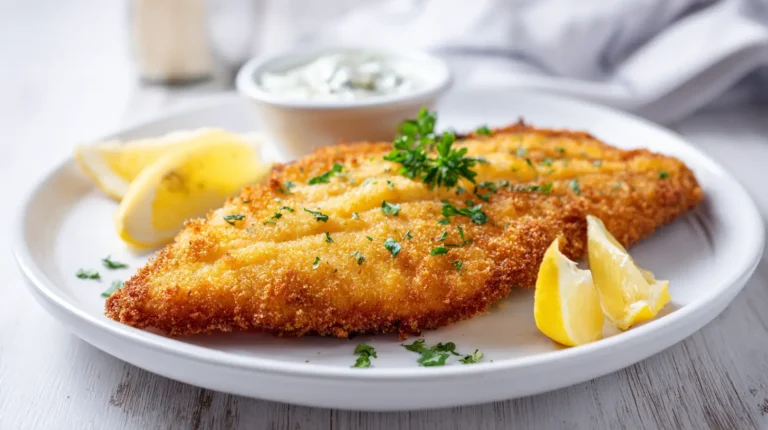
Classic Maryland Crab Cakes
These Maryland-style crab cakes are made with lump crab meat, very little filler and a golden pan-fried crust, and they take about 50 minutes including chilling. This crab cakes recipe makes four generous cakes, one per serving, and the mixture comes together in a single bowl.
The goal is simple: let the crab be the star. A light binder of mayonnaise, egg and crushed saltine crackers holds the lumps together, while Dijon mustard, lemon juice, Worcestershire sauce and Old Bay seasoning add a savory, slightly tangy backdrop.
Why These Crab Cakes Work
Good crab cakes are mostly crab, held together just enough to survive the pan. This recipe is built around that idea.
- Mostly crab: One pound of crab meat goes into four cakes, and only 1/4 cup of crushed crackers is added, so every bite tastes like crab instead of breading.
- A light, flavorful binder: Mayonnaise and one egg coat the lumps and set as they cook, while mustard, lemon juice and Worcestershire sauce season the mixture without covering the crab.
- Gentle handling: Folding the mixture with a rubber spatula keeps the large lumps intact, which gives the cakes a tender texture with visible pieces of crab.
- Time to firm up: A short rest in the refrigerator helps the binder set, so the cakes keep their shape in the skillet.
- Simple cooking: A nonstick skillet, a little butter and medium heat are all you need for a golden crust.
Ingredients and Substitutions
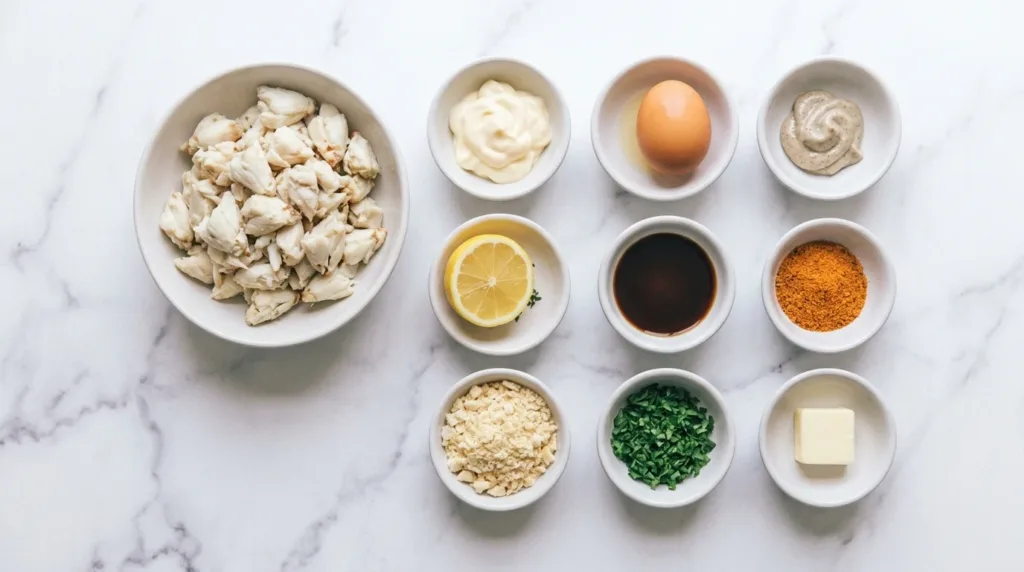
The full measurements are in the recipe card below. Here is what each ingredient does and what you can use instead.
- Jumbo lump, lump or backfin crab: Jumbo lump crab meat has the largest whole pieces and gives the most impressive texture. Lump crab meat has slightly smaller pieces and costs less, and backfin is made of smaller flakes. Any of the three works here, though cakes made with smaller pieces will be a little softer. Pick through the meat for shell fragments, and press it lightly in a fine sieve if it looks wet.
- Saltines or panko: Finely crushed saltine crackers are the classic binder. Panko works in the same amount, and it gives the cakes a slightly lighter texture. If you use panko, add a pinch of salt.
- Old Bay seasoning or a homemade mix: If you do not have Old Bay seasoning, stir together 1/4 teaspoon paprika, 1/4 teaspoon celery salt and a pinch of black pepper for a similar flavor.
- Mayonnaise or plain Greek yogurt: Plain Greek yogurt can replace the mayonnaise one for one. The cakes will taste a little tangier and the mixture will be slightly looser, so chill the shaped cakes the full 30 minutes.
- Butter or olive oil: Butter gives a rich flavor and a deeper golden color. Olive oil handles the heat well and gives a lighter taste.
- Cayenne: The pinch of cayenne is optional. Leave it out if you want a milder flavor.
How to Make Crab Cakes
Follow these steps, and check the recipe card for exact measurements.
- Gently pick through the crab meat for any shell fragments and place it in a medium bowl, keeping the lumps as whole as possible.
- In a small bowl, whisk the mayonnaise, egg, Dijon mustard, lemon juice, Worcestershire sauce, Old Bay seasoning, black pepper, and cayenne (if using).
- Pour the mixture over the crab meat and add the crushed crackers and parsley.
- Fold gently with a rubber spatula just until combined, without breaking up the lumps.
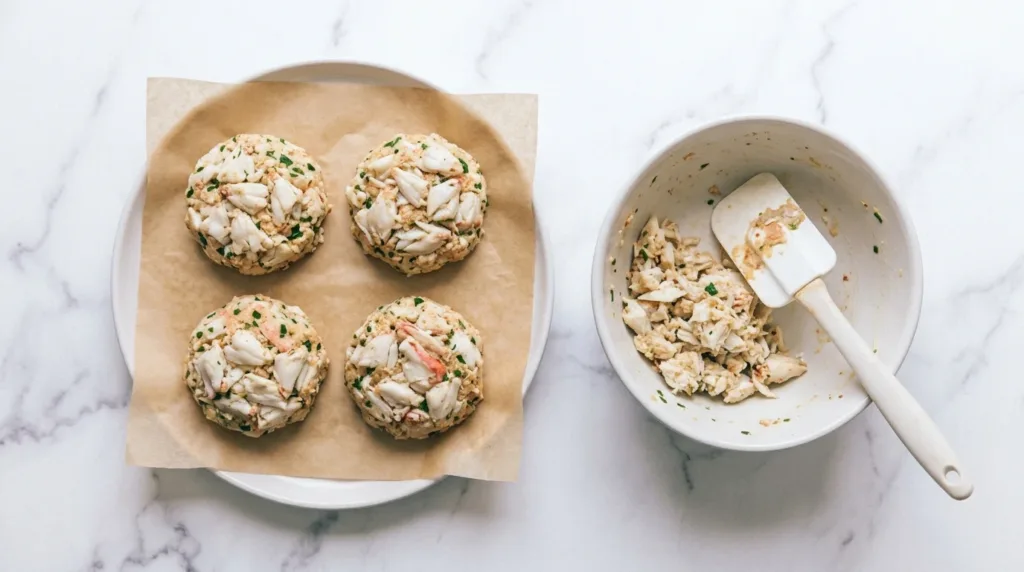
- Divide into 4 equal portions and shape each into a patty about 1 inch thick, without packing it tightly. Place on a plate and refrigerate for 15 to 30 minutes to firm up.
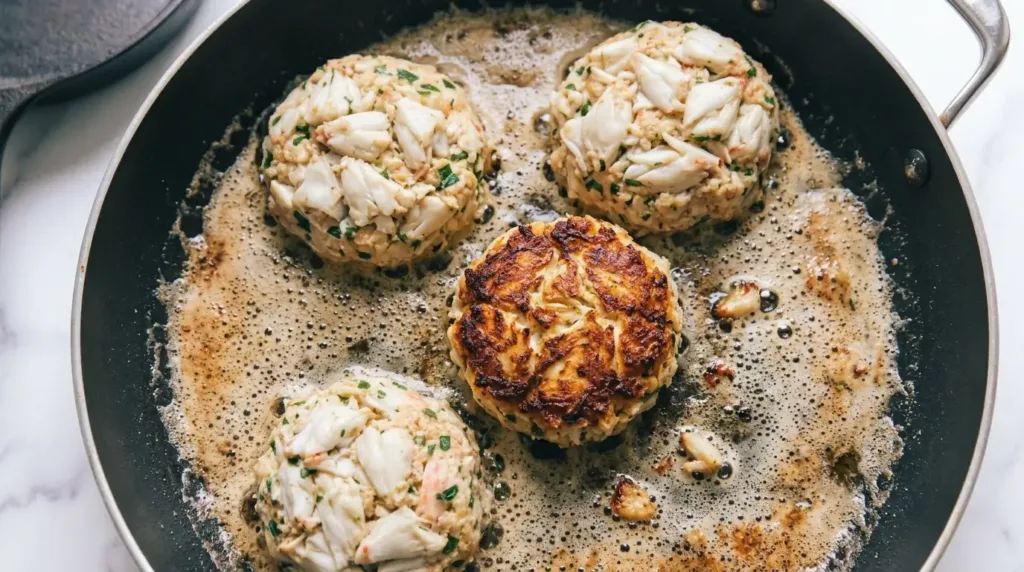
- Heat the butter or oil in a large nonstick skillet over medium heat until the butter foams or the oil shimmers. Add the crab cakes without crowding the pan.
- Cook for 4 to 6 minutes per side, until golden brown and the center reaches 160°F.
- Serve right away with lemon wedges and remoulade or tartar sauce.
Tips for Crab Cakes That Hold Together
- Drain the crab well. Extra liquid is the most common reason a crab cake mixture turns loose. Pat the crab meat dry with paper towels, or press it gently in a fine sieve.
- Fold, do not stir. Use a rubber spatula and turn the mixture just until the crab is coated. Stirring breaks the lumps into shreds.
- Do not pack the cakes tightly. Shape them gently, just firmly enough to hold together. Packing squeezes out the texture and makes the cakes dense.
- Chill before cooking. 15 to 30 minutes in the refrigerator lets the egg and mayonnaise firm up, which keeps the cakes intact when they hit the pan.
- Do not crowd the skillet. Leave space between the cakes so the heat stays steady. Cook in two batches if your pan is small.
- Flip only once. Wait until a golden crust forms, then turn each cake with a wide spatula. Moving them around early can break them apart.
- Use a thermometer. An instant-read thermometer inserted into the center should read 160°F.
What to Serve with Crab Cakes
Crab cakes are rich and delicate, so they pair well with something bright, crisp or lightly creamy.
- Quick remoulade: Stir together 1/2 cup mayonnaise, 1 tablespoon Dijon mustard, 1 tablespoon lemon juice, 1 tablespoon finely chopped dill pickle, 1 teaspoon drained capers and 1/2 teaspoon paprika. Chill it while the crab cakes rest.
- Tartar sauce and lemon: Lemon wedges and tartar sauce are the classic pairing.
- Salads: A crisp green salad with a lemon vinaigrette or a vinegar-based coleslaw balances the richness.
- Vegetables: Roasted asparagus, steamed green beans or corn on the cob all work well.
- Starches: Serve the crab cakes with roasted potatoes, rice or a slice of crusty bread.
If you enjoy crispy seafood, our Easy Salmon Croquettes use the same pan-fried, golden-crust method with canned salmon, and our Easy Fish Tacos Recipe is another quick dinner built on seasoned fish. For more ways to cook seafood, browse our Shrimp Recipes roundup.
Storing, Reheating and Freezing
Let the cooked crab cakes cool, then refrigerate them within two hours of cooking.
- Refrigerator: Store cooked crab cakes in an airtight container for 3 to 4 days.
- Reheating: Warm them on a rack set over a baking sheet in a 350°F oven for 10 to 15 minutes, until the center reaches 165°F. The rack lets hot air reach the bottoms and keeps the crust crisp.
- Freezing: Freeze the shaped, uncooked crab cakes in a single layer on a tray until firm, then move them to a freezer bag for up to 3 months. Thaw them overnight in the refrigerator, then cook as directed until the center reaches 160°F.
Common Questions
Can I bake or air fry crab cakes instead of pan-frying?
Yes. To bake, place the chilled crab cakes on a preheated, lightly oiled baking sheet and bake at 425°F for 15 to 18 minutes, flipping them halfway through. In an air fryer, cook them at 370°F for 10 to 12 minutes, turning once. In both cases, check that the center reaches 160°F. The crust will be a little less rich than a pan-fried one, and the nutrition estimate in the recipe card is calculated for the pan-fried version.
Can I use canned crab meat instead of fresh?
You can. Refrigerated pasteurized crab meat sold in tubs is the closest match to fresh and is what this recipe is written for. Shelf-stable canned crab meat is usually finer and wetter, so drain it very well and press out the extra liquid. The cakes will be softer and have less texture than ones made with lump crab.
Why are my crab cakes falling apart?
The usual causes are crab meat that is too wet, a mixture that is stirred too hard, cakes that skip the chilling time, or flipping too soon. Drain the crab well, fold gently, chill the shaped cakes for the full time, and let a crust form before you turn them. If the mixture still feels loose, add a tablespoon of crushed crackers.
Can I make crab cakes ahead of time?
Yes. Shape the cakes, cover the plate, and refrigerate them for up to 24 hours before cooking. They will firm up even more, which makes them easier to handle in the pan.
What is the difference between jumbo lump and lump crab meat?
Jumbo lump crab meat is made of the largest whole pieces from the body of the crab, and it is the most expensive grade. Lump crab meat contains a mix of broken jumbo pieces and smaller pieces. Both work in crab cakes, so choose based on your budget and how visible you want the lumps to be.
Classic Maryland Crab Cakes
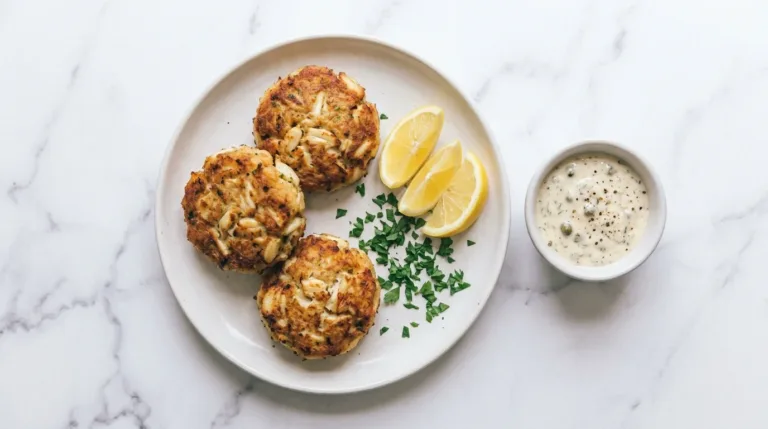
Lump crab meat with little filler, pan-fried until golden, ready in about 50 minutes including chilling.
Ingredients
- 1 pound jumbo lump crab meat (picked over for shells)
- 1/4 cup mayonnaise
- 1 large egg (lightly beaten)
- 1 tablespoon Dijon mustard
- 1 tablespoon fresh lemon juice
- 1 teaspoon Worcestershire sauce
- 1/2 teaspoon Old Bay seasoning
- 1/4 teaspoon black pepper
- 1 pinch cayenne pepper (optional)
- 1/4 cup finely crushed saltine crackers (about 8 crackers)
- 2 tablespoons finely chopped fresh parsley
- 2 tablespoons unsalted butter or olive oil (for pan-frying)
- lemon wedges (for serving)
- remoulade or tartar sauce (for serving, optional)
Instructions
- Gently pick through the crab meat for any shell fragments and place it in a medium bowl, keeping the lumps as whole as possible.
- In a small bowl, whisk the mayonnaise, egg, Dijon mustard, lemon juice, Worcestershire sauce, Old Bay seasoning, black pepper, and cayenne (if using).
- Pour the mixture over the crab meat and add the crushed crackers and parsley.
- Fold gently with a rubber spatula just until combined, without breaking up the lumps.
- Divide into 4 equal portions and shape each into a patty about 1 inch thick, without packing it tightly. Place on a plate and refrigerate for 15 to 30 minutes to firm up.
- Heat the butter or oil in a large nonstick skillet over medium heat until the butter foams or the oil shimmers. Add the crab cakes without crowding the pan.
- Cook for 4 to 6 minutes per side, until golden brown and the center reaches 160°F.
- Serve right away with lemon wedges and remoulade or tartar sauce.
Notes
Chill the shaped crab cakes for 15 to 30 minutes before cooking. The 15-minute chill time is included in the 50-minute total.
Leftover crab cakes keep in the refrigerator for 3 to 4 days. Reheat to 165°F.
Freeze the shaped, uncooked crab cakes for up to 3 months.
Nutrition is an estimate per serving, calculated from the listed ingredients using USDA data.