Best Baked Salmon Recipes
After fifteen years of getting dinner on the table for my family, I’ve learned one thing: salmon is your weeknight savior. When I come home after a long day and need something quick that everyone will actually eat, I reach for salmon. It bakes in fifteen minutes, pairs with whatever vegetables I have on hand, and my three daughters never complain. That’s the weeknight trifecta right there.
Here’s what makes baked salmon work for busy families. You can buy it frozen and keep it in your freezer for months. You don’t need fancy ingredients or complicated techniques. The oven does most of the work while you throw together a salad or steam some broccoli. And unlike chicken, which dries out if you overcook it by five minutes, salmon stays forgiving if you’re juggling homework help and dinner prep at the same time.
Choosing Your Salmon: Fresh vs. Frozen
Let’s clear something up right now. That “fresh” salmon at the grocery store? It was probably frozen and thawed for display. Unless you live on the coast and buy directly from a boat, frozen salmon is actually fresher than what’s sitting in the display case. Flash-freezing locks in quality right after the catch, while “fresh” fish can sit for days losing flavor and texture.
I keep frozen salmon fillets in my freezer at all times. They last up to eight months, cost less than fresh, and thaw overnight in the fridge. You don’t need to make any special preparations. Just move a fillet to your refrigerator the night before you want to cook it. For faster thawing, seal it in a plastic bag and submerge it in cold water for about an hour.
When buying salmon, look for individually vacuum-sealed portions. This makes it easy to thaw only what you need. Check that the packaging is intact with no freezer burn. Wild-caught Alaskan salmon tends to have better flavor than farmed, but both work fine for these recipes.

The Basic Method That Works Every Time
Preheat your oven to 375°F. This temperature keeps salmon moist without drying it out, even if you leave it in a minute too long. Line a baking sheet with parchment paper or foil for easy cleanup.
Pat your salmon dry with paper towels. This step matters more than you’d think. Wet fish steams instead of bakes, and you lose that lovely caramelization on top. Season with salt and pepper, then add your flavor components.
For a basic garlic butter salmon, brush the fillets with melted butter mixed with minced garlic. For something brighter, use olive oil with lemon juice and fresh herbs. The key is coating the fish evenly so every bite has flavor. If you enjoy simple, flavorful seafood preparations like this, you’ll also love our garlic butter baked salmon with asparagus.
Bake for 12 to 15 minutes for standard fillets about one inch thick. The fish is done when it flakes easily with a fork and reaches 145°F on an instant-read thermometer. I usually pull mine at 140°F because it continues cooking while it rests.
Four Flavor Variations for Your Week
Monday calls for lemon-dill salmon. Mix melted butter, lemon juice, minced garlic, and chopped fresh dill. Brush over the fillets and bake. The bright acidity cuts through the richness of the fish. Serve with roasted potatoes and green beans.
Wednesday needs something with a little kick. Try honey-mustard glazed salmon. Whisk together Dijon mustard, honey, olive oil, and a pinch of paprika. Spread this recipe over the fish before baking. The mustard adds tang while the honey caramelizes slightly in the oven. This dish pairs perfectly with rice and steamed broccoli.
Friday deserves teriyaki salmon. Combine soy sauce, brown sugar, minced ginger, and garlic. Brush half on the salmon before baking, then use the rest as a finishing glaze. The sweet-savory combination never fails with kids. Serve over rice with edamame on the side, similar to our popular salmon dinner recipes.
Sunday calls for herb-crusted salmon when you have an extra five minutes. Mix panko breadcrumbs with melted butter, chopped parsley, and grated Parmesan. Press this mixture onto the salmon and bake at 425°F for a crispy topping. It feels fancy but takes minimal effort.

Temperature and Timing Tips
Standard fillets need 12 to 15 minutes at 375°F. Thicker fillets, closer to 1.5 inches, need 18–20 minutes. If you’re cooking a whole side of salmon for a crowd, expect 25 to 30 minutes.
Here’s a trick I use: check the salmon after 10 minutes. Look for the flesh starting to turn opaque and lighten in color. When it’s almost done, the fish will just start to flake when you insert a fork. That’s when I pull it out. The residual heat finishes the cooking while I plate everything else.
An instant-read thermometer eliminates guesswork. Insert it into the thickest part of the fillet. At 120°F to 125°F, you get medium-rare salmon that’s still translucent in the center. At 135°F to 140°F, it’s cooked through but still moist. The FDA recommends 145°F, but I find that makes it drier than my family prefers.
Skin-on fillets help protect the fish from direct heat. Place them skin-side down on the baking sheet. The skin creates a barrier that keeps the flesh tender. You can easily peel it off after cooking if you would rather not eat it, though crispy salmon skin has its fans.
What to Serve With Baked Salmon
Roasted vegetables work because they bake at the same temperature. Toss asparagus, Brussels sprouts, or green beans with olive oil, salt, and pepper. Spread them on a separate baking sheet and put them in the oven when you start the salmon. Everything finishes at the same time.
Rice pilaf makes an effortless side. Start it on the stovetop before you begin the salmon. By the time the fish is done, your rice is ready. Quinoa works the same way if you want something different.
A simple salad rounds out the meal. While the salmon bakes, tear some lettuce, slice a cucumber, and halve some cherry tomatoes. Dress with olive oil and lemon juice. Done. The technique is similar to what we use in our baked cod with lemon and dill, which also pairs beautifully with fresh sides.
Mashed potatoes work for heartier appetites. Make them while the fish bakes. Sweet potatoes roasted in wedges are another option that my daughters actually request.

Common Problems and Quick Fixes
Dry salmon means you overcooked it. Next time, pull it from the oven sooner and use a thermometer. If your salmon is already dry, serve it with a sauce. A lemon-butter sauce, tzatziki, or even just a squeeze of fresh lemon helps.
A fishy smell usually means your salmon wasn’t fresh to begin with. Quality frozen salmon shouldn’t smell fishy when thawed. If it does, rinse it under cold water and pat it very dry. A squeeze of lemon juice before cooking helps mask any lingering odor.
Sticking to the pan happens when you don’t line your baking sheet. Always use parchment paper or foil. If you forgot and your salmon stuck, use a thin metal spatula to gently lift it. The skin will probably stay stuck to the pan, which is fine if you weren’t planning to eat it anyway.
Uneven cooking occurs with fillets of different thicknesses. Try to buy fillets that are similar in size. If you can’t, remove the thinner pieces a few minutes early while the thicker ones finish cooking.
Making It Work for Meal Prep
Baked salmon keeps in the refrigerator for three to four days. I often bake extra on Sunday to use in salads and grain bowls throughout the week. It tastes delicious cold or gently reheated.
To reheat, place it in an oven set to 275°F for 10 to 15 minutes. Cover it with foil to keep moisture in. The microwave works in a pinch but can dry it out. If using the microwave, add a tablespoon of water to the container and cover it before heating.
Cooked salmon flakes can be added beautifully to salad greens, topped with your favorite dressing. Mix it into pasta with olive oil, garlic, and vegetables. Toss it with rice and soy sauce for a quick fried rice. Make salmon cakes by mixing flaked salmon with breadcrumbs, egg, and seasonings, then pan-frying them. For more seafood inspiration beyond salmon, check out our seared ahi tuna recipe for another quick and healthy option.
Budget-Friendly Salmon Tips
Buy frozen salmon in bulk when it’s on sale. Individual fillets cost more per pound than larger packages. I portion out a big package myself, wrap each fillet in plastic wrap, then store them all in a freezer bag.
Canned salmon works for some recipes too. It’s significantly cheaper and still nutritious. Use it for salmon patties, pasta dishes, or mixed into salads. It won’t work for baked salmon recipes, but it’s a useful backup protein to keep in your pantry.
Check multiple stores for prices. Warehouse stores like Costco often have excellent deals on frozen wild-caught salmon. Regular grocery stores run sales too. Stock up when you see a favorable price.
Smaller fillets cost less than large center-cut pieces. They work fine for weeknight dinners. You might need to adjust cooking time slightly, but the technique stays the same.
Why This Protein Deserves a Spot in Your Rotation
Salmon delivers omega-3 fatty acids that are hard to get from other foods. It’s high in protein and cooks faster than chicken. My family gets a nutritious dinner without me spending an hour in the kitchen.
The versatility matters, too. Monday’s lemon-dill salmon tastes entirely different from Friday’s teriyaki version. Your family won’t feel like they’re eating the same thing twice a week even though the base protein stays the same.
Baked salmon works for different skill levels. If you’re new to cooking fish, start with the basic garlic butter version. Once you’re comfortable, try the variations. None of them require advanced techniques or hard-to-find ingredients. For even more variety in your seafood cooking, explore our cobia recipes guide for another delicious fish option.
When I started cooking salmon regularly, my daughters were skeptical. Now they request it. That’s the real test of a weeknight recipe. It has to be good enough that your family actually wants it again. These baked salmon recipes consistently meet that standard.
For more ways to incorporate seafood into your weekly meal planning, visit our complete Seafood Recipes Guide for everything from simple weeknight dinners to special occasion meals.
Frequently Asked Questions
What temperature should I bake salmon at?
Bake salmon at 375°F for the best results. This temperature cooks the fish through without drying it out. Standard one-inch fillets need 12 to 15 minutes at this temperature. For a crispier top, you can bake at 425°F for 10 to 12 minutes, but watch it closely to avoid overcooking.
Is frozen salmon as nutritious as fresh salmon?
Yes, high-quality frozen salmon is often better than “fresh” salmon at the store. Salmon is flash-frozen right after the catch, preserving its nutrients, flavor, and texture at peak freshness. The “fresh” salmon at most grocery stores was previously frozen and thawed for display, which means it’s been losing quality for days. Frozen salmon also costs less and lasts up to eight months in your freezer.
How do I know when baked salmon is done?
Salmon is done when it reaches an internal temperature of 145°F and flakes easily with a fork. Insert an instant-read thermometer into the thickest part of the fillet. For a more tender result, you can remove it at 135°F to 140°F. The fish should be opaque throughout and separate into large flakes when gently pressed with a fork.
Should I bake salmon with the skin on or off?
Bake salmon with the skin on, placed skin-side down. The skin acts as a barrier between the fish and the hot pan, helping the salmon cook more evenly and stay moist. It also prevents sticking. You can easily remove the skin after baking if you don’t want to eat it, but many people enjoy crispy salmon skin for its texture and flavor.
Can I cook salmon straight from the freezer?
Yes, you can bake salmon from frozen, but it will take longer and may not cook as evenly. Add 5 to 10 minutes to the cooking time and bake at 425°F. For better results, thaw salmon overnight in the refrigerator or place the sealed package in cold water for about an hour. Thawed salmon cooks more evenly and allows seasonings to penetrate better.
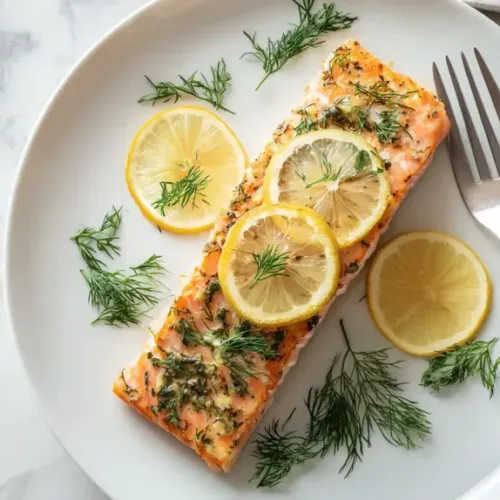
Baked Salmon
Ingredients
Basic Ingredients
- 4 pieces salmon fillets Skin-on preferred for moisture
- 2 tablespoons butter or olive oil For brushing the salmon
- 1 clove garlic Minced for flavoring
- 1 teaspoon salt To taste
- 1/2 teaspoon black pepper To taste
Flavor Variations
- 2 tablespoons lemon juice For lemon-dill salmon
- 1 tablespoon Dijon mustard For honey-mustard glazed salmon
- 2 tablespoons honey For honey-mustard glazed salmon
- 1 tablespoon soy sauce For teriyaki salmon
- 1 tablespoon brown sugar For teriyaki salmon
- 1 teaspoon minced ginger For teriyaki salmon
- 1/4 cup panko breadcrumbs For herb-crusted salmon
- 2 tablespoons grated Parmesan For herb-crusted salmon
- 2 tablespoons fresh parsley Chopped for herb-crusted salmon
- 1 tablespoon fresh dill For lemon-dill salmon
- 1/4 teaspoon paprika For honey-mustard glazed salmon
Instructions
Preparation
- Preheat your oven to 375°F (190°C). Line a baking sheet with parchment paper or foil.
- Pat your salmon fillets dry with paper towels.
- Season the salmon with salt and pepper, then brush with melted butter or olive oil mixed with minced garlic.
Baking
- Place the salmon fillets on the prepared baking sheet and bake for 12 to 15 minutes, depending on thickness.
- Check for doneness by ensuring the fish flakes easily with a fork and reaches an internal temperature of 145°F (63°C).
Serving
- Serve with your choice of sides such as roasted vegetables, rice, or a fresh salad.