Vegan Stuffed Bell Peppers: A Flavorful, Nutritious Plant-Based Delight
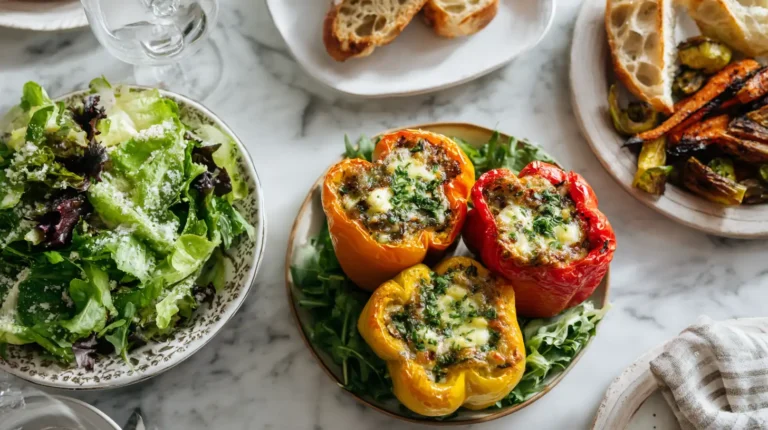
These vegan stuffed bell peppers are filled with seasoned quinoa, black beans, sweet corn, fire-roasted tomatoes, and warming spices, then baked until the peppers are tender and the tops are lightly charred. Each pepper delivers about 14 grams of plant protein and 9 grams of fiber, making one a complete plant-based dinner in 45 minutes.
Vegan stuffed peppers work when the filling is well-seasoned, has varied textures (not all soft), and moisture is controlled during cooking, not when you throw random vegetables in a pepper and hope for the best. Need bold spices since there is no meat or cheese to provide umami depth. Need some crunch or firmness (nuts, seeds, slightly undercooked grains) to prevent mush. Before stuffing, it’s crucial to drain the excess liquid from the vegetables to prevent the peppers from becoming soggy. The pepper is just a vessel—the filling must be so good you’d eat it alone.
One medium red bell pepper provides about 152 mg of vitamin C — roughly 169% of the adult Daily Value set by the FDA — according to USDA FoodData Central.
The Harvard Nutrition Source notes that pairing legumes (the black beans here) with whole grains like quinoa provides a complete amino acid profile suitable for a plant-based main course.
Why Vegan Stuffed Peppers
Health Benefits of Vegan Stuffed Bell Peppers
Bell peppers are high in vitamin C, antioxidants, and fiber and low in calories. Vegan fillings (quinoa, lentils, and beans) provide plant protein, complex carbs, and fiber without saturated fat from meat or cheese. A nutritionally dense meal that’s genuinely healthy, not just “healthy for comfort food.”
But health benefits are meaningless if nobody wants to eat them. Taste and texture must work first.
Versatility
Can customize filling to any flavor profile—Mexican (black beans, corn, cumin), Mediterranean (chickpeas, spinach, sun-dried tomatoes), Italian (lentils, marinara, herbs), or Indian-spiced (cauliflower, peas, curry powder). This flexibility is an advantage but also requires commitment to the chosen flavor direction. Can’t be timid with seasonings.
For more vegan options, see our vegan breakfast recipes.
Choosing Bell Peppers
Color matters: Red, yellow, and orange peppers are sweeter and more flavorful than green. Green peppers have a bitter edge that can dominate filling—only use if you specifically want that flavor.
Size and shape: Look for wide, squat peppers that sit flat—not tall, narrow ones that tip over. Need peppers with thick walls that hold shape during baking. Avoid thin-walled peppers that collapse into sad puddles.
Preparation: Cut tops off cleanly, and remove all seeds and white membranes. Leave peppers whole with the bottom intact. Don’t cut through the bottom, or the filling will leak out during cooking.
Building Good Filling
Grain or Legume Base
Best options:
- Quinoa: Cooks quickly, complete protein, slightly nutty flavor, holds texture well
- Brown rice: Hearty, familiar, absorbs flavors well (must be fully cooked before stuffing)
- Lentils: High protein, earthy flavor, firmer texture than beans
- Chickpeas: Creamy texture when mashed slightly, Mediterranean flavor profile
Avoid: White rice (gets mushy), pasta (wrong texture), and bread (becomes a soggy mess).
Vegetables
Works well: Diced onions, bell peppers, mushrooms (cook until moisture evaporates), corn, diced tomatoes (drained), and spinach (squeeze out water).
Problematic: Zucchini (too watery unless pre-cooked and drained), fresh tomatoes (release too much liquid), and eggplant (becomes mushy).
Critical rule: Cook vegetables before adding to filling. Don’t put raw vegetables in hoping they’ll cook during baking—they release liquid that makes everything soggy.
Texture Elements
This is what my original recipe completely missed. Contrasting textures are needed; otherwise, the filling will have a baby food consistency.
- Nuts: Chopped walnuts, pecans, almonds (toasted for more flavor)
- Seeds: Pumpkin seeds, sunflower seeds
- Slightly undercooked grains: Leave quinoa or rice tiny bit firm (al dente)
- Breadcrumbs on top: Creates crispy crust (mix with olive oil and herbs)
Seasoning (Critical)
Vegan filling has no meat or cheese, providing umami and richness—must compensate with bold seasoning. My bland disaster happened because I used timid amounts of spices.
Essential elements:
- Salt: More than you think necessary (start with 1 teaspoon per 4 peppers, taste, adjust)
- Umami sources: Soy sauce, tomato paste, nutritional yeast, miso paste
- Acid: Lemon juice, lime juice, or vinegar (brightens flavors)
- Spices: Cumin, smoked paprika, chili powder, garlic powder, onion powder (generous amounts)
- Fresh herbs: Cilantro, parsley, basil (add at end to preserve brightness)
Taste the filling before stuffing: it should taste slightly too salty/seasoned on its own because the pepper shell is bland and will dilute flavors.
How to Make Vegan Stuffed Peppers
Prepare Peppers
Cut tops off, remove seeds and membranes. Some recipes say to pre-roast peppers to soften them—this is optional. If peppers are very thick-walled, pre-roast 5-10 minutes. If already reasonably thin, skip this step to prevent overcooking later.
Stand peppers upright in baking dish. If they don’t sit flat, trim a tiny bit off the bottom (don’t cut through into the hollow center).
Make Filling
Basic process:
- Cook grain/legume base completely, let cool slightly
- Sauté vegetables until moisture evaporates and vegetables soften.
- Combine grain, cooked vegetables, seasonings, umami elements
- Taste and aggressively adjust seasoning (remember, should taste slightly too strong)
- Stir in texture elements (nuts, seeds) just before stuffing
Moisture check: Filling should hold together when squeezed but not be wet or soupy. If too wet, add breadcrumbs to absorb excess liquid.
Stuff and bake.
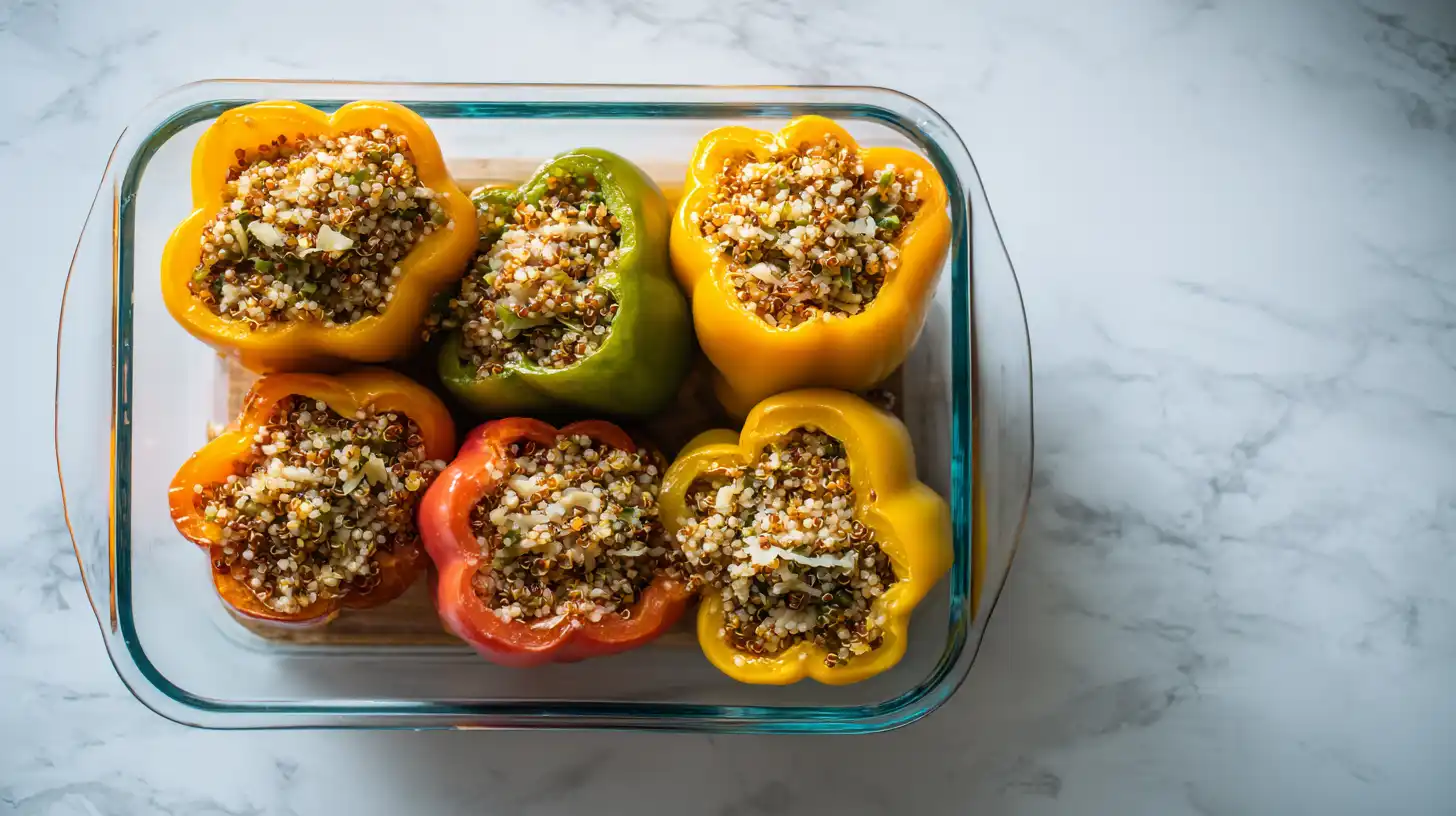
Pack filling firmly into peppers—don’t leave air pockets. Mound slightly above the rim.
Add ¼ inch water or vegetable broth to the bottom of the baking dish (prevents peppers from burning and creates steam for even cooking).
Cover with foil, bake at 375°F for 30 minutes. Remove foil and bake 10-15 more minutes until peppers are tender and tops are slightly browned. Don’t overbake, or peppers become mushy.
Let rest 5 minutes before serving (allows filling to set slightly).
Common Problems
Soggy Watery Peppers
Causes: Too much liquid in filling, vegetables not pre-cooked, filling too wet, peppers overbaked.
Prevention: Cook vegetables until moisture evaporates. Drain any watery ingredients (canned tomatoes, cooked spinach). Don’t add raw vegetables to filling. Check filling consistency before stuffing—it should be moist but not wet.
Bland Flavorless Filling
Cause: My exact problem—insufficient seasoning, no umami elements, forgot acid component.
Fixes: Double the spice amounts in the recipe (most recipes are timid). Add soy sauce or miso for umami. Add lemon juice or vinegar for brightness. Taste the filling multiple times during preparation; keep adjusting. Remember, filling should taste slightly too strong on its own.
Mushy Texture
Causes: Overcooked grains, no textural contrast, everything the same soft consistency.
Fixes: Cook grains al dente, not fully soft. Add nuts, seeds, or slightly crunchy vegetables. Consider topping with breadcrumb mixture for crispy crust. Don’t overbake peppers.
Filling Variations
Mexican-Style
Black beans, corn, quinoa, diced tomatoes (drained), cumin, chili powder, smoked paprika, lime juice, and cilantro. Top with avocado and salsa when serving.
Mediterranean
Chickpeas (slightly mashed), spinach (squeezed dry), sun-dried tomatoes, Kalamata olives, oregano, garlic, and lemon juice. Top with pine nuts.
Italian-Inspired
Lentils, marinara sauce (reduced until thick), diced zucchini (pre-cooked), Italian herbs, garlic, and nutritional yeast. Top with breadcrumbs mixed with olive oil and herbs.
Storage and Reheating
Refrigerate: Store in an airtight container for up to 4 days. Reheat in the oven at 350°F for 15-20 minutes or microwave for 2-3 minutes.
Freeze: Freeze unbaked stuffed peppers for up to 3 months. Don’t thaw before baking—bake frozen at 375°F for 50-60 minutes covered, then 10 minutes uncovered. Or freeze baked peppers, thaw overnight in the fridge, and reheat as above.
Vegan Stuffed Pepper Questions
Can I make these oil-free?
Yes. Sauté vegetables in vegetable broth or water instead of oil. Cooking takes slightly longer but works fine. Skip oil in the breadcrumb topping, or use a small amount of broth to help crumbs stick.
What can I use instead of quinoa?
Brown rice, lentils, chickpeas, cauliflower rice (low-carb option), couscous, or bulgur. Any grain or legume that holds texture when cooked works. Avoid pasta or white rice (they get mushy).
How do I stop peppers from falling over?
Trim a tiny bit off the bottom to create a flat base (don’t cut through into the hollow). Or use a muffin tin—place each pepper in a muffin cup to hold it upright during baking.
Final Reality on Vegan Stuffed Peppers
Vegan stuffed peppers stopped being a bland, mushy disappointment when I learned they require aggressive seasoning, texture variety, and moisture control. My dinner party failure happened because I treated them like a simple vegetable side dish—I threw ingredients in pepper, hoping they’d magically taste good. Doesn’t work that way.
The filling must be so flavorful and well-textured you’d eat it alone. Needs bold spices (no meat/cheese to provide depth), umami elements (soy sauce, miso, nutritional yeast), and acid for brightness (lemon, vinegar). Needs textural contrast—nuts, seeds, slightly firm grains—or becomes baby food. Needs moisture control—cook vegetables first, drain wet ingredients—or peppers become soggy disasters.
This is a practical main course when done correctly, not just a “healthy option” people tolerate. Properly seasoned vegan stuffed peppers with good texture balance satisfy even non-vegans. My guests now request these specifically—vindication after that first bland batch everyone left on plates. For side dish ideas, try our roasted potatoes recipe.
Related Recipes
Vegan Stuffed Bell Peppers
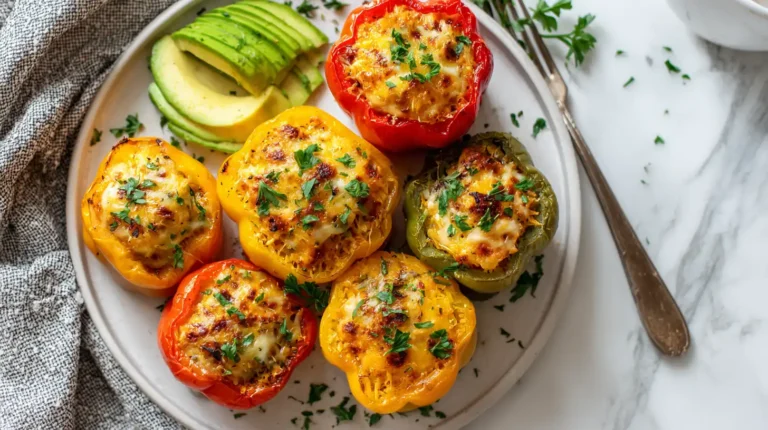
These vegan stuffed bell peppers are filled with seasoned quinoa, black beans, sweet corn, fire-roasted tomatoes, and warming spices, then baked until the peppers are tender and the tops are lightly charred. Bold seasoning, an umami boost, and crunchy seeds keep the plant-based filling flavorful and far from mushy.
Ingredients
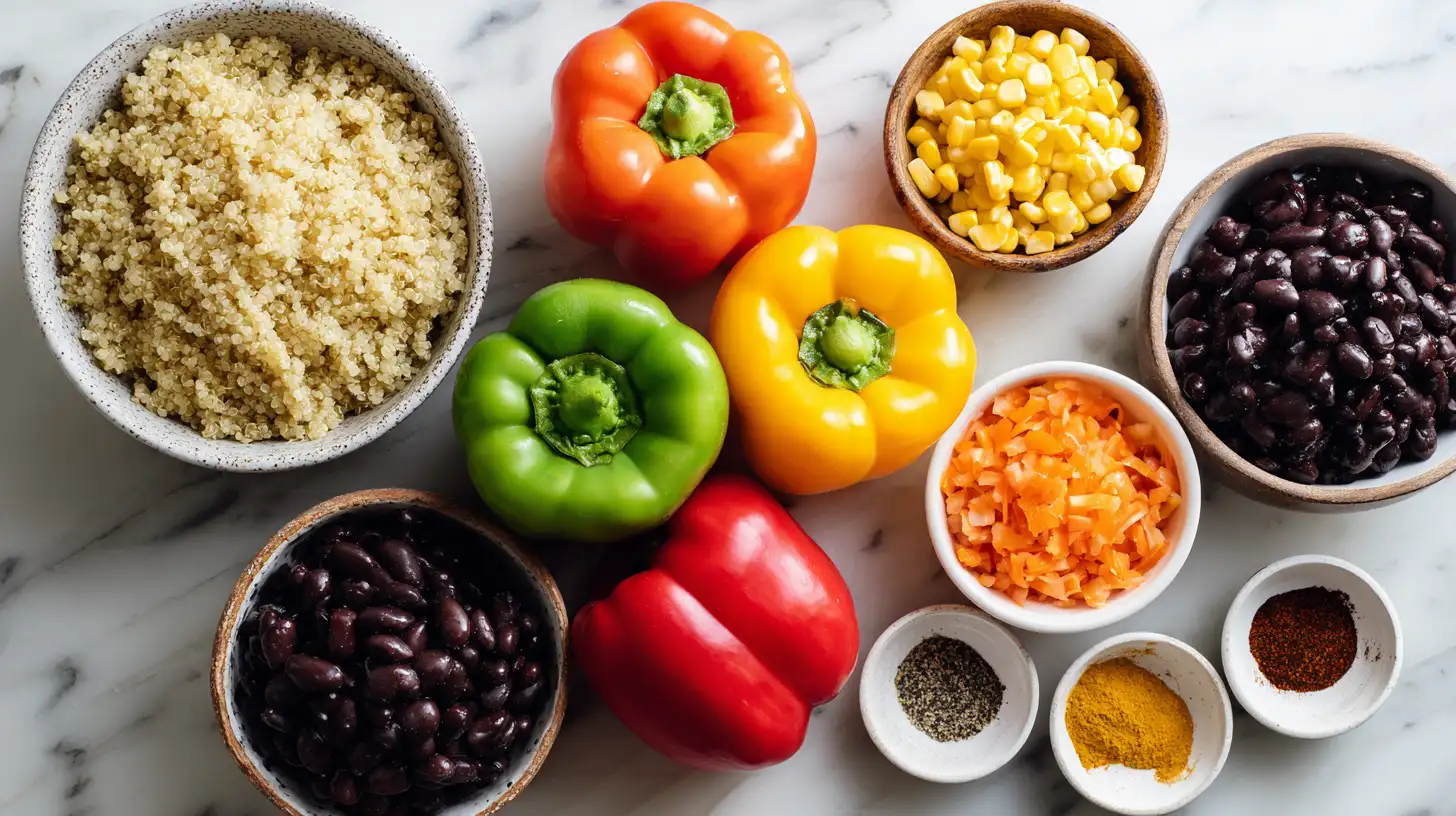
- 4 large bell peppers (red, yellow, or orange — wide and squat, thick-walled)
- 3/4 cup dry quinoa (cooked al dente — it firms the filling)
- 1 can (15 oz) black beans (drained and rinsed)
- 1 cup sweet corn
- 1 can (14.5 oz) fire-roasted diced tomatoes (well drained — critical)
- 1 small onion (diced)
- 3 cloves garlic (minced)
- 1 tablespoon olive oil (for sautéing (or broth for oil-free))
- 1 teaspoon ground cumin
- 1 teaspoon chili powder
- 1/2 teaspoon smoked paprika
- 1 teaspoon salt (taste and adjust)
- 1 tablespoon soy sauce or nutritional yeast (umami — essential without meat/cheese)
- 1 tablespoon lime juice (brightens the filling)
- 1/4 cup toasted pumpkin seeds or chopped walnuts (texture element — prevents mush)
- 1/4 cup fresh cilantro (chopped, added at the end)
- 1/4 inch water or vegetable broth (in the baking dish)
Instructions
- Cook the quinoa until just al dente — slightly firm grains keep the filling from turning mushy. Let cool slightly.
- Cut the tops off the peppers and remove seeds and membranes, keeping the bottoms intact. Trim a sliver off the base if they tip over. Stand them upright in a baking dish.
- Sauté the onion and garlic in olive oil until soft, then add the corn and drained tomatoes and cook until the moisture has evaporated — raw or wet vegetables make soggy peppers.
- Combine the quinoa, black beans, sautéed vegetables, cumin, chili powder, smoked paprika, salt, soy sauce, and lime juice. Taste aggressively and adjust — the filling should taste slightly too strong on its own, because the pepper shell dilutes it. Stir in the seeds or nuts and cilantro last.
- Pack the filling firmly into the peppers, mounding slightly above the rim. Pour 1/4 inch of water or broth into the bottom of the dish.
- Cover with foil and bake at 375°F for 30 minutes. Uncover and bake 10-15 more minutes, until the peppers are tender and the tops lightly browned. Don't overbake.
- Rest 5 minutes before serving so the filling sets. Top with avocado and salsa if you like.
Notes
Season boldly — with no meat or cheese, the filling needs generous spices, an umami source (soy sauce, miso, or nutritional yeast), and a hit of acid. Cook vegetables until dry and drain canned tomatoes well, or the peppers go soggy. Keeps 4 days in the fridge; freeze unbaked up to 3 months and bake from frozen (50-60 min covered + 10 uncovered). For oil-free, sauté in broth.