Are Black Beans Good for Chili?
My cousin made black bean chili for Thanksgiving once. She dumped three cans of black beans into a pot with some tomato sauce and called it chili. No other beans, no balance, just black beans swimming in red liquid. It tasted like dirt mixed with tomatoes. Everyone ate the turkey and avoided the chili. She never understood why. The problem wasn’t the black beans—it was using them wrong. Black beans need a support cast, not a solo performance.
Black beans work in chili, but they’re tricky. Use too many, and the earthy flavor dominates everything. Use too few and you wonder why you bothered. The texture issue is real—they can turn to mush faster than kidney beans if you’re not careful. But get the proportions right, pair them with complementary ingredients, and suddenly you’ve got depth most chilis lack. For more bean basics, check out our baked beans guide.
Why Black Beans in Chili Are Controversial
The Traditionalist Argument Against Black Beans
Texas chili purists will tell you real chili has zero beans. Period. Real chili consists solely of meat, chiles, and spices. They’d rather eat sand than see kidney beans in their bowl, let alone black beans. According to them, beans are filler for cheap restaurants trying to stretch their meat budget.
I comprehend their point partially. Bad chili uses beans as a cheap bulk ingredient. But dismissing all beans because some people use them wrong is like hating all pizza because you once had terrible frozen pizza. The ingredient isn’t the problem—execution is.
Modern Chili Evolution with Black Beans
Outside Texas, most people expect beans in chili. They add substance, stretch servings, and provide plant protein. Kidney beans became standard because they’re big, hold their shape, and taste neutral. Pinto beans joined because Southwestern cooks used what they had locally.
Black beans entered later, riding the vegetarian food wave of the 1990s. Their darker color, earthier taste, and firm texture made them popular in meatless chilis. Then meat-eaters discovered mixing bean types creates more intriguing texture than single-bean chili. Now black beans show up in all kinds of chili recipes.
What Black Beans Actually Bring to Chili
The Real Flavor of Black Beans in Chili
Black beans taste earthy. It is not “earthy,” as fancy food writers describe everything. Actually earthy—like mushrooms, like the smell of wet dirt after rain, like dark roasted coffee. There’s subtle sweetness underneath, but the earth notes hit first.
This flavor either enhances chili or ruins it depending on what else you’ve got. Pair black beans with bright tomatoes and lime juice? The acid cuts the earth, creating balance. Should I throw them in bland chili with weak spices? The flavor is akin to consuming a bowl of soil.
The key is treating black beans like you’d treat any strong ingredient—use them to add depth, not as the main attraction. Think of them like garlic. Garlic improves things in the right amount. Too much garlic, and that’s all you taste. Same principle.
Texture Truth About Black Beans
Black beans are smaller than kidney beans and softer than pinto beans when cooked. They hold shape better than pintos but break down faster than kidneys. This defect makes them finicky.
I’ve made chili where black beans stayed perfectly intact with a slight bite. I’ve also made chili where they dissolved into mush that clouded the liquid. The difference? Timing and temperature. Add them too early, simmer too hard, or use beans that were already overcooked (looking at you, cheap canned beans), and you get paste. Add them at the right moment, keep the heat gentle, and use quality beans, and they’re perfect.
Here’s what works: If using canned, add them during the last 20 minutes of cooking. Just heating through and absorbing flavor, not actually cooking. If using dried beans you cooked yourself, add when they’re still slightly firm—they’ll finish cooking in the chili and soften to exactly the right texture.
Nutrition Reality Check on Black Beans
Protein and Fiber Numbers That Matter
One cup of cooked black beans has roughly 15 grams of protein and 15 grams of fiber. Those are actual useful amounts, not trace nutrients food bloggers get excited about.
The protein helps if you’re making vegetarian chili and need substance beyond vegetables. Not a complete protein (missing some amino acids), but combined with corn or rice, you get a complete protein profile. The fiber keeps you full longer, helps digestion, and stabilizes blood sugar.
Is this dish revolutionary? No. Every bean provides similar benefits. But black beans pack it into a smaller package with more mineral density than lighter-colored beans. The dark skin contains anthocyanins (the same antioxidants in blueberries). Does that matter for chili? Probably not. But it doesn’t hurt.
Blood Sugar Impact of Black Beans
Black beans have a low glycemic index—around 30 on a scale where pure glucose is 100. This means slow, steady energy release instead of a sugar spike and crash.
My diabetic uncle can eat black bean chili without blood sugar drama. He can’t eat white rice or potatoes without problems. The combination of protein, fat, and fiber in black beans slows down how fast the carbohydrates hit your bloodstream. For anyone watching blood sugar—diabetics, people with insulin resistance, anyone trying to avoid energy crashes—black beans are a smart choice.
How to Actually Prepare Black Beans for Chili
Canned Black Beans Reality
Canned beans get a bad reputation, but they’re fine for chili if you handle them right. The problems people complain about—mushiness, can taste, too much sodium—are all fixable.
What I do with canned black beans:
- Dump can into the strainer; don’t just pour liquid off—actually drain it.
- Rinse under cold running water 30 seconds minimum, moving them around with hand
- Let drain completely in strainer while making rest of the chili.
- Add during last 15-20 minutes of cooking, not the beginning.
Brand matters. Store-brand canned beans are often overcooked and break apart. Name brands cost more but hold together better. Worth the extra dollar if texture matters to you.
Dried Black Beans Method
Dried beans take planning but give better results. Not “slightly better”—noticeably better texture and flavor. Here’s the reality of cooking dried black beans:
The soak (non-negotiable): Put beans in a bowl, cover with water three inches above beans. Leave on the counter for 8-12 hours. I usually do it overnight. Some people claim you don’t need to soak beans. Those people are wrong. Unsoaked beans cook unevenly, take forever, and cause more gas. Soak your beans.
The cook: Drain soaked beans, and put them in a pot with fresh water. Add aromatics if you want (onion chunk, garlic cloves, bay leaf), but NO SALT YET. Salting beans before they finish cooking makes them tough. This is science, not myth. Salt affects how bean skins absorb water.
Bring to a boil, reduce to a gentle simmer. Cook 45-60 minutes depending on bean age. Test by eating one—it should be tender but still hold its shape when you press it. Slight resistance in the center is perfect. Completely soft means overcooked.
Drain (save cooking liquid for soup stock), then add to chili. They’ll continue cooking in chili and reach perfect texture.
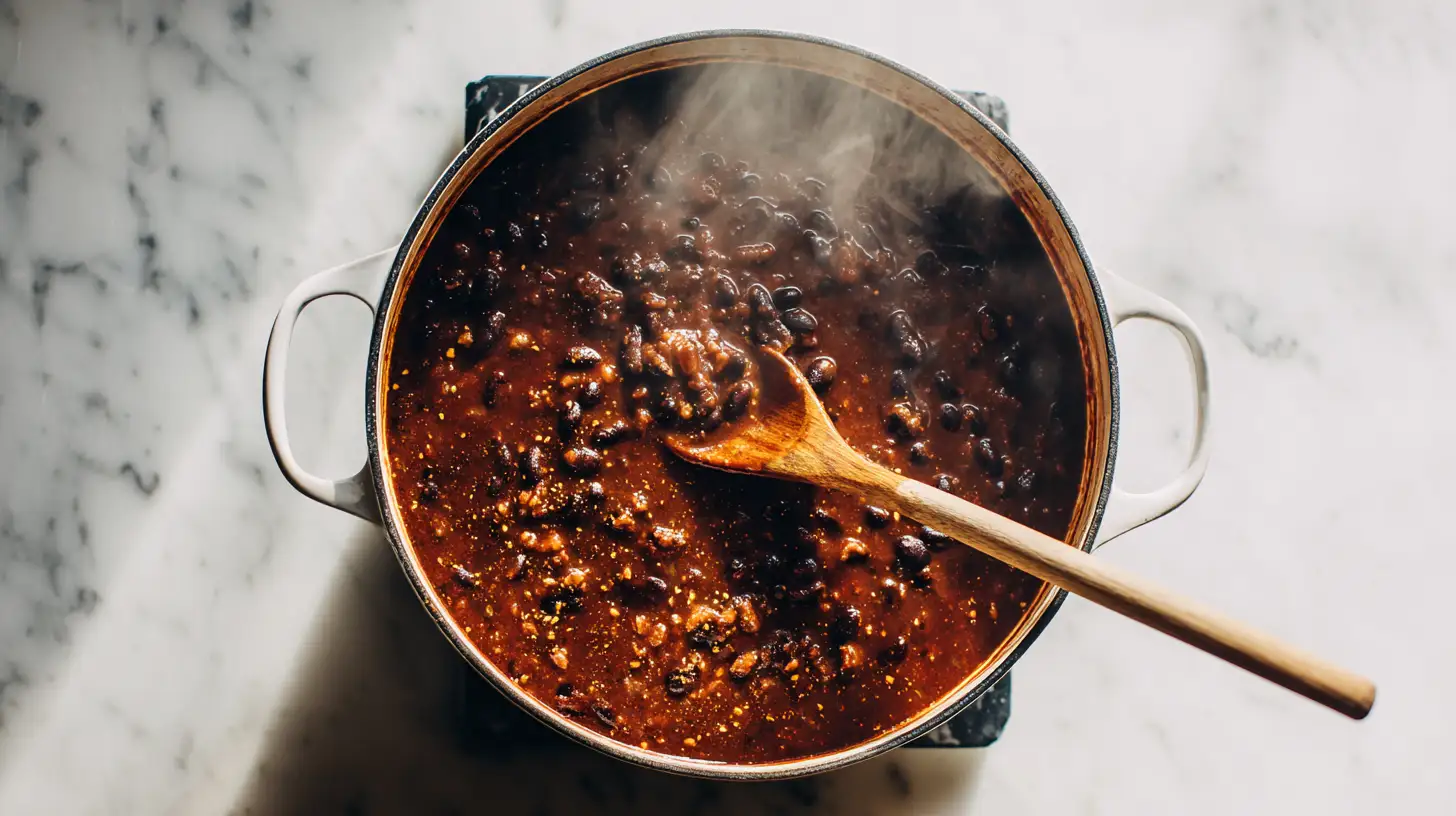
Actual Black Bean Chili Recipes That work.
Vegetarian Black Bean Chili That Actually Works
Vegetarian chili fails when people just remove meat and don’t replace it properly. You need substance, not just beans floating in tomato water.
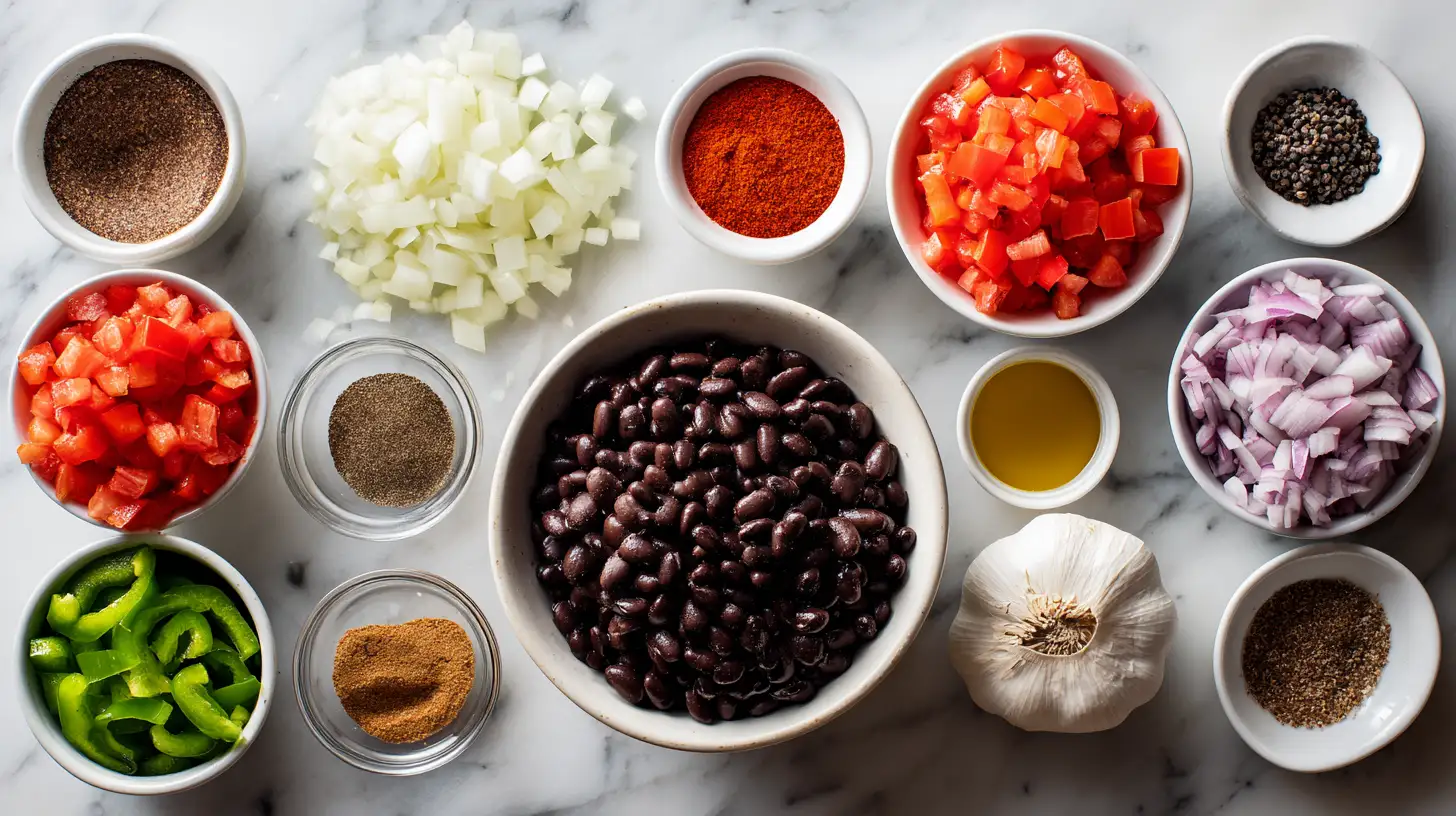
Foundation that works:
- 2 cans black beans (rinsed, drained)
- 1 can kidney beans (adds different texture)
- 1 large can crushed tomatoes
- 2 bell peppers, diced
- 1 large onion, diced
- 4 cloves garlic, minced
- 3 tablespoons chili powder
- 1 tablespoon cumin
- 1 teaspoon smoked paprika (IMPORTANT—adds missing smoke flavor)
- 1 tablespoon cocoa powder (secret weapon for depth)
Cook onions and peppers until soft, add garlic for 30 seconds, add spices to bloom them (a critical step people skip), add tomatoes and simmer for 20 minutes, and add beans for the last 15 minutes. Finish with lime juice and cilantro. The cocoa and smoked paprika make it taste like it has meat when it doesn’t.
For more vegetarian ideas, see our soup collection.
Mixed Bean Chili with Black Beans
Stop using just one bean type. Mix them. Different textures and flavors make better chili than a monotonous single-bean texture.
Ratio I use:
- 40% kidney beans (firm backbone)
- 30% black beans (earthy depth)
- 30% pinto beans (creaminess)
This combination gives you varied texture in every bite. Some beans hold their shape completely, others break down slightly to thicken sauce, and black beans add color contrast and depth. Way more interesting than all-kidney or all-black bean chili.
Black Bean and Meat Chili Balance
Adding black beans to meat chili is about balance. Too many beans and it’s bean stew with meat. Too few, so why bother?
For 2 pounds of ground beef, use 2 cans of beans total (1 black, 1 kidney or pinto). This keeps it meat-forward, while beans add substance and absorb flavors. Brown meat first, drain fat, build chili, and add beans near the end. The beans soak up meaty, spicy liquid and become little flavor bombs.
Problems I’ve Had with Black Beans in Chili
The Mush Problem
Made chili last month where the black beans completely disintegrated. Started as recognizable beans, ended as brown sludge thickening the chili into paste. What went wrong: used cheap canned beans that were already too soft, cooked chili too long on too high heat, and stirred aggressively.
Fixed it next time by switching to a better brand of canned beans, keeping the simmer gentle (barely bubbling), and stirring carefully with a spoon instead of vigorous mixing. Beans stayed intact.
The Dirt Taste
Boyfriend once said my black bean chili “tastes like I’m eating a garden.” Not a compliment. The problem was using mostly black beans with not enough acid to balance their earthy flavor.
Solution: added more crushed tomatoes, a squeeze of lime juice at the end, and an extra hit of chili powder. Acid and spice cut through the earthy flavor. Also reduced black beans to 1/3 of total beans instead of 2/3. Balance fixed it completely.
The Gas Issue
Real talk: beans cause gas. Black beans may be slightly more than other beans because of specific sugars in them. Can’t completely eliminate this but can reduce it:
- Long soak for dried beans (12+ hours)
- Thorough rinsing of canned beans
- Adding cumin and coriander (traditional digestive aids)
- Eating beans regularly (your gut adapts over time)
If you never eat beans and then suddenly eat a large bowl of black bean chili, you’re going to have problems. Start small, eat beans more often, and the issue reduces significantly.
Questions People Actually Ask Me
Can I use only black beans instead of kidney beans?
You can but shouldn’t. All-black-bean chili tastes too earthy, too one-note. Mix them at a 50/50 minimum. Better yet, use three bean types for complexity. Nobody makes chili with only one spice—the same logic applies to beans.
Does chili with black beans taste better overnight?
Yes, absolutely. All chili improves overnight as flavors meld. Black bean chili especially—the earthiness mellows out, spices blend together, and the whole thing becomes more cohesive. Always make chili the day before if possible. Refrigerate overnight, and reheat gently the next day. Trust me on this.
Can you freeze chili with black beans?
Freezes perfectly. Portion into containers (I use 2-cup portions), and freeze for up to 3 months. Thaw in fridge overnight, reheat on stove. The texture stays good; the beans don’t get weird. One of the best make-ahead meals for busy weeks. Way better than canned soup.
Does black bean chili work in an Instant Pot?
Works great. You can even use dried beans without soaking—Instant Pot’s pressure cooking softens them. But watch the timing. Black beans cook faster under pressure than kidney beans. If mixing bean types, add black beans halfway through, or they will turn to paste.
How do I make black bean chili spicier?
Add fresh jalapeños or serranos at the beginning when cooking onions. Or use canned chipotle peppers in adobo sauce (adds smoke plus heat). Cayenne pepper works but adds heat without flavor. Hot sauce at the end lets people customize the heat level themselves. I usually do jalapeños in chili and hot sauce on the table.
Final Reality Check on Black Beans in Chili
Black beans work in chili when you treat them right. Use them for depth and complexity, not as the main ingredient. Mix with other beans for varied texture. Balance their earthiness with acid and brightness. Don’t overcook them into mush.
Are they necessary? No. Can you make great chili without them? Absolutely. But they add something kidney and pinto beans don’t—a darker color, an earthier flavor, and a different nutritional profile. In mixed-bean chili, they’re valuable players on the team.
My recommendation: Don’t make all-black-bean chili unless you really love earthy flavors. Do use them as 30-40% of the total beans in mixed-bean chili. Do add them late in cooking to prevent mushiness. Do balance with acid and spice. Do this and you’ll understand why black beans earned their place in modern chili despite not being traditional. For more comfort food recipes, see our complete cooking guide.