Sunday afternoon, I stood in my kitchen with a dozen eggs and a stack of tortillas, exactly two hours before the week swallowed me whole. By the time I finished, I had 16 breakfast burritos wrapped in foil and stacked in my freezer like edible insurance policies against chaotic mornings. That was three years ago, and I haven’t looked back since.
Freezer breakfast burritos changed how my family handles mornings. No more skipped breakfasts, no more drive-through runs, and no more standing in front of the fridge at 6:30 AM wondering what to eat. These burritos sit in the freezer waiting for their moment, and when that moment comes, breakfast takes exactly 90 seconds in the microwave.
Why Freezer Breakfast Burritos Work So Well
The magic of freezer breakfast burritos lies in their simplicity. Eggs, cheese, and fillings wrapped in a tortilla freeze beautifully and reheat without turning into a soggy mess. Unlike other frozen breakfast options, homemade burritos taste like actual food because you control the ingredients and the seasoning.
Cost savings add up quickly. A batch of 12 burritos costs roughly what you’d spend on two fast-food breakfast sandwiches. When you multiply that across a month of mornings, you’re looking at significant savings without sacrificing quality or convenience. If you’re new to the concept of preparing meals in advance, our guide on freezer meals for beginners covers all the basics you need to know.
Time investment pays dividends all week long. Spending one to two hours on a Sunday means breakfast is handled for the next two to three weeks. That’s 15 to 20 mornings where you don’t have to think, plan, or cook. For families juggling school schedules, work commutes, and the general chaos of daily life, this kind of time-saving is worth its weight in gold.
Essential Ingredients for Perfect Freezer Burritos
Building excellent freezer burritos starts with choosing ingredients that handle freezing and reheating well. Some foods turn mushy or watery after thawing, while others maintain their texture beautifully. Here’s what works best.
Scrambled eggs form the foundation of any breakfast burrito. Cook them slightly underdone since they’ll continue cooking when reheated. Soft, creamy scrambled eggs work better than dry, firm ones. I typically use 2 eggs per burrito, which provides enough protein to keep you full until lunch.
Cheese melts twice in these burritos—once when you assemble them and again when you reheat them. Shredded cheddar, Monterey Jack, or a Mexican blend all work well. Pre-shredded cheese is convenient, but block cheese melts more smoothly if you have time to grate it yourself.
Protein options extend beyond eggs. Turkey sausage crumbles, seasoned ground beef, or shredded chicken all freeze beautifully. Cook your protein fully before adding it to the burritos. I often make a batch with turkey sausage for my husband and plain egg and cheese for the kids.
Vegetables add nutrition and flavor but require careful selection. Bell peppers, onions, and spinach freeze well when cooked first. Avoid raw tomatoes and lettuce—they turn watery and unpleasant after thawing. Roasted vegetables work better than raw ones since the cooking removes excess moisture.
Tortillas matter more than you might think. Flour tortillas work best for freezer burritos because they stay pliable when reheated. Look for burrito-sized tortillas (10-12 inches) rather than smaller taco-sized ones. Warming tortillas slightly before filling makes them easier to fold without cracking.
The Best Freezer Breakfast Burrito Recipes
Having variety in your freezer prevents breakfast boredom. Here are my family’s favorite combinations, each one tested and approved by picky eaters and hungry teenagers alike.
Classic Egg and Cheese Burrito
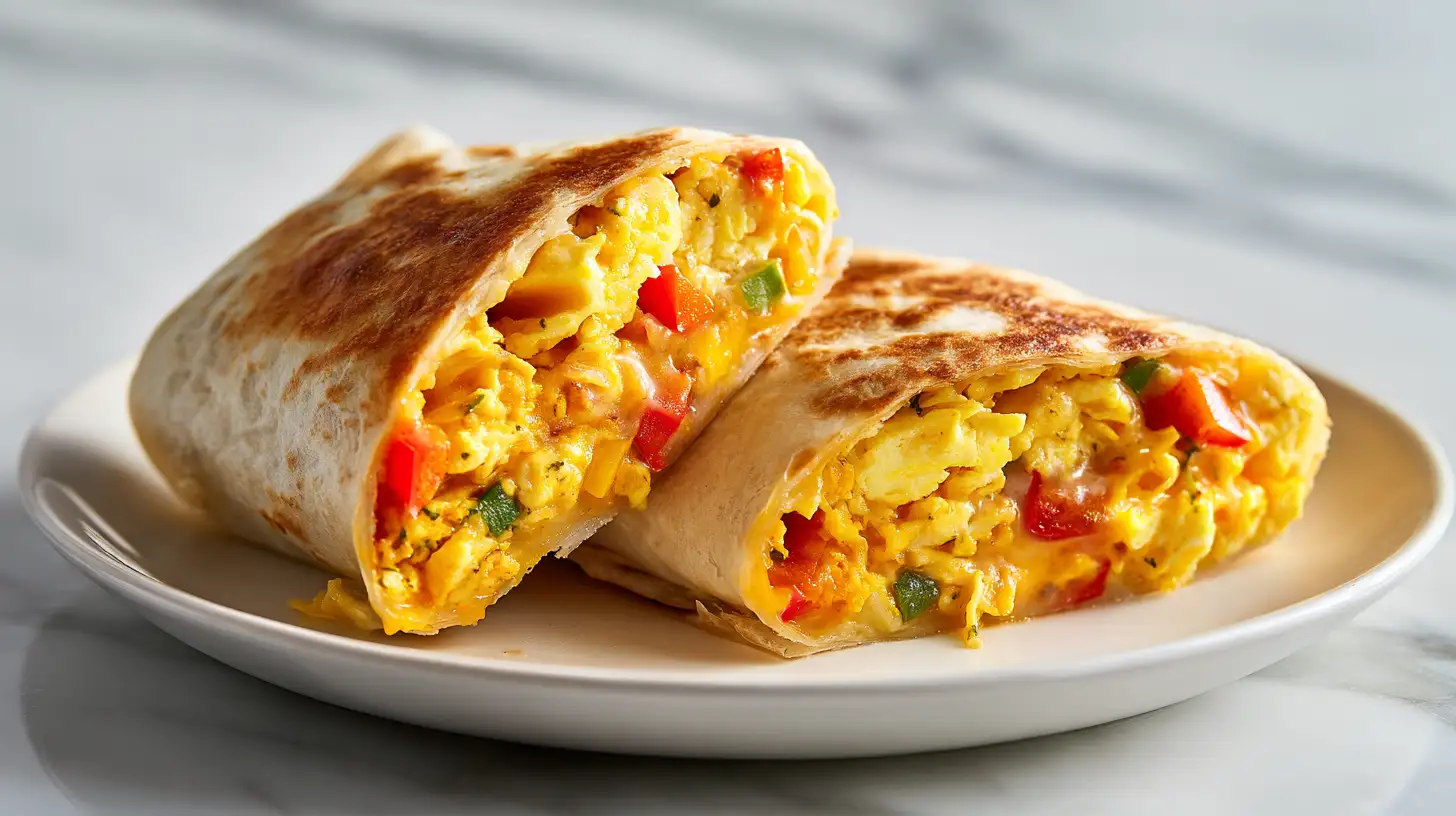
Sometimes simple wins. Scrambled eggs seasoned with salt and pepper, topped with shredded cheddar cheese. This version appeals to everyone, including kids who view vegetables with suspicion. The eggs should be soft and slightly underdone, and the cheese should be distributed evenly so every bite has that melty goodness.
Southwest Turkey Sausage Burrito
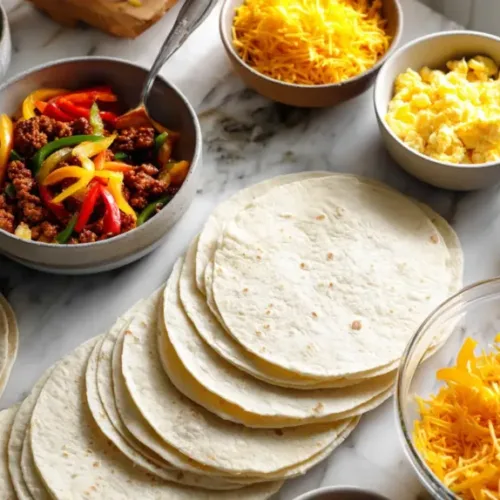
Brown turkey sausage crumbles with cumin, chili powder, and a pinch of cayenne. Mix with scrambled eggs and add sautéed bell peppers and onions. Top with pepper jack cheese for an extra kick. This combination brings serious flavor without being too spicy for sensitive palates.
Mediterranean Veggie Burrito
Sauté spinach, sun-dried tomatoes, and diced onions until the spinach wilts. Mix with scrambled eggs seasoned with oregano and garlic powder. Add crumbled feta cheese instead of cheddar. This lighter option works well when you want something more vegetable-forward.
Hearty Beef and Potato Burrito
Cook diced potatoes until crispy, then add seasoned ground beef. Combine with scrambled eggs and shredded cheddar. This version is substantial enough to fuel a long morning without needing a mid-morning snack. My teenage son requests this one specifically.
Chicken Fajita Breakfast Burrito
Use leftover shredded chicken or cook some specifically for this purpose. Sauté with fajita seasoning, sliced bell peppers, and onions. Mix with scrambled eggs and top with Monterey Jack cheese. A squeeze of lime juice before wrapping adds brightness that survives freezing.
Step-by-Step Assembly Process
Efficient assembly makes the difference between a pleasant afternoon project and a frustrating kitchen disaster. I’ve refined this process over countless batches, and setting up an assembly line saves significant time.
Prepare all your fillings first. Cook and season your eggs, prepare any additional proteins, and sauté your vegetables. Let everything cool to room temperature before assembling. Hot fillings create steam inside the wrapped burrito, which leads to soggy tortillas after freezing.
Warm your tortillas briefly. Stack them on a plate, cover with a damp paper towel, and microwave for 30 seconds. Warm tortillas fold without cracking. Work with 4-5 tortillas at a time to keep them pliable.
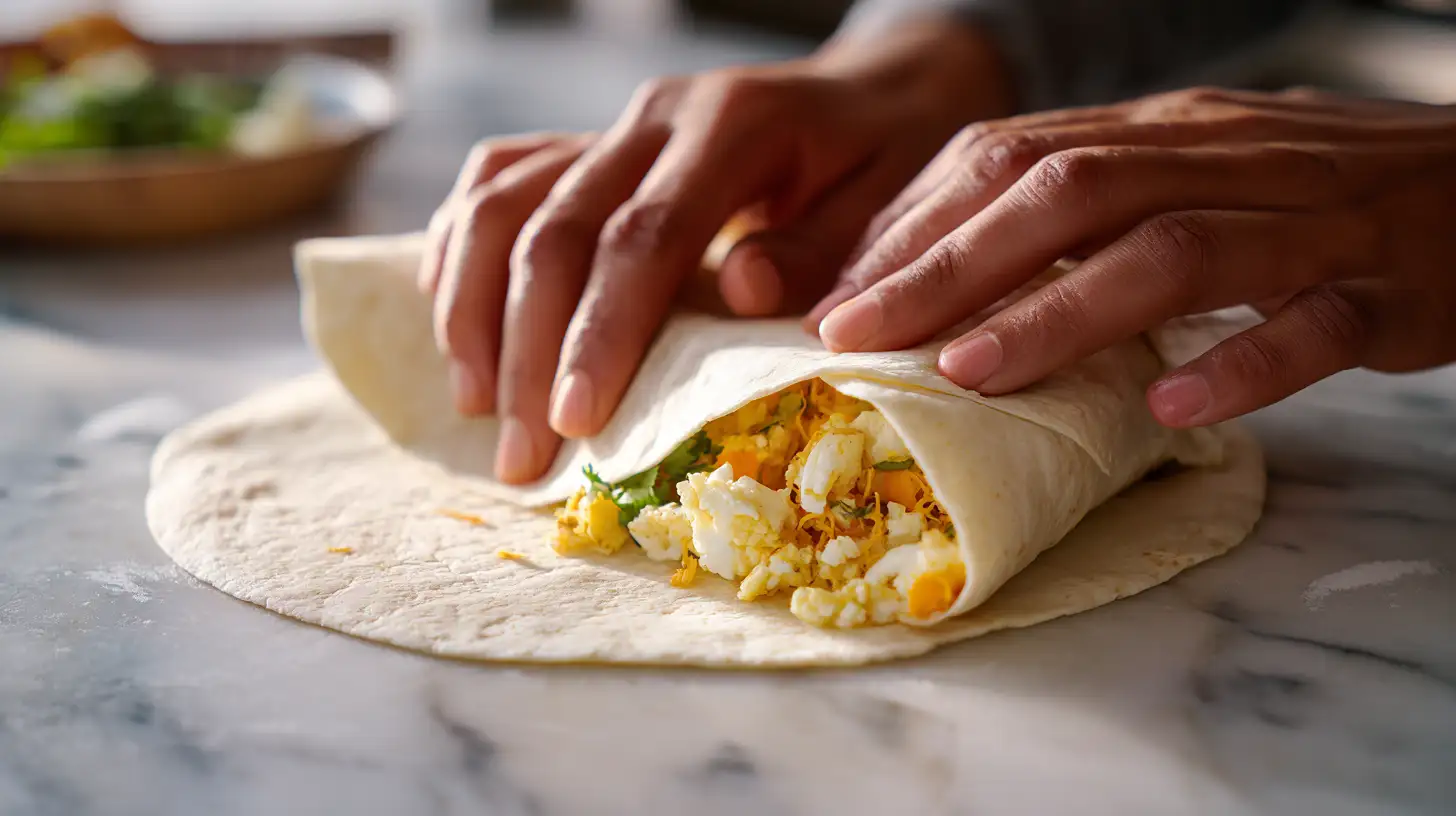
Portion your fillings consistently. Use about 1/3 cup of egg mixture per burrito, plus 2 tablespoons of cheese and any additional fillings. Place fillings in the lower third of the tortilla, leaving at least an inch on each side for folding.
Fold like a pro. Fold the bottom of the tortilla up over the filling, then fold in both sides. Roll tightly from bottom to top, keeping the sides tucked in as you go. The burrito should be snug but not so tight that it tears.
Wrap immediately. Place each burrito seam-side down on a piece of aluminum foil. Wrap tightly, twisting the ends like a candy wrapper. Some people prefer plastic wrap first, then foil. Both methods work, though double-wrapping provides extra protection against freezer burn.
Proper Storage for Maximum Freshness
How you store your burritos affects how long they last and how well they taste when reheated. Proper storage prevents freezer burn and maintains quality for up to three months.
Flash freeze before final storage. Place wrapped burritos on a baking sheet in a single layer and freeze for 2-3 hours. Once solid, transfer to freezer bags or containers. This prevents burritos from sticking together and makes grabbing just one easy.
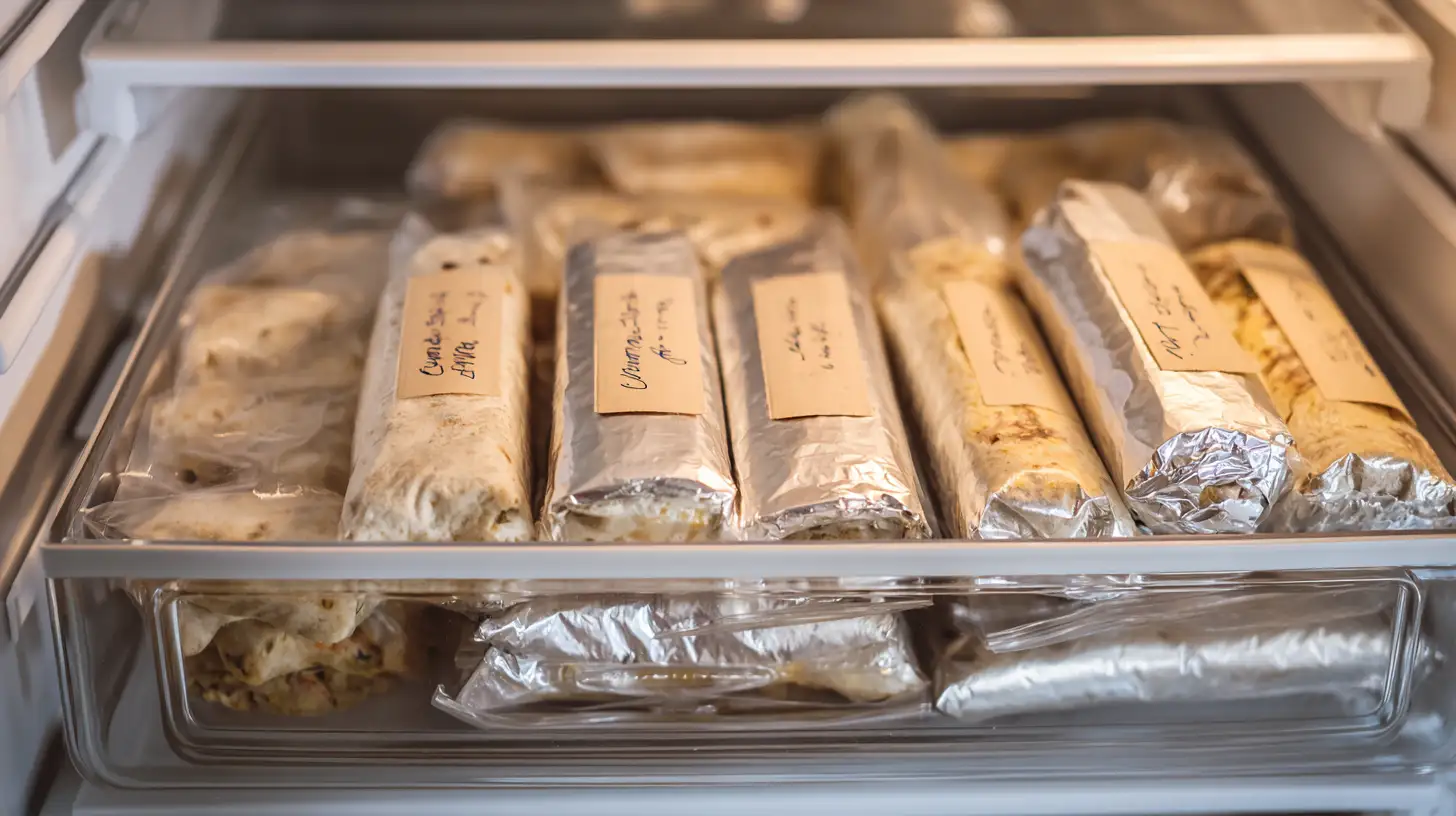
Label everything clearly. Write the contents and date on each burrito or on the storage bag. Three months from now, you won’t remember which burritos have turkey sausage versus plain egg and cheese. Trust me on this one.
Remove as much air as possible from storage bags. Air causes freezer burn, which creates dry, discolored spots on food. Press out air before sealing, or use a straw to suck out excess air if you don’t have a vacuum sealer.
Store in the coldest part of your freezer. The back of the freezer maintains more consistent temperatures than the door or front. Consistent temperature equals better quality over time. According to the Harvard T.H. Chan School of Public Health, proper food storage and balanced meals contribute significantly to overall nutrition quality.
Reheating Methods That Actually Work
The reheating method matters as much as the preparation. A poorly reheated burrito turns rubbery or stays frozen in the middle. Here are the methods I’ve tested, ranked by convenience and results.
Microwave Method (Fastest)
Remove the foil wrapper completely—never microwave foil. Wrap the burrito in a damp paper towel to prevent drying. Microwave on 50% power for 1 minute, flip, then microwave on full power for 30-60 seconds. Let it rest for 30 seconds before eating. The center should be hot all the way through.
Oven Method (Best Results)
Preheat oven to 350°F. Remove the foil, wrap in fresh foil, and bake for 25-30 minutes from frozen. For a crispy tortilla, unwrap for the last 5 minutes. This method takes longer but produces the best texture—crispy outside, hot and melty inside.
Air Fryer Method (Crispy Results)
Remove all wrapping. Air fry at 350°F for 12-15 minutes from frozen, flipping halfway through. The tortilla gets crispy and slightly charred in spots, which adds great texture. Watch closely to prevent burning.
Thaw-First Method (Recommended)
Move a burrito from the freezer to the refrigerator the night before. In the morning, microwave for 60-90 seconds or heat in a skillet over medium heat for 2-3 minutes per side. Pre-thawed burritos heat more evenly and quickly.
Common Mistakes to Avoid
After making hundreds of freezer burritos, I’ve learned what goes wrong and how to prevent it. These mistakes are easy to make but just as easy to avoid once you know what to watch for.
Overfilling leads to torn tortillas and messy reheating. Less is more with freezer burritos. You can always add salsa or hot sauce when eating, but you can’t fix a burrito that exploded in the microwave.
Using wet ingredients creates soggy results. Drain cooked vegetables well and let eggs cool before assembling. Any excess moisture turns to ice crystals during freezing, then water during reheating.
Skipping the cool-down step causes problems. Hot fillings in a cold freezer create condensation, which leads to ice buildup and soggy tortillas. Always let fillings cool to room temperature first.
Not labeling seems harmless until you have five different burrito types in your freezer and no idea which one. Spend the extra 30 seconds writing on each one. You will be grateful in the future.
Reheating on full power from frozen creates uneven results—burning outside while frozen inside. Low power or oven reheating gives better, more consistent results.
Meal Prep Tips for Maximum Efficiency
Making freezer breakfast burritos becomes significantly easier with a few organizational strategies. These tips come from years of Sunday meal prep sessions and plenty of trial and error.
Scale up your egg cooking. Use a large nonstick skillet or multiple pans. Cooking 12-18 eggs at once is more efficient than doing small batches. Season the entire batch the same way, then divide for different burrito varieties.
Prep vegetables in advance. Dice peppers and onions a day or two before your burrito-making session. Store in airtight containers in the refrigerator. When assembly day arrives, you can focus on cooking and wrapping.
Set up an assembly line. Arrange your workspace so you move in one direction—tortillas, then fillings, then wrapping station, then freezer sheet. This flow prevents backtracking and accelerates the process considerably.
Make it a family activity. Kids old enough to fold can help with assembly. Even young children can add cheese or place wrapped burritos on the baking sheet. Many hands make light work, and kids are more likely to eat food they helped prepare.
Cook multiple proteins if making varieties. While eggs cook in one pan, cook turkey sausage in another. This parallel cooking cuts total prep time significantly compared to cooking everything sequentially.
Customization Ideas for Different Dietary Needs
Freezer burritos adapt easily to various dietary preferences and restrictions. Small modifications allow everyone in the family to have burritos that work for them.
Low-carb versions use low-carb tortillas or large lettuce leaves. Some people skip the tortilla entirely and freeze just the filling in portions, then wrap it in lettuce when ready to eat.
Dairy-free options substitute vegan cheese or skip cheese entirely. Nutritional yeast adds a cheesy flavor without actual dairy. Avocado added after reheating provides creaminess without cheese.
Higher protein versions add extra egg whites or double the meat. Athletes or those with higher protein needs benefit from these boosted burritos that provide sustained energy.
Vegetarian burritos focus on eggs, cheese, and many vegetables. Black beans make an excellent protein addition that freezes well. Seasoned with cumin and lime, they rival any meat-filled version.
Building Your Weekly Breakfast Routine
Freezer breakfast burritos work best as part of a broader meal prep breakfast strategy. Having multiple grab-and-go options prevents burnout from eating the same thing every day.
Rotate between burritos and other make-ahead options. Pair your burrito stash with overnight oats, hard-boiled eggs, or batch-cooked muffins. Variety keeps breakfast intriguing even when everything is prepared in advance.
Plan your freezer inventory. If you typically eat breakfast at home five days a week, make sure you have at least that many burritos ready. I keep 20 burritos in my freezer at all times—enough for two weeks of weekday breakfasts for two adults.
Restock before running out. When your freezer stash drops to five or fewer burritos, schedule another prep session. Running out completely leads to reverting to old habits of skipping breakfast or grabbing something unhealthy.
Track what flavors your family prefers. After a few batches, you’ll know that the Southwest version disappears first while the Mediterranean one sits longer. Adjust your ratios accordingly to minimize waste and maximize satisfaction.
Making This Work Long-Term
The real test of any meal prep strategy is whether you stick with it. Freezer breakfast burritos pass that test because they solve a real problem without creating new ones. They’re quick to make, easy to store, and genuinely convenient to eat.
Start with one batch. Make 8-12 burritos and see how your family responds. Adjust fillings, portion sizes, and reheating methods based on feedback before committing to larger batches.
Schedule prep sessions on your calendar. Treat burrito-making like any other important appointment. Sunday afternoon works for many families, but choose whatever time fits your schedule. If you’re looking to expand your meal prep beyond breakfast, our comprehensive meal prep guide covers strategies for all meals throughout the week.
Celebrate the mornings when breakfast is handled. Notice how much less stressful mornings become when one decision is already made. That stress reduction alone makes the prep time worthwhile.
These burritos represent more than just breakfast—they represent taking control of your mornings before they start. Every burrito in your freezer is a vote for calmer, better-fed mornings. And honestly, who couldn’t use more of those?
Frequently Asked Questions
How long do freezer breakfast burritos last?
Properly wrapped freezer breakfast burritos maintain quality for 2-3 months in the freezer. After three months, they remain safe to eat but may develop freezer burn that affects texture and taste. For best results, aim to consume them within two months and always wrap tightly in foil with air removed from storage bags.
Can I freeze burritos with salsa or sour cream?
Salsa and sour cream don’t freeze well inside burritos—they become watery and separate when thawed. Keep these toppings on the side and add them after reheating. Alternatively, use thick, chunky salsa cooked into the filling rather than fresh salsa, which contains more water.
Why are my burritos soggy after reheating?
Soggy burritos usually result from excess moisture in the fillings or hot ingredients being wrapped before cooling. Always drain vegetables thoroughly, let all fillings cool completely before assembly, and avoid overfilling. Using a damp paper towel during microwave reheating helps, but the real fix happens during preparation.
Can I reheat frozen burritos directly, or should I thaw them first?
Both methods work, but thawing overnight in the refrigerator produces more even results. If reheating from a freezer, use lower power settings initially to allow heat to penetrate without overcooking the outside. The microwave at 50% power for the first minute prevents rubbery edges while the center thaws.
What’s the best tortilla size for freezer burritos?
Burrito-sized flour tortillas measuring 10-12 inches in diameter work best. Smaller taco-sized tortillas don’t hold enough filling for a satisfying breakfast, while larger tortillas become unwieldy. Flour tortillas stay more pliable when frozen than corn tortillas, making them the better choice for freezer burritos.
Freezer Breakfast Burritos
Ingredients
For the filling
- 24 ounces Eggs (12 eggs) Scramble slightly underdone.
- 3 cups Shredded cheese (cheddar, Monterey Jack, or a Mexican blend) Use pre-shredded for convenience or block cheese for better melt.
- 1 pound Turkey sausage crumbles Fully cooked before adding to burritos.
- 2 cups Bell peppers (diced) Cooked before adding to burritos.
- 1 cup Onions (diced) Cooked before adding to burritos.
- 2 cups Spinach Cooked before adding to burritos.
- 4 medium Flour tortillas (burrito-size, 10-12 inches) Warm slightly before filling.
Instructions
Preparation
- Cook scrambled eggs slightly underdone and season them.
- Prepare and cook any additional proteins (turkey sausage, beef, or chicken).
- Sauté the vegetables until they are tender and let everything cool to room temperature.
Assembly
- Warm tortillas briefly in the microwave wrapped in a damp paper towel.
- Portion about 1/3 cup of the egg mixture, plus 2 tablespoons of cheese and any additional fillings onto the lower third of the tortilla.
- Fold the bottom up over the filling, then fold in both sides and roll tightly from bottom to top.
- Wrap each burrito tightly in aluminum foil, twisting the ends to seal.
Storage
- Flash freeze the wrapped burritos on a baking sheet for 2-3 hours.
- Transfer to freezer bags or containers, removing as much air as possible.
- Label each bag with the contents and date.