Why Homemade Breakfast Sausage Recipe is a Staple in Morning Meals
This homemade breakfast sausage recipe seasons ground beef or ground turkey with sage, thyme, brown sugar, smoked paprika, and a hint of red pepper flake, then shapes the mix into patties that pan-fry in about ten minutes. You skip the preservatives and fillers in store-bought links and get juicier, more flavorful sausage for under three dollars a pound.
In this guide, I’m going to walk you through everything you need to know about making breakfast sausage at home. We’ll cover the basics, talk about which meats work best, discuss seasonings, and I’ll share some tips I’ve picked up along the way. Whether you want classic sage sausage or something with a kick, this recipe is completely customizable. And if you’re looking for other hearty breakfast options, check out our Southern Cornbread Recipe for the perfect side.
Ground turkey and ground beef both need to reach an internal temperature of 160°F to be safe, per the USDA FoodSafety.gov chart.
Per USDA FoodData Central, 93%-lean ground turkey contains about 27 g of protein and 8 g of fat per 100 g cooked — roughly half the fat of pork breakfast sausage at the same weight.
Why Homemade Breakfast Sausage Is Better
You Control the Ingredients
Store-bought sausage often contains fillers, preservatives, and way more sodium than you’d use at home. When you make it yourself, you know exactly what’s going in. Fresh meat, simple spices, and that’s it. No weird additives or stuff you can’t pronounce.
This is especially important if you’re trying to eat cleaner or have dietary restrictions. You can make it lower in sodium, skip the sugar, or use specific meats that fit your diet. Complete control is pretty powerful when it comes to what you’re putting in your body.
Why Homemade Breakfast Sausage Tastes Better
I’m not exaggerating when I say homemade sausage tastes completely different from the packaged stuff. The spices are fresher, the meat is better quality, and you can adjust the seasoning to your exact preferences. Some people like it more savory, others want a hint of sweetness from maple syrup. When you’re making it yourself, you get it exactly right every single time.
It’s Surprisingly Easy
You don’t need fancy equipment or culinary school training. Mix ground meat with spices, form patties, and cook. That’s really all there is to it. The whole process takes maybe 15 minutes of active work, and then you’ve got fresh sausage for the week. For more easy breakfast ideas, try our Breakfast Pizza Recipe.
Choosing Your Meat
Pork: The Classic Choice
Traditional breakfast sausage uses pork, and for good reason. Pork has the right fat content and flavor to make really delicious sausage. I usually go with ground pork that’s about 70% lean and 30% fat. That ratio gives you juicy, flavorful sausage without being too greasy.
If you can, buy pork shoulder and ask your butcher to grind it for you. It’s a bit more work, but the quality difference is noticeable. Pre-ground pork from the store works fine too—just check the fat percentage.
Turkey: The Lighter Option
Ground turkey makes a leaner sausage that’s still really tasty. The key is using a mix of white and dark meat to get enough fat for flavor and moisture. All-white-meat turkey can turn out dry and bland, so don’t go too lean.
I usually add a tiny bit of olive oil to turkey sausage to help keep it juicy. You can also mix in some finely diced mushrooms or grated zucchini for extra moisture without adding fat. For more healthy breakfast options, check out our Chicken Breakfast Recipes.
Chicken Works Too
Ground chicken is similar to turkey—you want that mix of light and dark meat for the best results. Chicken takes on seasonings really well, so don’t be shy with the spices. Add herbs like rosemary or thyme to complement the chicken’s mild flavor.
Plant-Based Alternatives
You can absolutely make vegetarian or vegan breakfast sausage. Use crumbled tempeh, textured vegetable protein (TVP), or a mix of black beans and mushrooms as your base. Add the same seasonings you’d use for meat sausage, plus some nutritional yeast for a savory umami kick. Use a flax egg or a bit of vital wheat gluten to help bind everything together.
The Essential Seasonings
Sage: The Star Player
If there’s one spice that defines breakfast sausage, it’s sage. That earthy, slightly peppery flavor is what makes sausage taste like… well, sausage. Use dried rubbed sage, not ground—it distributes better and has a cleaner flavor. About a tablespoon per pound of meat is a good starting point.
The Supporting Cast
Here’s my basic spice blend for one pound of ground meat:
- 1 tablespoon dried sage
- 1 teaspoon black pepper
- ½ teaspoon salt (adjust to taste)
- ½ teaspoon thyme
- ½ teaspoon garlic powder
- ¼ teaspoon onion powder
- Pinch of nutmeg (trust me on this)
- Pinch of red pepper flakes (optional, for heat)
That tiny bit of nutmeg might seem weird, but it adds a subtle warmth that makes the whole thing taste more complex. Don’t skip it.
Sweet Options
Some people love maple sausage, and honestly, so do I. Add about a tablespoon of real maple syrup per pound of meat for a sweet-savory combo that’s incredible with pancakes. Brown sugar or honey work too, but maple syrup is the classic for a reason.
Regional Variations
Different regions do breakfast sausage differently. Southern-style sausage often has more cayenne and a bit of brown sugar for sweet heat. Italian-style breakfast sausage uses fennel seeds instead of sage. Experiment to find what you like best.
Making the Sausage
The Mixing Technique
Here’s the most important tip: don’t overmix. When you work meat too much, it gets tough and dense. You want to mix just until the spices are evenly distributed and the meat holds together when you form a patty.
I use my hands for mixing because it gives me the best control. Just make sure your hands are cold—run them under cold water first. Cold hands help keep the fat from melting prematurely.
Test Your Seasoning
Before you form all your patties, cook a small piece of the sausage mixture to taste it. This is crucial. Once you’ve made two dozen patties, it’s too late to realize you needed more sage or salt. A quick taste test lets you adjust before committing.
Forming Patties
I make mine about 2-3 inches across and maybe half an inch thick. They’ll shrink a bit when they cook, so don’t make them too small. Use a kitchen scale if you want them all the same size—about 2 ounces per patty works well.
Place patties on parchment paper and stack them with parchment between each layer. This makes storage easy and prevents them from sticking together.
Making Links (Optional)
If you want to make links instead of patties, you’ll need casings and a sausage stuffer. Natural hog casings work great—you soak them in water to make them pliable, then fill them with your sausage mixture and twist into individual links. It’s more work but looks impressive and gives you that satisfying snap when you bite into them.
Honestly though? I almost always stick with patties. They’re easier and cook more evenly.
How to Cook Your Sausage
Pan-Frying: The Classic Method
This is how I cook sausage 90% of the time. Heat a skillet over medium heat—not too hot or the outside burns before the inside cooks. Add just a tiny bit of oil, or skip it entirely if you’re using fatty pork.
Cook for about 4-5 minutes per side until you get a nice brown crust and the internal temp hits 160°F (71°C). Don’t press down on the patties with your spatula—that squeezes out all the juices and makes them dry.
Oven Baking
Baking is great when you’re cooking a bunch at once. Preheat your oven to 375°F (190°C), arrange patties on a parchment-lined baking sheet, and bake for 15-20 minutes, flipping halfway through. Use a meat thermometer to check they’re done.
This method is more hands-off, which I appreciate on busy mornings. The sausages won’t get quite as crispy as pan-fried ones, but they’re still delicious.
Grilling
Grilled breakfast sausage is incredible. The smoke adds another layer of flavor that’s hard to beat. Preheat your grill to medium, oil the grates, and cook for 4-5 minutes per side. Watch them carefully—sausage can flare up from the fat dripping.
I love grilling a batch for meal prep, then reheating throughout the week. For more grilled breakfast ideas, check out our Perfect Roasted Potatoes recipe.
Storage and Freezing
Refrigerator Storage
Raw sausage keeps in the fridge for 2-3 days max. Store it in an airtight container or wrapped tightly in plastic. Cooked sausage lasts about 4 days in the fridge. Reheat gently to avoid drying it out.
Freezing Method
This is where making your own sausage really shines. Form all your patties, arrange them on a baking sheet, and freeze until solid. Then transfer to freezer bags, squeeze out the air, label with the date, and freeze for up to 3 months.
You can cook them straight from frozen—just add a couple extra minutes to the cooking time. Or thaw overnight in the fridge if you prefer. Either way works great.
What to Serve With Breakfast Sausage
Classic Pairings
- Eggs any style – Scrambled, fried, poached, doesn’t matter. Eggs and sausage just work.
- Pancakes or waffles – The sweet-savory combo is unbeatable, especially with maple sausage.
- Hash browns or home fries – Crispy potatoes complete the breakfast trinity.
- Biscuits and gravy – Make sausage gravy with the drippings for ultimate comfort food.
Creative Uses
- Breakfast sandwiches – Sausage patty, egg, cheese on an English muffin. Perfect grab-and-go meal.
- Breakfast bowls – Crumble sausage over quinoa or rice with roasted veggies and a fried egg.
- Breakfast burritos – Wrap it up with eggs, cheese, and salsa for a portable breakfast.
- Pizza topping – Use crumbled sausage on breakfast pizza with eggs and cheese.
For more creative breakfast ideas, explore our Chicken and Potato Recipes collection.
Common Mistakes to Avoid
Overmixing the Meat
I mentioned this before, but it’s worth repeating. When you overwork the meat, it gets tough. Mix gently and stop as soon as everything’s combined.
Using Meat That’s Too Lean
Lean meat makes dry, crumbly sausage. You need that fat for flavor and moisture. If you’re using turkey or chicken, add a bit of oil or include some moisture-rich ingredients like grated apple or onion.
Overcooking
Breakfast sausage dries out fast if you cook it too long. Use a meat thermometer and pull it off the heat at 160°F (71°C). It’ll stay juicy and delicious.
Not Testing Seasoning
Always cook a small piece to taste before making all your patties. You can’t fix under-seasoned sausage once it’s formed and frozen.
Common Questions
Do I need casings?
Nope. Patties are way easier and taste just as good. Only bother with casings if you specifically want links for presentation or texture.
How long does it last?
Raw sausage keeps 2-3 days in the fridge, cooked lasts 4 days. Frozen sausage is good for 3 months.
What spices are essential?
Sage is the must-have. After that, black pepper, thyme, garlic powder, and salt are the basics. Everything else is optional but fun to experiment with.
Why is my sausage dry?
Either your meat was too lean or you overcooked it. Use meat with enough fat (70/30 ratio) and don’t cook past 160°F internal temp.
Can I freeze the raw mixture?
Absolutely. Form patties first, freeze them individually, then bag them up. They’ll last 3 months and you can cook them straight from frozen.
Time to Make Your Own
Making breakfast sausage at home is one of those things that seems fancy but is actually super simple. Mix meat with spices, form patties, and cook. That’s it. The payoff is sausage that tastes way better than anything from the store, customized exactly how you like it, with ingredients you can feel good about.
Start with the basic recipe I’ve laid out here, then experiment from there. Try different spice blends, add maple syrup, throw in some fresh herbs. Make it your own. Once you nail down a recipe you love, make a big batch and freeze it. Future you will be very grateful to have homemade sausage ready to go on busy mornings.
Trust me, after you’ve had homemade breakfast sausage, going back to store-bought just won’t cut it anymore. For more homemade breakfast ideas, check out our complete Breakfast Recipes collection.
Homemade Breakfast Sausage
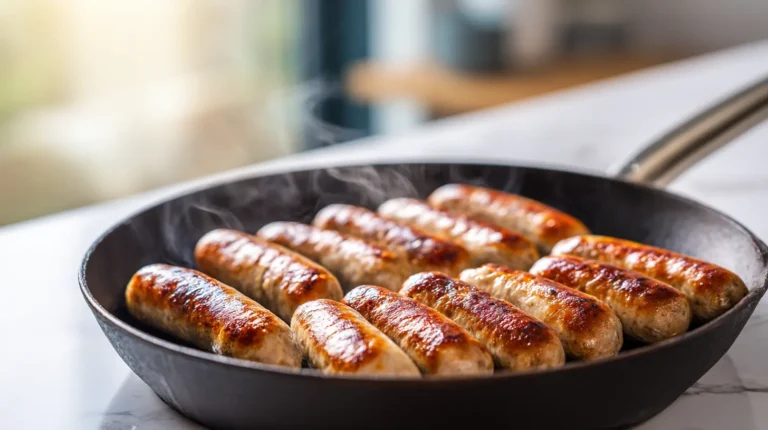
This homemade breakfast sausage seasons ground beef or turkey with sage, thyme, garlic, a hint of nutmeg, and a pinch of red pepper, then shapes the mix into patties that pan-fry in about ten minutes. You skip the preservatives and fillers of store-bought links and get juicier, more flavorful sausage you can customize exactly how you like.
Ingredients
- 1 lb halal ground beef or ground turkey (for turkey, use a mix of white and dark meat)
- 1 tbsp dried rubbed sage
- 1 tsp black pepper
- 1/2 tsp salt (adjust to taste)
- 1/2 tsp dried thyme
- 1/2 tsp garlic powder
- 1/4 tsp onion powder
- 1 pinch nutmeg
- 1 pinch red pepper flakes (optional, for heat)
- 1 tbsp maple syrup (optional, for maple sausage)
- 1 tsp olive oil (if using turkey, to keep it juicy)
Instructions
- With cold hands (run them under cold water first), gently mix the ground meat with the sage, black pepper, salt, thyme, garlic powder, onion powder, nutmeg, and red pepper flakes (and maple syrup, if using) just until the spices are evenly distributed. Don't overmix or the sausage turns tough.
- Cook a small piece of the mixture to taste it, and adjust the seasoning before forming all the patties.
- Form the mixture into patties about 2-3 inches across and ½ inch thick (about 2 oz each) — they shrink as they cook.
- Pan-fry over medium heat with a little oil for about 4-5 minutes per side, until browned and the internal temperature reaches 160°F. Don't press down on the patties (it squeezes out the juices). Alternatively, bake at 375°F for 15-20 minutes, flipping halfway.
Notes
Don't overmix the meat — work it gently and stop as soon as the spices are combined, or the sausage gets tough.
Always cook a small piece to taste and adjust the seasoning before forming all the patties. Sage is the essential spice.
Don't use meat that's too lean (for turkey, add a little oil or grated apple/onion for moisture) and don't overcook — pull it at 160°F internal temperature.
Variations: maple (add 1 tbsp maple syrup per pound) or Southern-style (more cayenne plus a little brown sugar). Freeze raw patties up to 3 months and cook straight from frozen. Serve with eggs, pancakes, or in breakfast sandwiches.