I used to cook dinner from scratch every single night. By Wednesday, I was exhausted. By Friday, I was ordering pizza again because I just couldn’t face another hour in the kitchen.
Then I discovered batch cooking. Not the complicated version where you spend entire weekends cooking, but real, practical batch cooking that works for busy families. The kind where you make double or triple batches when you’re already cooking, then freeze the extras for later.
This simple shift changed everything. Now I cook a few times a week instead of every single night. My freezer is stocked with homemade meals instead of expensive frozen dinners. And on those impossible evenings when I have zero energy, I just reheat something delicious I made weeks ago.
If you’re tired of cooking every night but don’t want to eat takeout, this guide is for you. I’ll show you exactly how to start with simple recipes that actually work for real families. For complete meal prep strategies, refer to our Meal Prep Recipes Guide.
What Is Batch Cooking?
Batch cooking means making larger quantities of food and saving some for later. Instead of making one lasagna, you make two and freeze one. Instead of cooking rice for tonight, you make a big batch to use all week.
It doesn’t take much longer to make a double batch of most recipes. You’re already chopping vegetables, preheating the oven, and cleaning up afterward. Making extra while you’re at it saves massive time later.
Why batch cooking works:
- Saves real time: Cook 2-3 times per week instead of every night
- More efficient: Use oven, stove, and appliances simultaneously
- Reduces stress: Always have backup meals ready
- Budget-friendly: Buy ingredients in bulk, reduce waste
- Prevents boredom: Freeze extras to eat weeks later when they feel fresh again
Three Ways to Batch Cook
Method 1: Batch Whole Meals
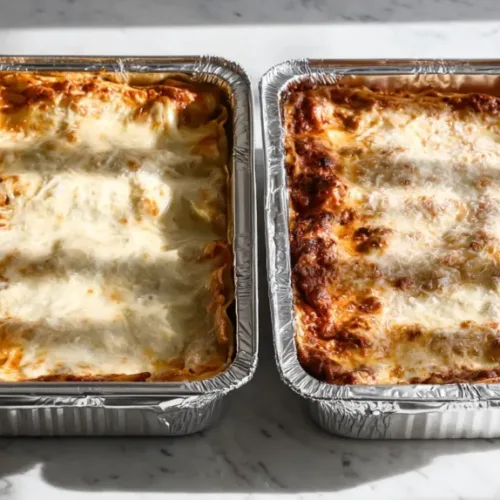
Make complete meals in large quantities. Cook two lasagnas, three pots of chili, or multiple casseroles at once. Eat one now, and freeze the others.
Best for: Soups, stews, casseroles, lasagna, pasta bakes, chili
Method 2: Batch Ingredients
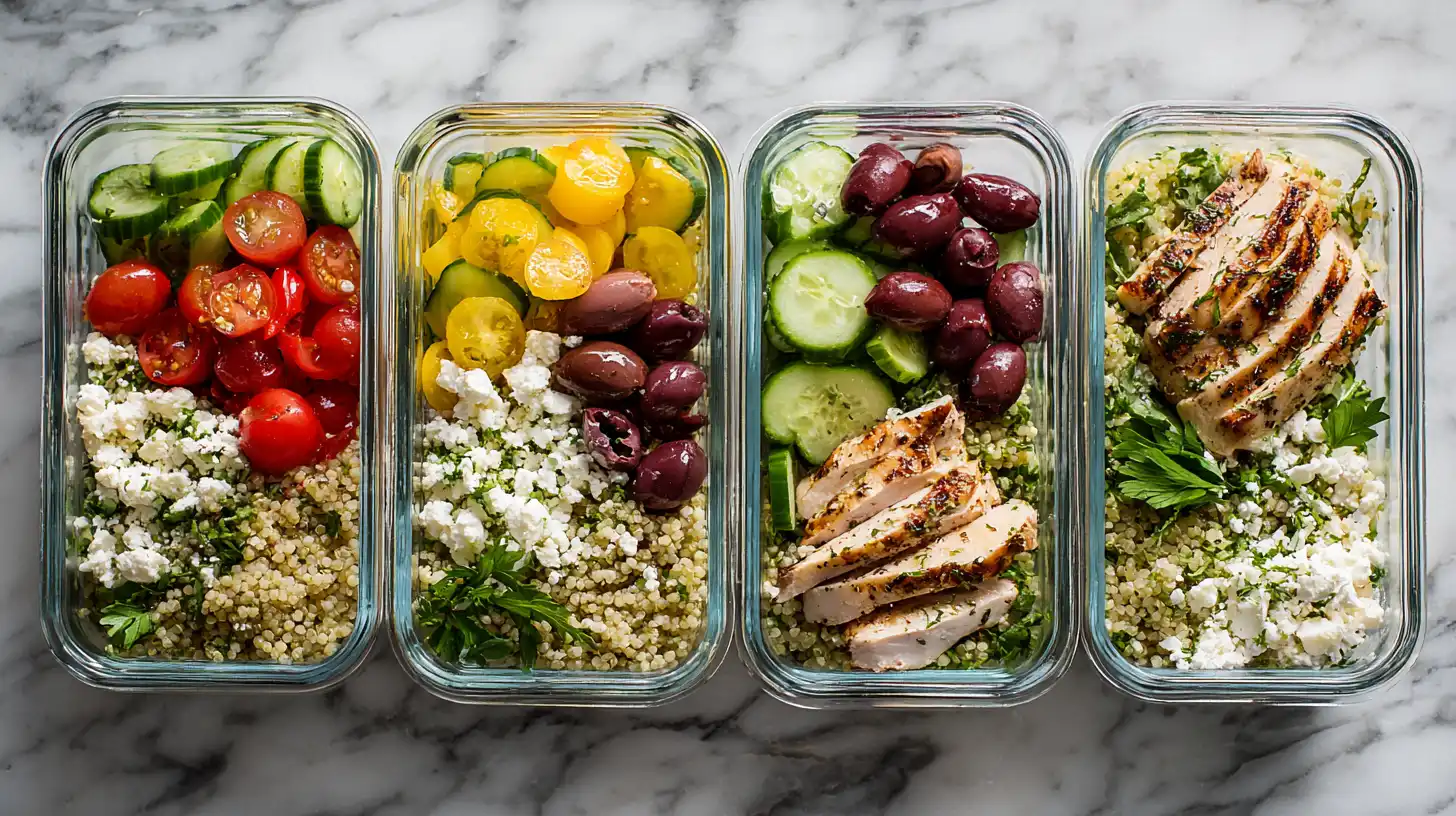
Cook large quantities of base ingredients to use in different meals throughout the week. Make a huge batch of rice, roasted vegetables, or cooked chicken. Mix and match for variety.
Example week:
- Monday: Chicken and rice with vegetables
- Tuesday: Chicken tacos with different toppings
- Wednesday: Rice bowls with different sauces
- Thursday: Chicken salad with roasted vegetables
Same ingredients, completely different meals. Learn more in our Meal Prep Bowls guide.
Method 3: Batch Tasks
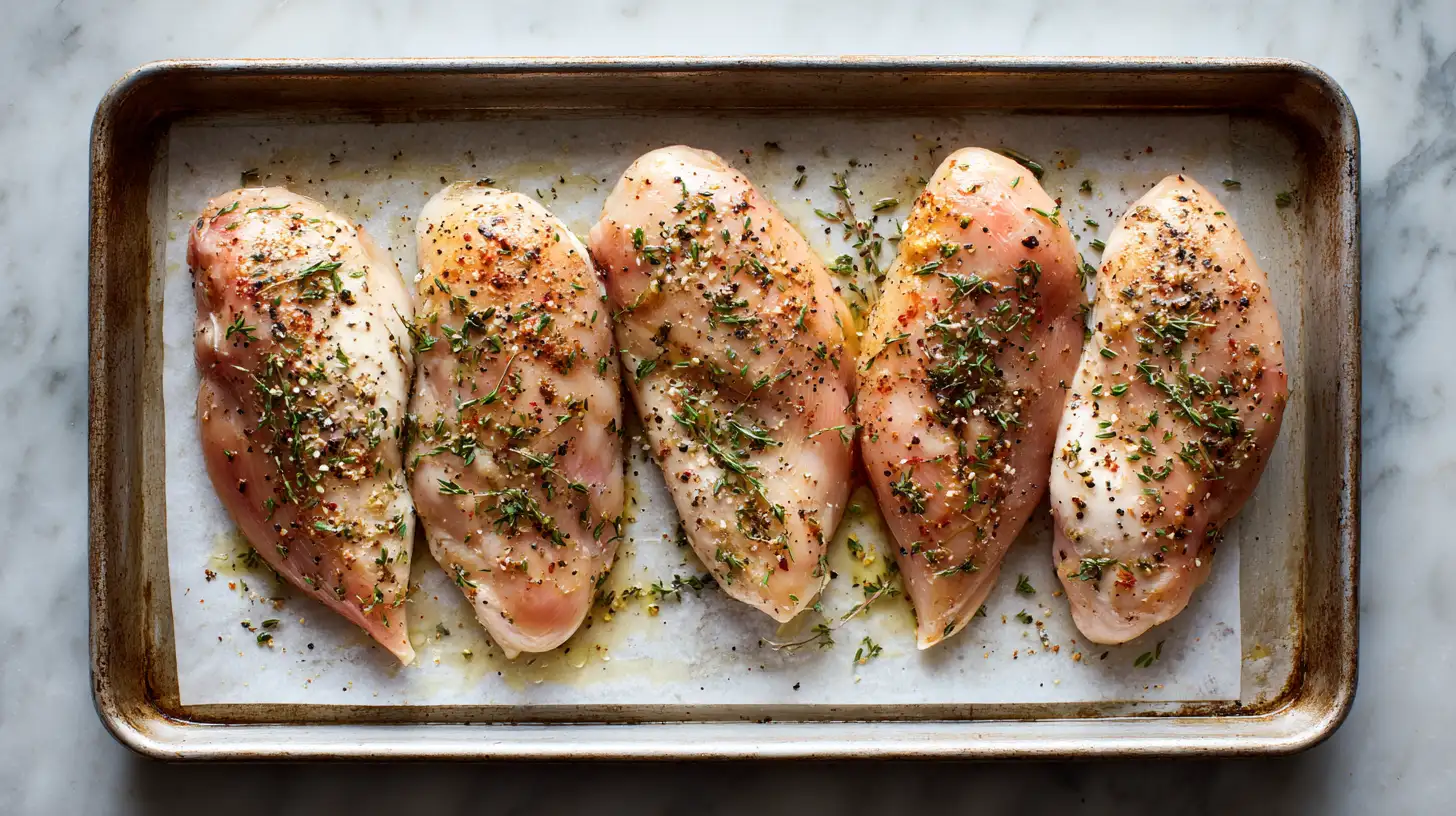
Do one task in bulk instead of repeating it daily. Chop all vegetables for the week at once. Brown multiple pounds of ground meat. Bake several chicken breasts together.
Best for: Chopping vegetables, cooking proteins, making sauces, baking basics
Getting Started with Batch Cooking
Start simple. Don’t try cooking 30 meals in one day. That’s overwhelming and unsustainable.
Beginner approach:
- Pick one recipe your family loves
- Make a double or triple batch
- Eat one portion now, freeze the rest
- Repeat with different recipes throughout the month
This gradual approach fills your freezer without overwhelming you. By month’s end, you’ll have 8-10 different meals ready to go. If you’re new to meal prep, start with our Meal Prep for Beginners guide.
Best Recipes for Batch Cooking
Not all recipes batch well. These do:
Soups and Stews
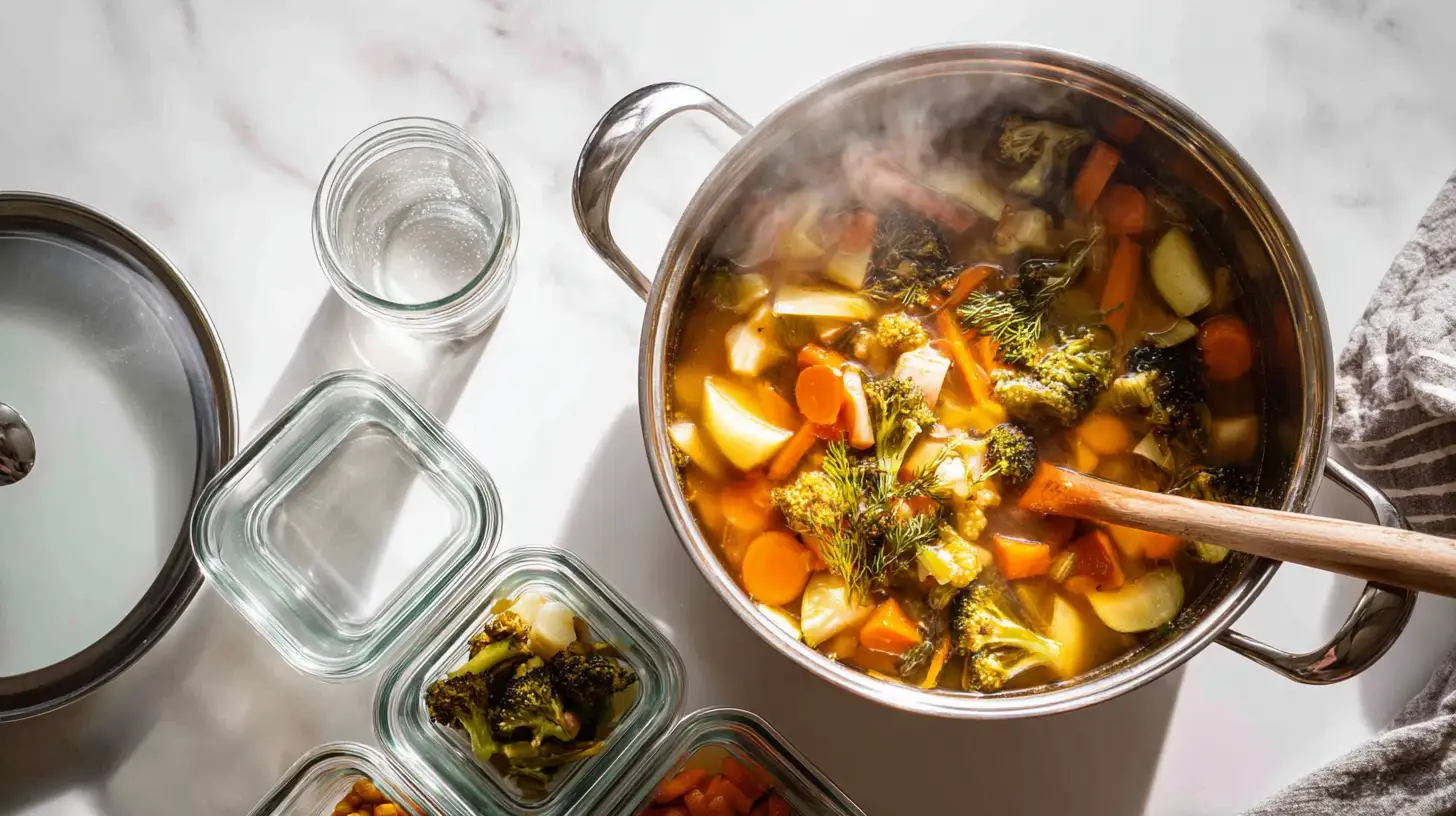
Perfect for batch cooking because they actually taste better after sitting. Make triple batches, and freeze in portions.
- Chili (beef, turkey, or vegetarian)
- Vegetable soup
- Chicken noodle soup
- Beef stew
- Minestrone
Casseroles and Bakes
Assemble multiple pans at once. Bake one, freeze the others.
- Lasagna
- Shepherd’s pie
- Baked ziti
- Enchiladas
- Mac and cheese
Sauces and Bases
Make large batches of versatile sauces to use multiple ways.
- Marinara sauce (pasta, pizza, chicken parmesan)
- Bolognese (pasta, lasagna, stuffed peppers)
- Curry sauce (with chicken, vegetables, chickpeas)
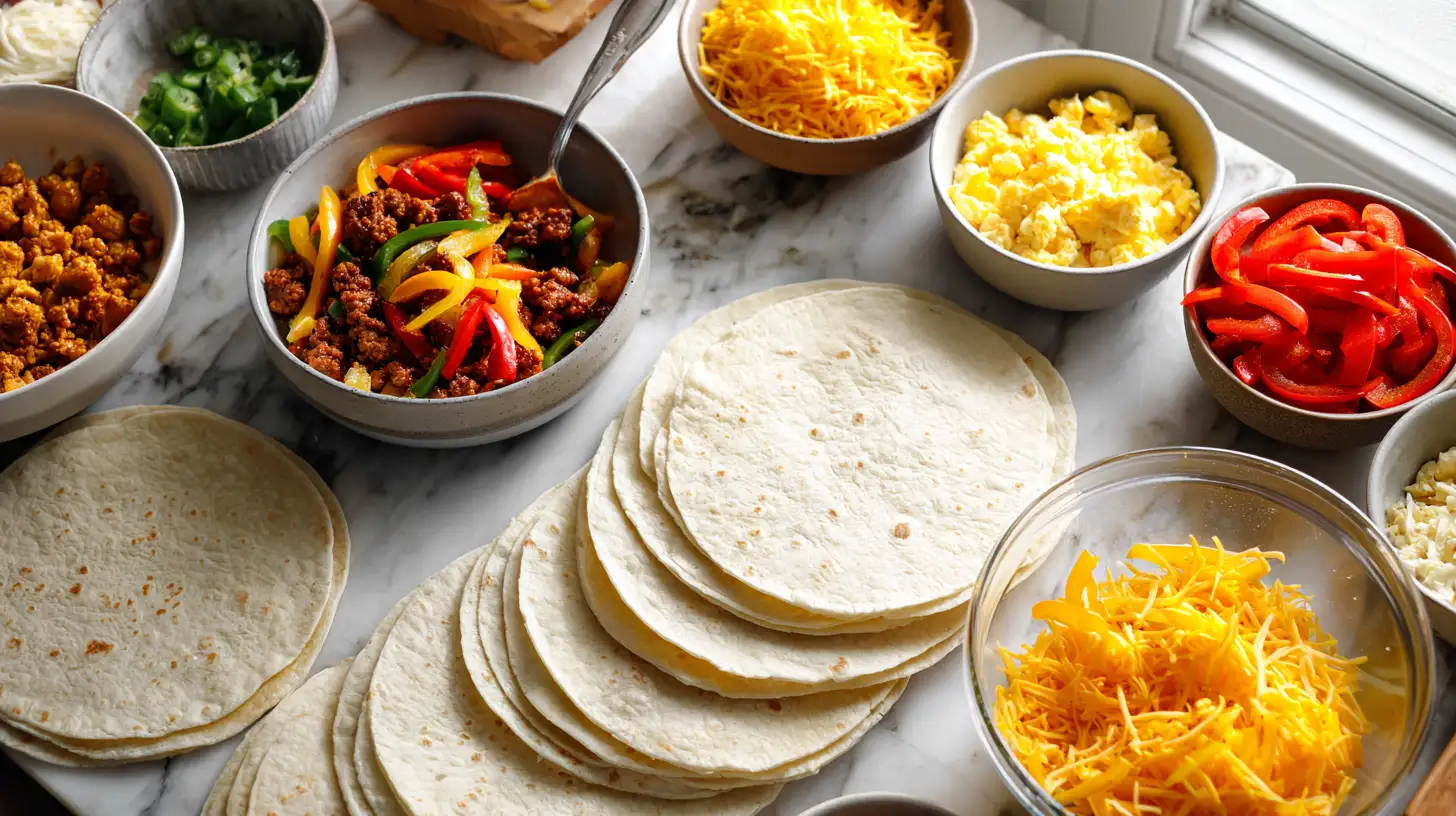
- Taco meat (tacos, burrito bowls, nachos, quesadillas)
Proteins
Cook proteins in bulk to use throughout the week.
- Baked or grilled chicken breasts
- Shredded chicken (slow cooker)
- Ground beef or turkey
- Meatballs
- Pulled pork
Storage and Reheating
Refrigerator storage:
- Cooked proteins: 3-4 days
- Cooked grains and vegetables: 4-5 days
- Soups and stews: 3-4 days
- Casseroles: 3-4 days
Freezer storage:
- Soups and stews: 3-4 months
- Casseroles: 2-3 months
- Cooked proteins: 2-3 months
- Sauces: 3-4 months
Reheating tips:
- Thaw in refrigerator overnight for best results
- Add splash of water or broth when reheating to restore moisture
- Reheat to 165°F for food safety
- Stir halfway through microwave reheating for even heating
Batch Cooking Schedule
My weekly system:
Sunday: Make one double-batch recipe (soup, casserole, or sauce)
Tuesday or Wednesday: Make another double-batch recipe
Throughout week: When making regular dinners, intentionally make extra portions to freeze
Result: By month’s end, freezer is stocked with 10-12 different homemade meals
This schedule doesn’t require marathon cooking sessions. Just consistent small batches that add up over time. For weekly planning tips, see our Sunday Meal Prep Ideas.
Common Mistakes to Avoid
Cooking too much at once: Don’t try making 20 meals in one day. Start with doubling one recipe and build gradually.
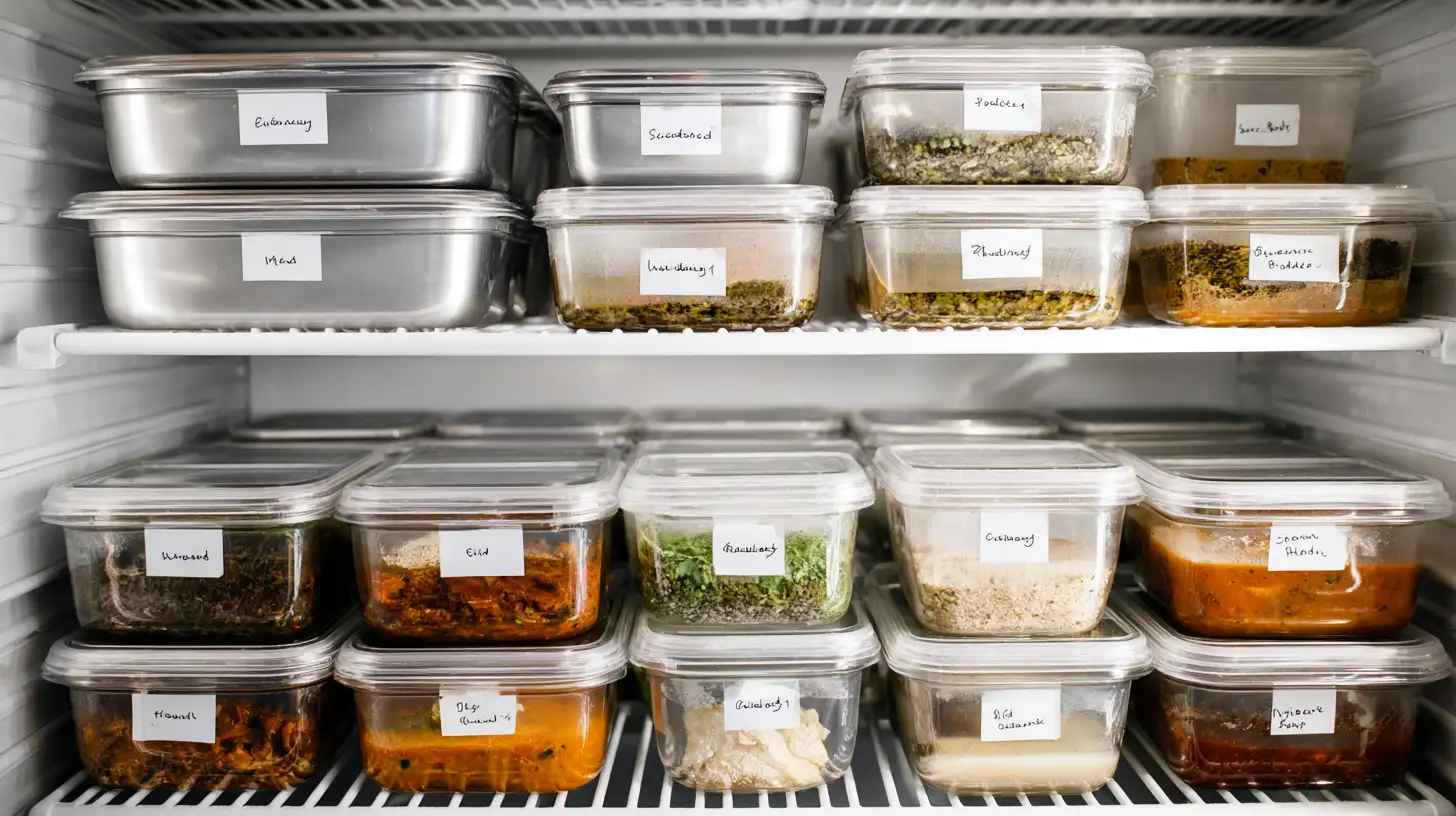
Not labeling: Future you won’t remember what’s in that container or when you made it. Always label with name and date.
Forgetting to rotate: Use oldest meals first. Keep new batches in back, older ones in front.
Choosing complicated recipes: Batch cooking should be simple. Save fancy recipes for fresh-cooked nights.
Not having proper containers: Invest in freezer-safe containers or quality freezer bags. Cheap bags leak and cause freezer burn.
Frequently Asked Questions
What foods are best for batch cooking?
Soups, stews, chili, casseroles, lasagna, pasta sauces, cooked proteins, and grain-based dishes batch cook beautifully. Foods with sauces or liquids typically freeze and reheat better than dry foods. Avoid batch cooking foods with high water content vegetables, cream-based sauces (add cream when reheating), or anything fried.
How long does batch cooking take?
Making a double batch takes only 15–20% longer than making a single batch. If a recipe normally takes 1 hour, a double batch takes about 1 hour and 15 minutes. You’re already doing the prep work, heating the oven, and cleaning up—making extra while you’re at it is efficient.
Do batch-cooked meals taste as good reheated?
Yes! Many batch-cooked meals actually taste better reheated because flavors have time to develop. Soups, stews, chili, and tomato-based sauces especially improve with time. Add a splash of liquid when reheating to restore moisture, and most meals taste just as delicious as fresh.
Can I batch cook if I have a small freezer?
Yes! Focus on batch cooking ingredients instead of whole meals—they take up less space. Freeze foods in flat bags that stack efficiently. Make smaller batches more frequently rather than one giant session. Even a small freezer can hold 5-6 batch-cooked meals if organized well.
How do I prevent batch-cooked food from getting boring?
Freeze extras to eat weeks later when they feel fresh again. Batch cook versatile bases like plain chicken or marinara sauce, then season differently each time. Mix a batch of cooked proteins with fresh sides for variety. Rotate through 10-12 different recipes monthly instead of eating the same thing all week.
Batch cooking completely changed how I approach weeknight dinners. Instead of cooking from scratch every night, I cook a few times a week and use those meals strategically throughout the month.
You don’t need marathon cooking sessions or fancy equipment. Just start making double batches when you’re already cooking. By the end of the month, you’ll have a freezer full of homemade meals ready for those nights when cooking feels impossible.
Start this week. Pick one recipe you’re already making. Double it. Freeze half. See how much easier your next busy week becomes. For complete meal prep strategies, explore our Meal Prep Recipes Guide.
Batch Cooking
Ingredients
Soups and Stews
- 1 lb Ground beef or turkey (for chili) Can be swapped for vegetarian options.
- 2 cups Vegetables (for soups and stews) Carrots, celery, and onions work great.
- 4 cups Broth (chicken or vegetable) For chili and soups.
Casseroles and Bakes
- 1 box Lasagna noodles Use for lasagna recipes.
- 2 cups Ricotta cheese For lasagna assembly.
Proteins
- 4 lb Chicken breasts Baked or grilled for various recipes.
- 2 lb Ground meat (beef or turkey) For tacos, meatballs, and sauces.
Sauces and Bases
- 2 cups Marinara sauce Use for pasta or pizza.
- 2 cups Bolognese sauce For pasta and lasagna.
Instructions
Preparation
- Choose one or two recipes your family enjoys.
- Gather all ingredients and prep them (chop vegetables, measure out ingredients).
Cooking
- Cook large batches of soups, stews, or casseroles as desired.
- Prepare proteins in bulk (grill, bake, or slow cook).
Storage
- Portion out meals into freezer-safe containers.
- Label each container with the meal name and date.
Reheating
- Thaw meals in the refrigerator overnight before reheating.
- Add a splash of liquid when reheating to prevent drying out.
- Reheat to an internal temperature of 165°F.